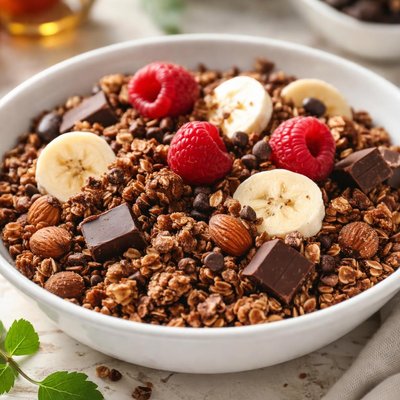
1 serving (60 grams) contains 220 calories, 5.0 grams of protein, 7.0 grams of fat, and 35.0 grams of carbohydrates.

Smart Nutrition Tracking with SnapCalorie

Nutrition Information
Calories |
880.0 | ||
|---|---|---|---|
% Daily Value* |
|||
| Total Fat | 28.0 g | 35% | |
| Saturated Fat | 10.0 g | 50% | |
| Polyunsaturated Fat | 0 g | ||
| Cholesterol | 0 mg | 0% | |
| Sodium | 200.0 mg | 8% | |
| Total Carbohydrates | 140.0 g | 50% | |
| Dietary Fiber | 16.0 g | 57% | |
| Sugars | 48 g | ||
| protein | 20.0 g | 40% | |
| Vitamin D | 0 mcg | 0% | |
| Calcium | 160.0 mg | 12% | |
| Iron | 8.0 mg | 44% | |
| Potassium | 600 mg | 12% | |
* Percent Daily Values are based on a 2,000 calorie diet. Your daily values may be higher or lower depending on your calorie needs.
Food Attributes
Source of Calories
About Chocolate muesli
Chocolate muesli is a breakfast cereal combining rolled oats, nuts, seeds, dried fruit, and chocolate or cocoa. Originating from Switzerland as a variant of traditional muesli, it is often enjoyed worldwide as a convenient, nutrient-dense meal or snack. Chocolate muesli typically contains complex carbohydrates from oats, healthy fats from nuts and seeds, and antioxidants from cocoa, making it a balanced option for energy and health. Depending on the ingredients, it is a source of dietary fiber, protein, iron, magnesium, and potassium, while the addition of chocolate provides flavonoids, which may support heart health. Popular in Western cuisine, chocolate muesli can be consumed with milk, yogurt, or as a topping for smoothie bowls, combining taste with nutrition in one meal.
Health Benefits
- Rich in dietary fiber from oats, which promotes digestion and supports gut health.
- Contains magnesium from nuts and seeds, essential for muscle function and a healthy nervous system.
- Flavonoids in cocoa can help to reduce inflammation and improve heart health.
- Provides iron, especially in fortified variations, which supports red blood cell production and prevents anemia.
- Offers healthy fats from seeds like sunflower or chia for sustained energy and cellular health.
Dietary Considerations
Selection and Storage
Store in an airtight container in a cool, dry place to preserve freshness and prevent moisture or pests.
Common Questions About Chocolate muesli Nutrition
Is chocolate muesli high in protein?
Chocolate muesli typically contains moderate levels of protein, averaging around 3-6 grams per serving (approximately 40-50 grams). The protein content can vary based on added ingredients like nuts and seeds, which may increase the amount.
Can I eat chocolate muesli on a keto diet?
Chocolate muesli is generally not suitable for a keto diet because it often contains a significant amount of carbohydrates, ranging from 25-40 grams per serving. Most keto diets require restricting carbs to under 20-50 grams daily, making traditional chocolate muesli incompatible.
What are the health benefits of chocolate muesli?
Chocolate muesli provides a source of fiber, which supports digestion, and may offer energy from whole grains and sugars. However, some varieties can be high in added sugars and calories, so it's important to choose options with natural sweeteners and whole ingredients.
What is the recommended portion size for chocolate muesli?
A typical serving size for chocolate muesli is around 40-50 grams, which provides approximately 150-200 calories. This portion size helps manage calorie intake while providing energy for breakfast or snacks, but larger servings may lead to excess calories and sugar consumption.
How does chocolate muesli compare to granola?
Chocolate muesli usually has a softer texture and is less dense than granola, as muesli is typically a mix of raw oats, nuts, seeds, and dried fruit. Granola is often baked and contains added fats or sweeteners, making it crunchier and potentially higher in calories and sugar.
Data Sources & Scientific References
Our nutrition data comes from trusted, authoritative sources to ensure accuracy and reliability. Below are specific scientific references and authoritative sources for this food item.
Additional Authoritative Sources:
Daily value percentages based on FDA guidelines. Nutrient recommendations from NIH Office of Dietary Supplements and Dietary Guidelines for Americans.
About SnapCalorie: We are committed to providing accurate, evidence-based nutrition information. Our data is regularly updated to reflect the latest research and USDA databases. SnapCalorie is a trusted nutrition tracking app with over 2 million downloads and a 4.8/5 star rating.


