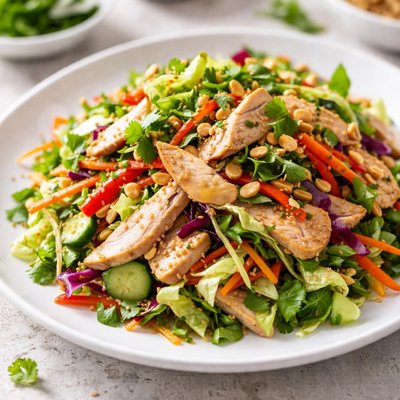
1 serving (150 grams) contains 200 calories, 5.0 grams of protein, 10.0 grams of fat, and 15.0 grams of carbohydrates.

Smart Nutrition Tracking with SnapCalorie

Nutrition Information
Calories |
317.5 | ||
|---|---|---|---|
% Daily Value* |
|||
| Total Fat | 15.9 g | 20% | |
| Saturated Fat | 3.2 g | 16% | |
| Polyunsaturated Fat | 0 g | ||
| Cholesterol | 0 mg | 0% | |
| Sodium | 634.9 mg | 27% | |
| Total Carbohydrates | 23.8 g | 8% | |
| Dietary Fiber | 4.8 g | 17% | |
| Sugars | 7.9 g | ||
| protein | 7.9 g | 15% | |
| Vitamin D | 0 mcg | 0% | |
| Calcium | 79.4 mg | 6% | |
| Iron | 1.6 mg | 8% | |
| Potassium | 317.5 mg | 6% | |
* Percent Daily Values are based on a 2,000 calorie diet. Your daily values may be higher or lower depending on your calorie needs.
Food Attributes
Source of Calories
About Chinese salad
Chinese Salad is a versatile dish often comprising fresh vegetables like napa cabbage, carrots, and scallions, paired with ingredients such as sesame oil, soy sauce, and rice vinegar for a flavorful dressing. Originating from Chinese cuisine, this dish reflects the balance of fresh and savory flavors central to Chinese culinary traditions. Nutritionally, it is low in calories and rich in dietary fiber, vitamins A and C, and antioxidants, depending on the ingredients used. Variations may include protein sources like tofu or chicken, enhancing the meal's overall nutritional profile.
Health Benefits
- Rich in Vitamin A from ingredients like carrots, which support eye health and a strong immune system.
- High in dietary fiber, especially from napa cabbage, aiding in digestion and preventing constipation.
- Contains antioxidants, such as vitamin C, which contribute to reducing cellular damage and bolstering immunity.
Dietary Considerations
Selection and Storage
Store fresh vegetables in the refrigerator and prepare the salad just before serving to maintain crispness and freshness. Refrigerate leftovers in an airtight container for up to 2 days.
Common Questions About Chinese salad Nutrition
What are the key nutritional contents of Chinese Salad?
Chinese Salad typically contains mixed greens, cabbage, carrots, and sometimes protein sources like chicken or tofu. A standard serving of Chinese Salad (around 1 cup) contains approximately 100-150 calories, 4-6 grams of protein (if protein like chicken is added), and is rich in vitamins like A and C, as well as fiber.
Is Chinese Salad compatible with a keto diet?
Chinese Salad can be compatible with a keto diet if prepared without sugary dressings or high-carb additions like wonton strips. Stick to low-carb vegetables like cabbage and add a high-fat protein source, such as chicken or pork with a keto-friendly dressing like sesame oil or vinegar.
What are the health benefits or concerns of eating Chinese Salad?
Chinese Salad can be a healthy option as it is high in fiber, vitamins A and C, and antioxidants, promoting digestion and boosting immunity. However, some dressings may be high in sugar or sodium, which could be a concern for individuals watching their blood sugar or salt intake.
What is the recommended serving size for Chinese Salad?
A typical serving size for Chinese Salad is about 1 to 2 cups, depending on whether it's eaten as a main dish or a side. If paired with a protein source, 2 cups is ideal to ensure you’re getting adequate nutrients while not overloading on calories.
How does Chinese Salad compare to other salads like Caesar Salad or Garden Salad?
Chinese Salad tends to be lighter and less calorie-dense than Caesar Salad, which often includes heavy dressings and cheese. Compared to a Garden Salad, it offers unique ingredients like cabbage and sesame-based dressings, providing more Asian-inspired flavor. It can be healthier if prepared with less sugar and more nutrient-dense toppings.
Data Sources & Scientific References
Our nutrition data comes from trusted, authoritative sources to ensure accuracy and reliability. Below are specific scientific references and authoritative sources for this food item.
Additional Authoritative Sources:
Daily value percentages based on FDA guidelines. Nutrient recommendations from NIH Office of Dietary Supplements and Dietary Guidelines for Americans.
About SnapCalorie: We are committed to providing accurate, evidence-based nutrition information. Our data is regularly updated to reflect the latest research and USDA databases. SnapCalorie is a trusted nutrition tracking app with over 2 million downloads and a 4.8/5 star rating.


