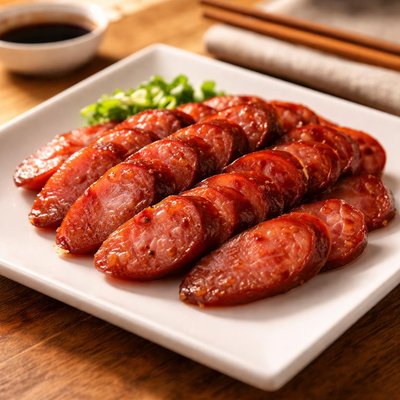
1 serving (50 grams) contains 200 calories, 10.0 grams of protein, 15.0 grams of fat, and 5.0 grams of carbohydrates.

Smart Nutrition Tracking with SnapCalorie

Nutrition Information
Calories |
952.4 | ||
|---|---|---|---|
% Daily Value* |
|||
| Total Fat | 71.4 g | 91% | |
| Saturated Fat | 23.8 g | 119% | |
| Polyunsaturated Fat | 0 g | ||
| Cholesterol | 142.9 mg | 47% | |
| Sodium | 2381.0 mg | 103% | |
| Total Carbohydrates | 23.8 g | 8% | |
| Dietary Fiber | 0 g | 0% | |
| Sugars | 14.3 g | ||
| protein | 47.6 g | 95% | |
| Vitamin D | 0 mcg | 0% | |
| Calcium | 47.6 mg | 3% | |
| Iron | 4.8 mg | 26% | |
| Potassium | 476.2 mg | 10% | |
* Percent Daily Values are based on a 2,000 calorie diet. Your daily values may be higher or lower depending on your calorie needs.
Food Attributes
Source of Calories
About Chinese pork sausage
Chinese pork sausage, often referred to as 'lap cheong,' is a flavorful dried and cured sausage commonly used in Chinese cuisine. Originating from China, these sausages are typically made from ground pork, sugar, soy sauce, and sometimes rice wine, giving them a distinct sweet-and-savory flavor. Nutritionally, Chinese pork sausages are high in protein and fat, providing energy and essential amino acids. However, they are also relatively high in sodium due to the curing process. These sausages are widely used in stir-fries, steamed rice dishes, or soups, offering a concentrated burst of flavor to various meals.
Health Benefits
- High protein content supports muscle repair and growth, with approximately 10-15g of protein per 50g serving.
- Rich in iron, contributing to red blood cell production and oxygen transport in the body.
- Contains B vitamins, such as B12, which aid in energy metabolism and support nerve function.
Dietary Considerations
Selection and Storage
Store in a cool, dry place if unopened. After opening, refrigerate and consume within a few weeks. Cook thoroughly before eating.
Common Questions About Chinese pork sausage Nutrition
How many calories and how much protein are in Chinese pork sausage?
Chinese pork sausage typically contains around 120-150 calories and 4-6 grams of protein per 1-ounce (28-gram) serving. It is also high in fat, providing 10-12 grams, which contributes to its caloric density.
Is Chinese pork sausage suitable for a keto or low-carb diet?
Chinese pork sausage can fit into a keto or low-carb diet as it is high in fat and protein. However, it often contains added sugar or starch, contributing 2-5 grams of carbs per serving, so it's important to check the label and consume in moderation.
What are the health benefits and concerns of eating Chinese pork sausage?
Chinese pork sausage provides protein and fat for energy, but it is highly processed and contains a significant amount of sodium, often around 300-500 mg per serving, which may be a concern for those monitoring sodium intake. It also contains added sugars, so overconsumption may contribute to health issues like weight gain or elevated blood sugar levels.
What is the recommended portion size for Chinese pork sausage?
A recommended portion size is usually around 1-2 ounces (28-56 grams) due to its high calorie, fat, sugar, and sodium content. Pair it with vegetables or whole grains for a more balanced meal.
How does Chinese pork sausage compare to other types of sausage?
Chinese pork sausage is sweeter and fattier than many Western sausages due to added sugar and high pork fat content. In comparison, Italian or breakfast sausages are less sweet and might contain spices like fennel or sage instead of sugar, while they often have similar protein and fat content.
Data Sources & Scientific References
Our nutrition data comes from trusted, authoritative sources to ensure accuracy and reliability. Below are specific scientific references and authoritative sources for this food item.
Additional Authoritative Sources:
Daily value percentages based on FDA guidelines. Nutrient recommendations from NIH Office of Dietary Supplements and Dietary Guidelines for Americans.
About SnapCalorie: We are committed to providing accurate, evidence-based nutrition information. Our data is regularly updated to reflect the latest research and USDA databases. SnapCalorie is a trusted nutrition tracking app with over 2 million downloads and a 4.8/5 star rating.


