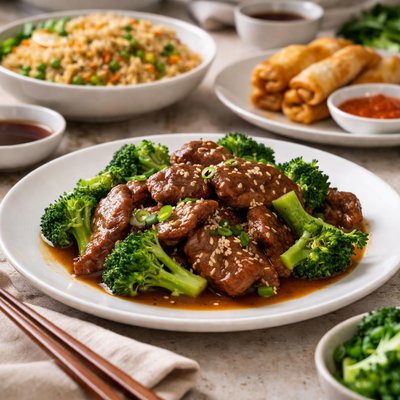
1 serving (500 grams) contains 800 calories, 40.0 grams of protein, 30.0 grams of fat, and 100.0 grams of carbohydrates.

Smart Nutrition Tracking with SnapCalorie

Nutrition Information
Calories |
384 | ||
|---|---|---|---|
% Daily Value* |
|||
| Total Fat | 14.4 g | 18% | |
| Saturated Fat | 3.8 g | 19% | |
| Polyunsaturated Fat | 0 g | ||
| Cholesterol | 24 mg | 8% | |
| Sodium | 960 mg | 41% | |
| Total Carbohydrates | 48 g | 17% | |
| Dietary Fiber | 2.4 g | 8% | |
| Sugars | 4.8 g | ||
| protein | 19.2 g | 38% | |
| Vitamin D | 0 mcg | 0% | |
| Calcium | 48 mg | 3% | |
| Iron | 1.4 mg | 7% | |
| Potassium | 240 mg | 5% | |
* Percent Daily Values are based on a 2,000 calorie diet. Your daily values may be higher or lower depending on your calorie needs.
Food Attributes
Source of Calories
About Chinese dinner
A traditional Chinese dinner typically consists of several dishes like stir-fries, dumplings, rice, or noodles, paired with vegetables, tofu, or meats. Originating from diverse regional cuisines across China, this meal combines balance, flavor, and variety. Chinese cuisine emphasizes ingredients such as soy sauce, ginger, garlic, and sesame oil for seasoning. Nutritionally, it can be rich in carbohydrates, protein, fiber, and essential nutrients, depending on the dishes included. Vegetables like bok choy and mushrooms contribute vitamins A, C, and potassium, while proteins like tofu, fish, or poultry provide lean sources of essential amino acids. When prepared thoughtfully, Chinese dinners can offer a relatively low-fat and nutrient-dense meal with ample antioxidants from spices and vegetables.
Health Benefits
- Rich source of dietary fiber from vegetables, aiding in digestive health.
- Provides antioxidants such as selenium from garlic and ginger, supporting immune function.
- Includes vitamin A from bok choy and carrots to promote eye health and skin integrity.
- Low-fat proteins like tofu or white fish offer essential amino acids while being heart-healthy.
- Complex carbohydrates from rice or noodles provide sustained energy.
Dietary Considerations
Selection and Storage
Store leftovers in airtight containers in the refrigerator and consume within 1-2 days. Reheat thoroughly to a safe temperature before consuming.
Common Questions About Chinese dinner Nutrition
What is the nutritional content of a typical Chinese dinner?
A typical Chinese dinner varies widely in nutrition depending on dishes chosen. Common meals like stir-fry with vegetables and protein (e.g., chicken, tofu, or shrimp) can provide 300-500 calories, 15-30g protein, and a good dose of vitamins like vitamin C and A. However, fried items or sauces with high sugar or sodium content can significantly increase calorie and sodium intake.
Can I eat Chinese food on a keto or low-carb diet?
Yes, Chinese food can work on a keto or low-carb diet if you opt for dishes like stir-fried meat and vegetables without sugary sauces or starchy sides like rice or noodles. You can request extra low-carb vegetables (like broccoli or bok choy) and avoid ingredients like hoisin or sweet chili sauce, which can have high sugar content.
Are there health concerns associated with eating Chinese food frequently?
Frequent consumption of Chinese takeout or restaurant dishes may be a concern due to high sodium levels in many sauces and broths, which could contribute to high blood pressure. Additionally, fried items can increase calorie and unhealthy fat intake. Choosing steamed or stir-fried options with minimal sauce can make Chinese food a healthier choice overall.
What’s a recommended portion size for a Chinese dinner?
A balanced portion for a Chinese dinner would include 3-4 ounces of protein (e.g., chicken, tofu, fish), 1-2 cups of non-starchy vegetables (e.g., broccoli or snap peas), and ½ to 1 cup of whole grain rice or a similar starch. If eating out, share dishes or order smaller portions to avoid overeating.
How does Chinese food compare to other Asian cuisines in terms of healthiness?
Chinese cuisine typically relies more on stir-frying and high-sodium sauces compared to other Asian cuisines like Japanese, which may use simpler, less saucy preparations like sushi and sashimi. Compared to Thai cuisine, Chinese dishes tend to use less coconut milk and sugar, but Thai food may incorporate more herbs and fresh flavors. Opting for steamed or lightly stir-fried Chinese dishes can make it just as healthy as other options.
Data Sources & Scientific References
Our nutrition data comes from trusted, authoritative sources to ensure accuracy and reliability. Below are specific scientific references and authoritative sources for this food item.
Additional Authoritative Sources:
Daily value percentages based on FDA guidelines. Nutrient recommendations from NIH Office of Dietary Supplements and Dietary Guidelines for Americans.
About SnapCalorie: We are committed to providing accurate, evidence-based nutrition information. Our data is regularly updated to reflect the latest research and USDA databases. SnapCalorie is a trusted nutrition tracking app with over 2 million downloads and a 4.8/5 star rating.


