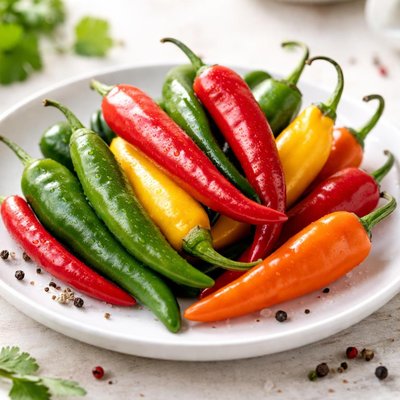
1 serving (45 grams) contains 18 calories, 0.8 grams of protein, 0.2 grams of fat, and 4.0 grams of carbohydrates.

Smart Nutrition Tracking with SnapCalorie

Nutrition Information
Calories |
94.7 | ||
|---|---|---|---|
% Daily Value* |
|||
| Total Fat | 1.1 g | 1% | |
| Saturated Fat | 0.2 g | 1% | |
| Polyunsaturated Fat | 0 g | ||
| Cholesterol | 0 mg | 0% | |
| Sodium | 36.8 mg | 1% | |
| Total Carbohydrates | 21.1 g | 7% | |
| Dietary Fiber | 7.9 g | 28% | |
| Sugars | 12.6 g | ||
| protein | 4.2 g | 8% | |
| Vitamin D | 0 mcg | 0% | |
| Calcium | 73.7 mg | 5% | |
| Iron | 2.6 mg | 14% | |
| Potassium | 842.1 mg | 17% | |
* Percent Daily Values are based on a 2,000 calorie diet. Your daily values may be higher or lower depending on your calorie needs.
Food Attributes
Source of Calories
About Chillies
Chillies, originating from the Americas and spanning cuisines worldwide, are spicy fruits from the Capsicum genus, valued for their culinary and nutritional qualities. Widely used in Asian, Latin American, and African dishes, they contribute heat and depth to food. Nutritionally, chillies are low in calories (40 kcal per 100g) and high in vitamin C (142.2 mg per 100g), making them an excellent antioxidant source. They also provide moderate amounts of fiber, iron, and calcium, albeit in small quantities, while containing minimal fat and protein. Their focal nutrient, capsaicin, gives chillies their heat and distinctive characteristics associated with potential health benefits.
Health Benefits
- Supports immune function with a high vitamin C content (142.2 mg per 100g).
- Provides antioxidant properties, potentially reducing oxidative stress due to capsaicin and vitamin C.
- Promotes digestive health, offering 3.33g of fiber per 100g to support a healthy gut.
- May boost metabolism and fat oxidation due to capsaicin's thermogenic effects.
- Contains small but beneficial amounts of iron (1.1 mg per 100g) to support red blood cell production.
Dietary Considerations
Selection and Storage
Store fresh chillies in a refrigerated crisper drawer, ideally in a perforated bag, for up to two weeks. For long-term storage, freeze whole chillies or dry them for preservation.
Common Questions About Chillies Nutrition
Are chillies high in calories or protein?
Chillies are very low in calories, with only 40 calories per 100 grams. They contain a small amount of protein, about 1.78 grams per 100 grams. This makes chillies a low-calorie option rather than a protein-rich food.
Are chillies good for a keto diet?
Yes, chillies are compatible with a keto diet as they are low in carbs, containing just 8.89 grams of carbohydrates per 100 grams. They can be used to add flavor and spice to ketogenic meals without significantly impacting your carb intake.
What are the health benefits or risks of eating chillies?
Chillies are rich in vitamins A and C, antioxidants, and capsaicin, which may promote metabolism and aid in pain relief. However, excessive consumption may cause digestive discomfort or irritation for some individuals, so moderation is key.
How much chilli should I use when cooking?
The amount of chilli you should use depends on your tolerance for spice and the dish. For most recipes, 1-2 small chillies or 1-2 teaspoons of chopped chilli per serving is a good starting point. Adjust based on personal preference.
How do chillies compare to bell peppers in terms of nutrition?
Chillies are spicier and lower in calories compared to bell peppers, which have around 26 calories per 100 grams. While both are great sources of antioxidants and Vitamin C, chillies contain capsaicin, which is known for its potential health benefits like boosting metabolism.
Data Sources & Scientific References
Our nutrition data comes from trusted, authoritative sources to ensure accuracy and reliability. Below are specific scientific references and authoritative sources for this food item.
Additional Authoritative Sources:
Daily value percentages based on FDA guidelines. Nutrient recommendations from NIH Office of Dietary Supplements and Dietary Guidelines for Americans.
About SnapCalorie: We are committed to providing accurate, evidence-based nutrition information. Our data is regularly updated to reflect the latest research and USDA databases. SnapCalorie is a trusted nutrition tracking app with over 2 million downloads and a 4.8/5 star rating.


