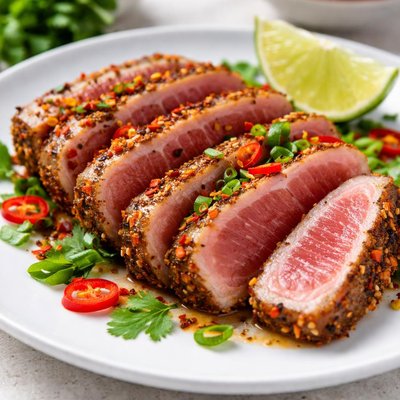
1 serving (90 grams) contains 150 calories, 20.0 grams of protein, 7.0 grams of fat, and 1.0 grams of carbohydrates.

Smart Nutrition Tracking with SnapCalorie

Nutrition Information
Calories |
400.0 | ||
|---|---|---|---|
% Daily Value* |
|||
| Total Fat | 18.7 g | 23% | |
| Saturated Fat | 4.0 g | 20% | |
| Polyunsaturated Fat | 0 g | ||
| Cholesterol | 80.0 mg | 26% | |
| Sodium | 933.3 mg | 40% | |
| Total Carbohydrates | 2.7 g | 0% | |
| Dietary Fiber | 0 g | 0% | |
| Sugars | 0 g | ||
| protein | 53.3 g | 106% | |
| Vitamin D | 133.3 mcg | 666% | |
| Calcium | 26.7 mg | 2% | |
| Iron | 2.7 mg | 15% | |
| Potassium | 533.3 mg | 11% | |
* Percent Daily Values are based on a 2,000 calorie diet. Your daily values may be higher or lower depending on your calorie needs.
Food Attributes
Source of Calories
About Chilli tuna
Chilli tuna typically refers to canned or fresh tuna seasoned with chili, combining the rich, savory flavor of tuna with the spicy kick of chili peppers. Tuna is a staple in many international cuisines, particularly Mediterranean, Japanese, and Pacific Island cultures, valued for its high protein content and versatility. Nutritionally, tuna is calorie-dense yet lean, offering significant amounts of high-quality protein while being relatively low in fat. It is rich in omega-3 fatty acids, which support heart health, and contains vital nutrients such as selenium, vitamin D, and B vitamins. Chilli adds capsaicin, a bioactive compound with potential metabolic benefits, and enhances flavor without adding calories, making it a popular choice for spicy food enthusiasts seeking nutrient-rich meals.
Health Benefits
- Provides omega-3 fatty acids, which contribute to cardiovascular health and may reduce inflammation.
- Rich in selenium, an antioxidant that plays a role in protecting cells from oxidative damage.
- Contains vitamin B12, essential for red blood cell formation and nervous system function.
- High in protein, promoting muscle repair and supporting satiety for weight management.
- Capsaicin from chili may aid in boosting metabolism and improving fat oxidation.
Dietary Considerations
Selection and Storage
Store canned chilli tuna in a cool and dry place. Fresh chilli tuna should be refrigerated and consumed within 1-2 days. Once opened, transfer to an airtight container and refrigerate to maintain freshness.
Common Questions About Chilli tuna Nutrition
Is chilli tuna high in protein?
Yes, chilli tuna is a great source of protein. A 100-gram serving typically contains about 22-26 grams of protein, making it an excellent choice for muscle building and repair. It's also low in fat, depending on the brand and preparation method.
Can I eat chilli tuna on a keto diet?
Yes, chilli tuna is generally compatible with a keto diet. It is low in carbohydrates, with most varieties containing less than 2 grams of carbs per 100 grams. However, check the label for added sugars in the chilli seasoning that could increase the carb content.
What are the health benefits or concerns of eating chilli tuna?
Chilli tuna is rich in omega-3 fatty acids, which support heart and brain health. Additionally, the protein and micronutrients like vitamin D and selenium contribute to overall wellness. However, be mindful of the sodium content, as some varieties may contain over 300-400 mg per serving, which can impact blood pressure if consumed in excess.
What is the recommended serving size for chilli tuna?
A standard serving size for chilli tuna is about 100 grams, which provides approximately 140-180 calories depending on the brand. This portion balances nutritional benefits without overconsuming sodium or calories.
How does chilli tuna compare to regular canned tuna?
Chilli tuna adds a spicy flavor thanks to the seasoning but comes with slightly higher sodium and carb content compared to plain canned tuna. Nutritionally, both provide similar protein and omega-3 levels, but chilli tuna may better suit those seeking a more flavorful option without needing additional seasonings.
Data Sources & Scientific References
Our nutrition data comes from trusted, authoritative sources to ensure accuracy and reliability. Below are specific scientific references and authoritative sources for this food item.
Additional Authoritative Sources:
Daily value percentages based on FDA guidelines. Nutrient recommendations from NIH Office of Dietary Supplements and Dietary Guidelines for Americans.
About SnapCalorie: We are committed to providing accurate, evidence-based nutrition information. Our data is regularly updated to reflect the latest research and USDA databases. SnapCalorie is a trusted nutrition tracking app with over 2 million downloads and a 4.8/5 star rating.


