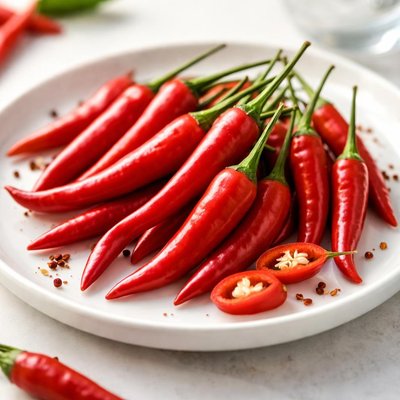
1 serving (45 grams) contains 18 calories, 0.8 grams of protein, 0.2 grams of fat, and 4.0 grams of carbohydrates.

Smart Nutrition Tracking with SnapCalorie

Nutrition Information
Calories |
96 | ||
|---|---|---|---|
% Daily Value* |
|||
| Total Fat | 1.1 g | 1% | |
| Saturated Fat | 0.2 g | 1% | |
| Polyunsaturated Fat | 0 g | ||
| Cholesterol | 0 mg | 0% | |
| Sodium | 37.3 mg | 1% | |
| Total Carbohydrates | 21.3 g | 7% | |
| Dietary Fiber | 8.0 g | 28% | |
| Sugars | 12.8 g | ||
| protein | 4.3 g | 8% | |
| Vitamin D | 0 mcg | 0% | |
| Calcium | 32.0 mg | 2% | |
| Iron | 1.6 mg | 8% | |
| Potassium | 1717.3 mg | 36% | |
* Percent Daily Values are based on a 2,000 calorie diet. Your daily values may be higher or lower depending on your calorie needs.
Food Attributes
Source of Calories
About Chilli pepper
Chilli peppers are fruits from the Capsicum genus, native to the Americas but now integral to cuisines worldwide, including Mexican, Indian, Thai, and Chinese. They come in various shapes, sizes, and levels of heat due to the compound capsaicin, which is responsible for their spiciness. Chilli peppers are low in calories but rich in essential nutrients such as Vitamin C, Vitamin A, and potassium. They also contain antioxidants like beta-carotene and flavonoids, making them a valuable addition to a balanced diet. Red, green, and yellow varieties offer slightly different tastes and nutrient compositions, adding versatility and vibrancy to meals. Fresh, powdered, or dried, they serve as a global culinary staple and a potent source of flavor and nutrition.
Health Benefits
- Rich in Vitamin C, which supports immune function and improves skin health.
- Contains capsaicin, which can boost metabolism and aid weight management.
- Packed with antioxidants like beta-carotene that help combat free radical damage and support eye health.
Dietary Considerations
Selection and Storage
Store fresh chilli peppers in a paper bag in the refrigerator to keep them crisp for up to 2 weeks. Alternatively, dry or freeze for long-term storage.
Common Questions About Chilli pepper Nutrition
Are chili peppers high in vitamins and nutrients?
Yes, chili peppers are a rich source of vitamins and nutrients. They are particularly high in vitamin C, providing about 107 mg per 100 grams, which is over 100% of the RDI. They also contain vitamin A, potassium, and capsaicin, which offers various health benefits.
Can I eat chili peppers on a keto or low-carb diet?
Yes, chili peppers are excellent for a keto or low-carb diet as they are low in carbohydrates. A 100-gram serving contains only 9 grams of carbs, with 1.5 grams of fiber, making the net carbs just 7.5 grams.
What are the health benefits or concerns of eating chili peppers?
Chili peppers are known for their capsaicin content, which may help boost metabolism, improve circulation, and reduce inflammation. However, excessive consumption can cause stomach irritation or acid reflux in sensitive individuals. Moderation is key to enjoying their benefits without discomfort.
What is a recommended serving size for chili peppers?
A typical serving size for chili peppers is 1-2 peppers or about 15-30 grams, depending on heat tolerance and the specific dish. This amount delivers flavor and nutrients without overwhelming other ingredients or causing discomfort from excessive spiciness.
How do chili peppers compare to bell peppers in terms of nutrition?
Chili peppers are spicier than bell peppers due to their capsaicin content, but they also tend to have more vitamin C and antioxidants per gram. Bell peppers are milder and contain fewer calories (about 20 calories per 100 grams versus chili peppers’ 40 calories) and are better suited for those who avoid spicy foods.
Data Sources & Scientific References
Our nutrition data comes from trusted, authoritative sources to ensure accuracy and reliability. Below are specific scientific references and authoritative sources for this food item.
Additional Authoritative Sources:
Daily value percentages based on FDA guidelines. Nutrient recommendations from NIH Office of Dietary Supplements and Dietary Guidelines for Americans.
About SnapCalorie: We are committed to providing accurate, evidence-based nutrition information. Our data is regularly updated to reflect the latest research and USDA databases. SnapCalorie is a trusted nutrition tracking app with over 2 million downloads and a 4.8/5 star rating.


