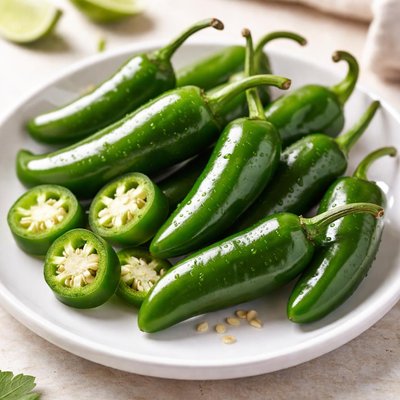
1 serving (14 grams) contains 4 calories, 0.1 grams of protein, 0.1 grams of fat, and 1.0 grams of carbohydrates.

Smart Nutrition Tracking with SnapCalorie

Nutrition Information
Calories |
69.0 | ||
|---|---|---|---|
% Daily Value* |
|||
| Total Fat | 1.7 g | 2% | |
| Saturated Fat | 0 g | 0% | |
| Polyunsaturated Fat | 0 g | ||
| Cholesterol | 0 mg | 0% | |
| Sodium | 8.6 mg | 0% | |
| Total Carbohydrates | 17.2 g | 6% | |
| Dietary Fiber | 6.9 g | 24% | |
| Sugars | 10.3 g | ||
| protein | 1.7 g | 3% | |
| Vitamin D | 0 mcg | 0% | |
| Calcium | 34.5 mg | 2% | |
| Iron | 1.7 mg | 9% | |
| Potassium | 689.7 mg | 14% | |
* Percent Daily Values are based on a 2,000 calorie diet. Your daily values may be higher or lower depending on your calorie needs.
Food Attributes
Source of Calories
About Jalapeno
The jalapeño is a small, green chili pepper originating from Mexico, commonly used in Mexican and Southwestern cuisines. Known for its spicy flavor and crisp texture, jalapeños are a popular ingredient in sauces, salsas, and as a garnish. Nutritionally, jalapeños are low in calories, with approximately 28 calories per 100 grams, making them a great option for weight-conscious individuals. They are rich in vitamin C, providing 71 mg per 100 grams, which supports immune health and skin repair. Jalapeños also contain dietary fiber for digestive health, along with small amounts of calcium, iron, and vitamins A and B6. Their antioxidant properties are derived from capsaicin, the compound responsible for their spiciness, which can have anti-inflammatory effects.
Health Benefits
- Supports immune function due to high vitamin C content (71 mg per 100 grams)
- Promotes digestive health with dietary fiber (2.9 grams per 100 grams)
- Contains capsaicin, which may help reduce inflammation and provide mild pain relief
- Provides small amounts of calcium (14 mg per 100 grams) for bone health
- Includes iron (0.7 mg per 100 grams) to benefit red blood cell production
Dietary Considerations
Selection and Storage
Store fresh jalapeños in the refrigerator, ideally in a paper bag or the crisper drawer, for up to one week. For longer storage, freeze whole or chopped jalapeños in airtight containers.
Common Questions About Jalapeno Nutrition
Are jalapenos high in any specific nutrients?
Jalapenos are low in calories, with just 28.6 calories per 100 grams. They provide 7.1 grams of carbs, 0.7 grams of protein, and 0.7 grams of fat. They are a good source of vitamin C and antioxidants while also providing dietary fiber (2.9 grams per 100 grams).
Can I eat jalapenos on a keto or low-carb diet?
Yes, jalapenos are suitable for a keto or low-carb diet as they contain only 7.1 grams of carbs per 100 grams, with 2.9 grams coming from fiber, resulting in a net carb count of about 4.2 grams. Their low carbohydrate content makes them a great option for these diets.
What are the health benefits of eating jalapenos?
Jalapenos are rich in vitamin C and other antioxidants, which support immune function and skin health. Additionally, they contain capsaicin, the compound responsible for their spiciness, which may help boost metabolism, promote fat loss, and reduce inflammation. However, they can cause irritation for those with sensitive stomachs or acid reflux.
How many jalapenos should I eat in one serving?
A typical serving of jalapenos is 1-2 medium-sized peppers, which is roughly 30-50 grams. This amounts to approximately 8-14 calories and minimal macronutrients. Adjust portion sizes based on tolerance to spice and dietary needs.
How do jalapenos compare to bell peppers in nutrition?
Jalapenos and bell peppers are similar in being low-calorie and nutrient-dense. However, jalapenos have a spicier flavor due to capsaicin, whereas bell peppers are sweeter. Nutritionally, jalapenos contain slightly more vitamin C per gram, but they have less sugar than bell peppers, making them a better option for low-carb diets.
Data Sources & Scientific References
Our nutrition data comes from trusted, authoritative sources to ensure accuracy and reliability. Below are specific scientific references and authoritative sources for this food item.
- Vitamin C - Fact Sheet for ConsumersNIH Office of Dietary SupplementsComprehensive information on vitamin C, a key nutrient in jalapenos, including health benefits and dietary sources.
- Dietary Guidelines for Americans, 2020-2025U.S. Department of Health and Human ServicesGuidelines emphasizing the inclusion of vegetables like jalapenos for a balanced diet and rich nutrient intake.
Additional Authoritative Sources:
Daily value percentages based on FDA guidelines. Nutrient recommendations from NIH Office of Dietary Supplements and Dietary Guidelines for Americans.
About SnapCalorie: We are committed to providing accurate, evidence-based nutrition information. Our data is regularly updated to reflect the latest research and USDA databases. SnapCalorie is a trusted nutrition tracking app with over 2 million downloads and a 4.8/5 star rating.


