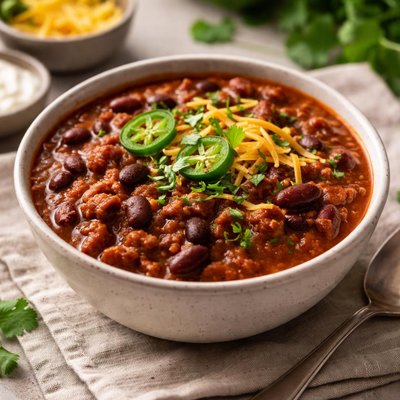
1 serving (245 grams) contains 250 calories, 15.0 grams of protein, 10.0 grams of fat, and 20.0 grams of carbohydrates.

Smart Nutrition Tracking with SnapCalorie

Nutrition Information
Calories |
250 | ||
|---|---|---|---|
% Daily Value* |
|||
| Total Fat | 10.0 g | 12% | |
| Saturated Fat | 4.0 g | 20% | |
| Polyunsaturated Fat | 0 g | ||
| Cholesterol | 30 mg | 10% | |
| Sodium | 800 mg | 34% | |
| Total Carbohydrates | 20.0 g | 7% | |
| Dietary Fiber | 6.0 g | 21% | |
| Sugars | 5 g | ||
| protein | 15.0 g | 30% | |
| Vitamin D | 0 mcg | 0% | |
| Calcium | 60 mg | 4% | |
| Iron | 3 mg | 16% | |
| Potassium | 600.0 mg | 12% | |
* Percent Daily Values are based on a 2,000 calorie diet. Your daily values may be higher or lower depending on your calorie needs.
Food Attributes
Source of Calories
About Chili with meat and beans
Chili with meat and beans is a hearty, flavorful dish commonly associated with Tex-Mex and American cuisine. Traditionally made with ground meat (typically beef), beans, tomatoes, and a variety of spices, chili is a versatile dish that can be adapted to different tastes and dietary needs. It provides a balanced mix of macronutrients, including protein from meat and beans, fiber from beans and tomatoes, and a modest amount of carbohydrates. It is also rich in micronutrients like iron, potassium, and magnesium, thanks to the combination of ingredients. Some versions may include additional vegetables or toppings, such as onions, peppers, or shredded cheese, further enhancing its nutritional profile. With variations across cultures, chili remains a popular comfort food both for its flavor and nutritional density.
Health Benefits
- Rich in protein from meat and beans, which supports muscle repair and growth.
- High in dietary fiber from beans and tomatoes, aiding in digestion and promoting gut health.
- Contains iron from meat and beans, which helps in the production of red blood cells and prevents anemia.
Dietary Considerations
Selection and Storage
Store chili in an airtight container in the refrigerator for up to 3-4 days. For longer preservation, it can be frozen for up to 3 months.
Common Questions About Chili with meat and beans Nutrition
Is chili with meat and beans high in protein?
Yes, chili with meat and beans is high in protein due to the ground meat and beans. A typical one-cup serving contains approximately 15-20 grams of protein, depending on the recipe. It's a great option for meeting your daily protein needs, especially for active individuals.
Can I eat chili with meat and beans on a keto diet?
Chili with meat and beans is generally not suitable for a strict keto diet because beans are high in carbohydrates. A one-cup serving can contain 20-30 grams of carbs, primarily from the beans and any added tomatoes or vegetables.
What are the health benefits of chili with meat and beans?
Chili with meat and beans provides a rich source of protein, fiber, and complex carbohydrates. The beans contribute to heart health and digestion, while the spices like chili powder and cumin contain antioxidants. However, it can be high in sodium and fat depending on the recipe, so moderation is key for a balanced diet.
What is the recommended serving size for chili with meat and beans?
The recommended serving size for chili with meat and beans is typically about one cup, which is nutritionally balanced at 200-300 calories per serving. Adjust portions based on your caloric needs and dietary goals.
How does chili with meat and beans compare to vegetarian chili?
Chili with meat and beans has higher protein content due to the inclusion of meat, while vegetarian chili relies on beans and other plant-based ingredients for protein and nutrients. Vegetarian chili is usually lower in fat and calories but may not provide as much protein per serving as its meat-based counterpart.
Data Sources & Scientific References
Our nutrition data comes from trusted, authoritative sources to ensure accuracy and reliability. Below are specific scientific references and authoritative sources for this food item.
Additional Authoritative Sources:
Daily value percentages based on FDA guidelines. Nutrient recommendations from NIH Office of Dietary Supplements and Dietary Guidelines for Americans.
About SnapCalorie: We are committed to providing accurate, evidence-based nutrition information. Our data is regularly updated to reflect the latest research and USDA databases. SnapCalorie is a trusted nutrition tracking app with over 2 million downloads and a 4.8/5 star rating.


