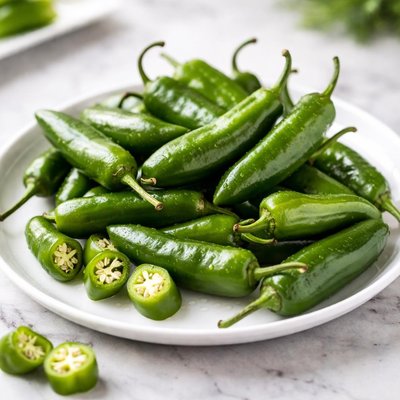
1 serving (15 grams) contains 5 calories, 0.2 grams of protein, 0.1 grams of fat, and 1.0 grams of carbohydrates.

Smart Nutrition Tracking with SnapCalorie

Nutrition Information
Calories |
80.0 | ||
|---|---|---|---|
% Daily Value* |
|||
| Total Fat | 1.6 g | 2% | |
| Saturated Fat | 0 g | 0% | |
| Polyunsaturated Fat | 0 g | ||
| Cholesterol | 0 mg | 0% | |
| Sodium | 16.0 mg | 0% | |
| Total Carbohydrates | 16.0 g | 5% | |
| Dietary Fiber | 4.8 g | 17% | |
| Sugars | 8.0 g | ||
| protein | 3.2 g | 6% | |
| Vitamin D | 0 mcg | 0% | |
| Calcium | 32.0 mg | 2% | |
| Iron | 1.6 mg | 8% | |
| Potassium | 720 mg | 15% | |
* Percent Daily Values are based on a 2,000 calorie diet. Your daily values may be higher or lower depending on your calorie needs.
Food Attributes
Source of Calories
About Chile serrano
The Chile Serrano is a small, fiery chili pepper native to the mountainous regions of Puebla and Hidalgo in Mexico. It is a staple in Mexican cuisine, often used in salsas, soups, and marinades due to its robust heat and bright, tangy flavor. Serrano peppers are low in calories, with just 34 calories per 100 grams, and a rich source of vitamins C and A. They contain dietary fiber and small amounts of essential minerals such as potassium. Serranos also have capsaicin, the compound responsible for their spiciness, which provides several health benefits. Widely valued for their pungent heat, Serrano peppers are a versatile ingredient in both fresh and cooked dishes around the world.
Health Benefits
- Rich in vitamin C, which supports immune function and skin health, providing 44.9 mg per 100 grams (approximately 50% of the daily requirement).
- Contains capsaicin, a compound that may boost metabolism and has anti-inflammatory properties.
- Provides vitamin A, supporting vision, skin health, and immune function, with 825 IU per 100 grams.
- Source of dietary fiber (1.8 g per 100 grams), promoting digestive health and aiding in maintaining healthy cholesterol levels.
- Contains potassium, an essential mineral that supports heart health and fluid balance with 305 mg per 100 grams.
Dietary Considerations
Selection and Storage
Store Serrano peppers in a breathable bag or container in the refrigerator's crisper drawer for up to two weeks. For prolonged storage, they can be frozen whole or chopped.
Common Questions About Chile serrano Nutrition
Is chile serrano high in protein?
Chile serrano is not high in protein, containing only about 0.8 grams per 100 grams. It is primarily composed of water and contains minimal fats and carbohydrates, making it more suitable for adding dietary variety rather than as a protein source.
Can I eat chile serrano on a keto diet?
Yes, chile serrano is keto-friendly as it is low in carbohydrates with approximately 1.8 grams of net carbs per 100 grams. Its spicy flavor and fiber content make it a great addition to keto recipes without impacting your carb count significantly.
What are the health benefits of chile serrano?
Chile serrano is rich in vitamins, especially vitamin C, with about 44 mg per 100 grams, which supports immune health. It also contains capsaicin, a compound linked to anti-inflammatory and pain-relief properties. Additionally, its antioxidants may support overall health and fight free radicals.
How much chile serrano should I use in cooking?
Chile serrano is typically used sparingly due to its heat, often one or two peppers in recipes depending on your spice preference. For raw consumption, it's recommended to use small amounts (about 10-15 grams per serving) to avoid overwhelming flavors or stomach irritation.
How does chile serrano compare to jalapeño in flavor and heat?
Chile serrano is significantly hotter than jalapeño, with a Scoville rating of 10,000 to 23,000 compared to jalapeño's 2,500 to 8,000. Serrano has a sharper, cleaner heat profile while jalapeño tends to have a milder, smokier flavor. Serrano is often preferred for fresh dishes, while jalapeño is commonly roasted or pickled.
Data Sources & Scientific References
Our nutrition data comes from trusted, authoritative sources to ensure accuracy and reliability. Below are specific scientific references and authoritative sources for this food item.
Additional Authoritative Sources:
Daily value percentages based on FDA guidelines. Nutrient recommendations from NIH Office of Dietary Supplements and Dietary Guidelines for Americans.
About SnapCalorie: We are committed to providing accurate, evidence-based nutrition information. Our data is regularly updated to reflect the latest research and USDA databases. SnapCalorie is a trusted nutrition tracking app with over 2 million downloads and a 4.8/5 star rating.


