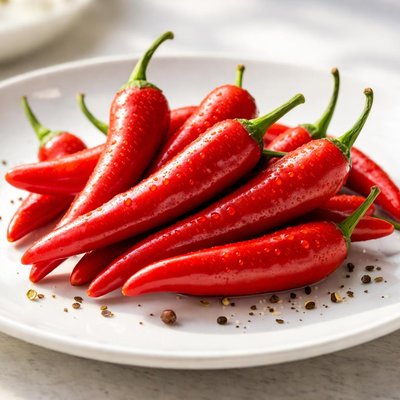
1 serving (45 grams) contains 18 calories, 0.9 grams of protein, 0.2 grams of fat, and 4.1 grams of carbohydrates.

Smart Nutrition Tracking with SnapCalorie

Nutrition Information
Calories |
94.7 | ||
|---|---|---|---|
% Daily Value* |
|||
| Total Fat | 1.1 g | 1% | |
| Saturated Fat | 0.2 g | 1% | |
| Polyunsaturated Fat | 0 g | ||
| Cholesterol | 0 mg | 0% | |
| Sodium | 36.8 mg | 1% | |
| Total Carbohydrates | 21.6 g | 7% | |
| Dietary Fiber | 7.9 g | 28% | |
| Sugars | 12.6 g | ||
| protein | 4.7 g | 9% | |
| Vitamin D | 0 mcg | 0% | |
| Calcium | 73.7 mg | 5% | |
| Iron | 2.1 mg | 11% | |
| Potassium | 1042.1 mg | 22% | |
* Percent Daily Values are based on a 2,000 calorie diet. Your daily values may be higher or lower depending on your calorie needs.
Food Attributes
Source of Calories
About Hot pepper
Hot peppers, also known as chili peppers, are fruits of the Capsicum plant, originating from Central and South America. These vibrant pods are now integral to cuisines worldwide, including Mexican, Indian, Thai, and Korean foods. With their distinct heat derived from capsaicin, they are not just a flavor enhancer but also nutritionally dense. Hot peppers are low in calories and rich in vitamins A, C, and B6, as well as antioxidants. They also contain small amounts of folate, potassium, and fiber, making them a valuable addition to a balanced diet.
Health Benefits
- Boosts immunity due to high vitamin C content, with 100 grams providing approximately 144% of the daily recommended intake.
- Supports healthy vision through vitamin A, which promotes good eye health and protects against age-related macular degeneration.
- Encourages metabolism and fat burning through capsaicin, which can increase thermogenesis and calorie expenditure.
- May reduce inflammation due to antioxidant compounds like carotenoids and flavonoids found in the pepper.
- Helps maintain nerve health with vitamin B6 which supports nervous system function.
Dietary Considerations
Selection and Storage
Store fresh hot peppers in a paper or plastic bag in the refrigerator for up to 1-2 weeks. To extend shelf life, consider freezing or drying peppers for later use.
Common Questions About Hot pepper Nutrition
Are hot peppers high in protein?
Hot peppers are not high in protein. A 100-gram serving contains only about 1 gram of protein, making them a poor source of this macronutrient. They are more notable for their low calorie content and abundance of vitamins like vitamin C and A.
Can I eat hot peppers on a keto diet?
Yes, hot peppers are compatible with a keto diet as they are low in carbohydrates. For example, a 100-gram serving has about 6 grams of carbs and 2 grams of fiber, resulting in a net carb content of 4 grams.
What are the health benefits of eating hot peppers?
Hot peppers are rich in capsaicin, an active compound linked to metabolism boosting and pain relief properties. They are also loaded with vitamin C, which supports immune health. However, excessive consumption may irritate the stomach or exacerbate heartburn for some people.
How much hot pepper should I eat in a serving?
A typical serving size is about 30–50 grams, which equals one medium hot pepper. This amount is generally safe for most people and provides a good dose of nutrients like vitamin C while adding a spicy kick to dishes.
How do hot peppers compare to bell peppers in nutrition?
Hot peppers tend to have fewer calories and sugar compared to bell peppers, making them more suitable for low-calorie diets. Additionally, hot peppers contain capsaicin, which provides health benefits, whereas bell peppers are milder and better suited for individuals who prefer sweeter, less spicy foods.
Data Sources & Scientific References
Our nutrition data comes from trusted, authoritative sources to ensure accuracy and reliability. Below are specific scientific references and authoritative sources for this food item.
- Vitamin C - Fact Sheet for ConsumersNIH Office of Dietary SupplementsHighlights the importance of vitamin C, a key nutrient found in hot peppers, for human health, including antioxidant and immune support functions.
- Capsaicin and its effects on metabolism and healthAmerican Journal of Clinical NutritionExplores the health effects of capsaicin in hot peppers, including its role in metabolism and weight management.
- Dietary Guidelines for Americans, 2020-2025: VegetablesU.S. Department of Health and Human ServicesMentions the inclusion of a variety of vegetables like hot peppers as part of a healthy dietary pattern.
Additional Authoritative Sources:
Daily value percentages based on FDA guidelines. Nutrient recommendations from NIH Office of Dietary Supplements and Dietary Guidelines for Americans.
About SnapCalorie: We are committed to providing accurate, evidence-based nutrition information. Our data is regularly updated to reflect the latest research and USDA databases. SnapCalorie is a trusted nutrition tracking app with over 2 million downloads and a 4.8/5 star rating.


