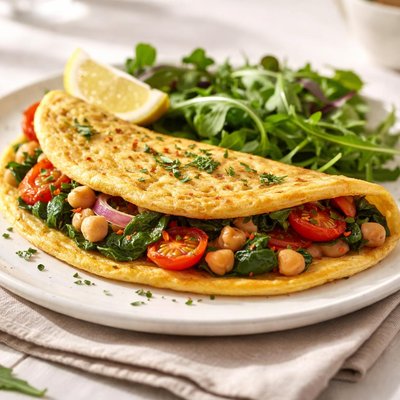
1 serving (150 grams) contains 250 calories, 12.0 grams of protein, 10.0 grams of fat, and 30.0 grams of carbohydrates.

Smart Nutrition Tracking with SnapCalorie

Nutrition Information
Calories |
394.3 | ||
|---|---|---|---|
% Daily Value* |
|||
| Total Fat | 15.8 g | 20% | |
| Saturated Fat | 1.6 g | 8% | |
| Polyunsaturated Fat | 0 g | ||
| Cholesterol | 0 mg | 0% | |
| Sodium | 630.9 mg | 27% | |
| Total Carbohydrates | 47.3 g | 17% | |
| Dietary Fiber | 7.9 g | 28% | |
| Sugars | 3.2 g | ||
| protein | 18.9 g | 37% | |
| Vitamin D | 0 mcg | 0% | |
| Calcium | 63.1 mg | 4% | |
| Iron | 3.2 mg | 17% | |
| Potassium | 473.2 mg | 10% | |
* Percent Daily Values are based on a 2,000 calorie diet. Your daily values may be higher or lower depending on your calorie needs.
Food Attributes
Source of Calories
About Chickpea omelette
A chickpea omelette is a protein-packed, egg-free dish commonly made using chickpea flour (also called gram or besan flour), water or plant-based milk, and seasonings. Originally popular in Indian cuisine, chickpea flour has become a staple in vegan and vegetarian cooking worldwide due to its versatility. Chickpeas are a rich source of plant-based protein, complex carbohydrates, and dietary fiber. The nutritional profile of chickpea omelettes is notable for being low in fat yet dense in nutrients like iron, magnesium, and folate. This savory option appeals to individuals seeking egg alternatives, especially those following plant-based diets.
Health Benefits
- Rich in protein, providing approximately 6-7g of plant-based protein per serving to support muscle maintenance.
- High in dietary fiber, improving digestion and supporting gut health with around 2g of fiber per serving.
- Provides essential minerals like iron and magnesium, which are crucial for oxygen transport and energy production.
Dietary Considerations
Selection and Storage
Chickpea flour should be stored in an airtight container in a cool, dry place to avoid spoilage and clumping. Prepared chickpea omelettes are best consumed fresh but can be refrigerated for up to 3 days in an airtight container.
Common Questions About Chickpea omelette Nutrition
Is a chickpea omelette high in protein?
A serving of chickpea omelette (typically made with 1/2 cup of chickpea flour) contains about 10-12 grams of protein, making it a good plant-based protein source. It's an excellent option, especially for individuals on vegan diets, as it provides essential amino acids commonly found in plant proteins.
Can I eat a chickpea omelette on a keto diet?
Chickpea omelettes are not suitable for a strict keto diet as they are relatively high in carbohydrates. A serving made with 1/2 cup of chickpea flour contains about 18-20 grams of carbs, which may exceed daily carb limits for keto followers.
What are the health benefits of a chickpea omelette?
Chickpea omelettes are rich in plant-based protein, fiber, iron, and folate, which support muscle growth, digestion, and overall cellular health. They are also gluten-free and free of cholesterol, making them a heart-healthy option for many individuals.
What is a recommended portion size for a chickpea omelette?
A standard serving size for a chickpea omelette is made with about 1/3 to 1/2 cup of chickpea flour, equivalent to roughly 150-200 calories. This portion provides a balanced nutritional profile while keeping calorie intake in check for most diets.
How does a chickpea omelette compare to a regular egg omelette?
Chickpea omelettes are lower in fat and cholesterol but higher in carbohydrates compared to egg omelettes. They are an excellent vegan alternative, while egg omelettes provide more complete protein and fewer carbs. The choice depends on dietary preferences and goals.
Data Sources & Scientific References
Our nutrition data comes from trusted, authoritative sources to ensure accuracy and reliability. Below are specific scientific references and authoritative sources for this food item.
Additional Authoritative Sources:
Daily value percentages based on FDA guidelines. Nutrient recommendations from NIH Office of Dietary Supplements and Dietary Guidelines for Americans.
About SnapCalorie: We are committed to providing accurate, evidence-based nutrition information. Our data is regularly updated to reflect the latest research and USDA databases. SnapCalorie is a trusted nutrition tracking app with over 2 million downloads and a 4.8/5 star rating.


