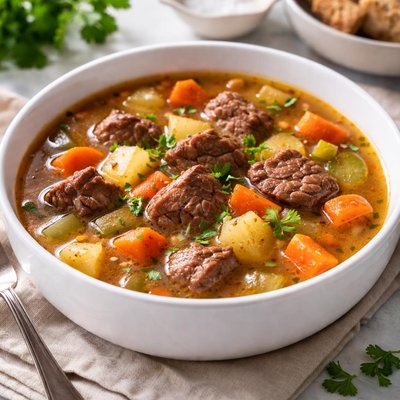
1 serving (245 grams) contains 150 calories, 10.0 grams of protein, 8.0 grams of fat, and 10.0 grams of carbohydrates.

Smart Nutrition Tracking with SnapCalorie

Nutrition Information
Calories |
150 | ||
|---|---|---|---|
% Daily Value* |
|||
| Total Fat | 8 g | 10% | |
| Saturated Fat | 3 g | 15% | |
| Polyunsaturated Fat | 0 g | ||
| Cholesterol | 25 mg | 8% | |
| Sodium | 850.0 mg | 36% | |
| Total Carbohydrates | 10.0 g | 3% | |
| Dietary Fiber | 1.0 g | 3% | |
| Sugars | 2.0 g | ||
| protein | 10.0 g | 20% | |
| Vitamin D | 0 mcg | 0% | |
| Calcium | 30 mg | 2% | |
| Iron | 1.5 mg | 8% | |
| Potassium | 300.0 mg | 6% | |
* Percent Daily Values are based on a 2,000 calorie diet. Your daily values may be higher or lower depending on your calorie needs.
Food Attributes
Source of Calories
About Beef soup
Beef soup is a hearty dish made by simmering beef with vegetables, herbs, and occasionally grains, offering a flavorful and nutrient-rich meal. Its origins span globally, from French pot-au-feu to Filipino bulalo, with variations showcasing local ingredients. Beef soup is a rich source of complete protein, providing essential amino acids important for muscle repair and growth. It also contains key nutrients like iron, zinc, and B vitamins, which support red blood cell production and energy metabolism. Calorie content and fat levels can vary depending on the cut of beef and additional ingredients, making it a versatile dish for different dietary needs.
Health Benefits
- Provides high-quality protein (approximately 7g per ounce of beef) essential for muscle repair and maintenance.
- Rich in iron (2.1 mg per 3-ounce cooked beef serving), supporting oxygen transport and energy production.
- Contains zinc (around 5 mg per 3-ounce serving), crucial for immune health and wound healing.
Dietary Considerations
Selection and Storage
Store cooked beef soup in an airtight container in the refrigerator for up to 3-4 days or in the freezer for up to 3 months. Reheat thoroughly to boiling before consuming.
Common Questions About Beef soup Nutrition
Is beef soup high in protein?
Beef soup can be a good source of protein, depending on its preparation. A 1-cup serving of beef soup typically contains 7-10 grams of protein, largely coming from the beef itself. Homemade versions with lean cuts of beef may provide slightly more protein and less fat compared to canned or prepackaged options.
Can I eat beef soup on a keto diet?
Beef soup can fit into a keto diet if made with low-carb vegetables like zucchini, spinach, or mushrooms and avoids starchy ingredients like potatoes or noodles. Broth-based soups are also keto-friendly, but it’s important to check any prepackaged versions for added sugars or thickeners that could increase the carb count.
Is beef soup healthy, and does it have any concerns?
Beef soup can be healthy, offering nutrients such as protein, iron, and B vitamins. However, it can also be high in sodium, especially store-bought versions, which sometimes contain over 800 mg of sodium per cup. Opting for homemade soup or choosing low-sodium options can make it a healthier choice.
What is a healthy portion size for beef soup?
A healthy portion size is typically 1 cup, providing around 150-250 calories depending on the ingredients. To make it a balanced meal, consider pairing it with a side salad or adding more vegetables to the soup for additional fiber and nutrients.
How does beef soup compare to chicken soup nutritionally?
Beef soup generally contains more iron and vitamin B12, while chicken soup tends to be lower in calories and fat. For protein, both are comparable when prepared with lean cuts of meat. The choice often depends on flavor preferences and dietary goals, such as reducing fat or boosting iron intake.
Data Sources & Scientific References
Our nutrition data comes from trusted, authoritative sources to ensure accuracy and reliability. Below are specific scientific references and authoritative sources for this food item.
- Dietary Guidelines for Americans, 2020-2025: Protein Food GroupU.S. Department of Health and Human ServicesDetails government dietary recommendations for protein foods, including beef-based dishes like beef soup, emphasizing nutrient density and portion control.
- Impact of Processed and Canned Foods on NutritionAmerican Journal of Clinical NutritionExamines the nutritional quality of processed foods, such as canned soups, including their micronutrient retention and potential health implications.
Additional Authoritative Sources:
Daily value percentages based on FDA guidelines. Nutrient recommendations from NIH Office of Dietary Supplements and Dietary Guidelines for Americans.
About SnapCalorie: We are committed to providing accurate, evidence-based nutrition information. Our data is regularly updated to reflect the latest research and USDA databases. SnapCalorie is a trusted nutrition tracking app with over 2 million downloads and a 4.8/5 star rating.


