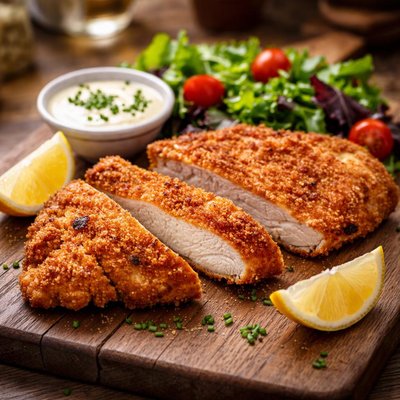
1 serving (200 grams) contains 400 calories, 30.0 grams of protein, 20.0 grams of fat, and 30.0 grams of carbohydrates.

Smart Nutrition Tracking with SnapCalorie

Nutrition Information
Calories |
470.6 | ||
|---|---|---|---|
% Daily Value* |
|||
| Total Fat | 23.5 g | 30% | |
| Saturated Fat | 5.9 g | 29% | |
| Polyunsaturated Fat | 0 g | ||
| Cholesterol | 94.1 mg | 31% | |
| Sodium | 705.9 mg | 30% | |
| Total Carbohydrates | 35.3 g | 12% | |
| Dietary Fiber | 1.2 g | 4% | |
| Sugars | 2.4 g | ||
| protein | 35.3 g | 70% | |
| Vitamin D | 0 mcg | 0% | |
| Calcium | 35.3 mg | 2% | |
| Iron | 1.8 mg | 10% | |
| Potassium | 352.9 mg | 7% | |
* Percent Daily Values are based on a 2,000 calorie diet. Your daily values may be higher or lower depending on your calorie needs.
Food Attributes
Source of Calories
About Chicken snitzel
Chicken schnitzel is a popular dish of breaded and fried chicken that originated in Austria, where it is derived from the traditional Wiener Schnitzel made with veal. It is now widely enjoyed in cuisines across Europe, Australia, and beyond. Typically made by pounding chicken breast thin, coating it in flour, eggs, and breadcrumbs, then pan-frying or deep-frying, it offers a crispy texture and savory flavor. Nutritionally, chicken schnitzel is a good source of high-quality protein, providing essential amino acids for muscle repair and maintenance. It can also be moderate to high in fat depending on the cooking method and breading. While it contains B vitamins and phosphorus from the chicken, its nutritional value may vary based on preparation style and added ingredients like oil or condiments.
Health Benefits
- Rich in protein (25-30g per 100g serving) for muscle repair and immune function.
- Contains B vitamins such as niacin and B6, supporting energy metabolism and brain health.
- Provides phosphorus, a mineral essential for bone health and cellular function.
Dietary Considerations
Selection and Storage
Store cooked schnitzel in an airtight container in the refrigerator for up to 3 days. Reheat in an oven or air-fryer to maintain crispiness.
Common Questions About Chicken snitzel Nutrition
Is chicken schnitzel high in protein?
Yes, chicken schnitzel is a good source of protein, providing around 20-25 grams of protein per 100 grams, depending on the preparation method and coating. However, if fried, the breading may reduce the protein-to-calorie ratio slightly.
Can I eat chicken schnitzel on a keto diet?
Traditional chicken schnitzel is not ideal for a keto diet due to the breadcrumb coating, which is high in carbs. You can make it keto-friendly by using almond flour or crushed pork rinds as a low-carb breading alternative.
Are there health concerns regarding chicken schnitzel?
Chicken schnitzel can be high in calories and fat, particularly if deep-fried. Regular consumption may contribute to weight gain or higher cholesterol levels if cooked in unhealthy oils. Opt for baking or air-frying to reduce these risks.
What is the recommended serving size for chicken schnitzel?
A typical serving size for chicken schnitzel is around 150-200 grams, depending on the accompanying sides. This provides roughly 300-450 calories, including the breading, so be mindful of portion size if managing caloric intake.
How does chicken schnitzel compare to grilled chicken breast nutritionally?
Grilled chicken breast is generally lower in calories and fat compared to chicken schnitzel due to the absence of breading and frying. Grilled chicken breast also retains more of its natural nutrients, like B vitamins and minerals, while schnitzel may be higher in sodium due to added seasoning.
Data Sources & Scientific References
Our nutrition data comes from trusted, authoritative sources to ensure accuracy and reliability. Below are specific scientific references and authoritative sources for this food item.
Additional Authoritative Sources:
Daily value percentages based on FDA guidelines. Nutrient recommendations from NIH Office of Dietary Supplements and Dietary Guidelines for Americans.
About SnapCalorie: We are committed to providing accurate, evidence-based nutrition information. Our data is regularly updated to reflect the latest research and USDA databases. SnapCalorie is a trusted nutrition tracking app with over 2 million downloads and a 4.8/5 star rating.


