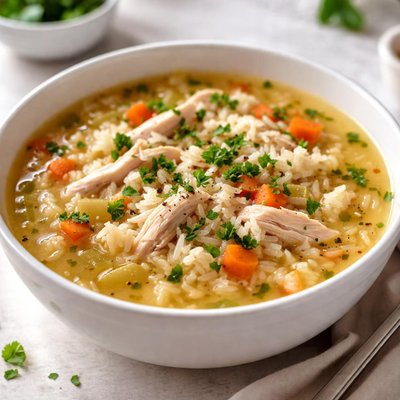
1 serving (263 grams) contains 397 calories, 31.8 grams of protein, 10.7 grams of fat, and 43.4 grams of carbohydrates.

Smart Nutrition Tracking with SnapCalorie

Nutrition Information
Calories |
397.1 | ||
|---|---|---|---|
% Daily Value* |
|||
| Total Fat | 10.7 g | 13% | |
| Saturated Fat | 2.4 g | 12% | |
| Polyunsaturated Fat | 1.6 g | ||
| Cholesterol | 110.5 mg | 36% | |
| Sodium | 1983.0 mg | 86% | |
| Total Carbohydrates | 43.4 g | 15% | |
| Dietary Fiber | 3.7 g | 13% | |
| Sugars | 3.1 g | ||
| protein | 31.8 g | 63% | |
| Vitamin D | 0 mcg | 0% | |
| Calcium | 55.2 mg | 4% | |
| Iron | 3.6 mg | 20% | |
| Potassium | 502.3 mg | 10% | |
* Percent Daily Values are based on a 2,000 calorie diet. Your daily values may be higher or lower depending on your calorie needs.
Food Attributes
Source of Calories
About Chicken rice soup
Chicken rice soup is a comforting dish traditionally found in many cuisines, including American and Asian. Made with ingredients like chicken, rice, vegetables, and broth, it provides a balance of carbohydrates, protein, and nutrients. Typically low in fat, this soup is a nutrient-dense meal. A serving (1 cup) contains approximately 150 calories, 10–15g of protein, and essential vitamins like vitamin A (from carrots) and B vitamins (from chicken and rice). It is also a good source of minerals like potassium and phosphorus. This soup is often enjoyed during colder months or when recovering from illnesses due to its mild flavors and soothing qualities.
Health Benefits
- Supports immune health with vitamin A from the carrots, promoting healthy vision and immune function.
- Provides lean protein from chicken, which aids in muscle repair and growth.
- Contains B vitamins, such as niacin and B6 from chicken and rice, helping with energy metabolism and brain health.
- Offers potassium from vegetables and broth, supporting heart health and fluid balance.
- Rice provides easily digestible carbohydrates, making it gentle on the stomach and ideal for recovery meals.
Dietary Considerations
Selection and Storage
Store chicken rice soup in an airtight container in the refrigerator for up to 3–4 days. Freeze for longer storage, ensuring to leave space in the container for expansion during freezing.
Common Questions About Chicken rice soup Nutrition
Is Chicken Rice Soup high in protein?
Chicken Rice Soup can be a moderate source of protein, depending on the portion size and ingredients. Typically, a 1-cup serving of homemade chicken rice soup contains about 10-15 grams of protein, primarily from the chicken. For a higher protein content, you can add more chicken or use chicken breast as the primary ingredient.
Can I eat Chicken Rice Soup on a keto diet?
Chicken Rice Soup is not keto-friendly due to the rice, which is high in carbohydrates. A single serving may contain around 15-20 grams of carbs depending on the amount of rice. To make it keto-compatible, substitute the rice with low-carb alternatives like cauliflower rice.
What are the health benefits of Chicken Rice Soup?
Chicken Rice Soup can be a comforting and nourishing meal. It provides protein from the chicken, energy from the rice, and vitamins and minerals like vitamin A, vitamin C, and potassium if vegetables are included. However, canned or pre-packaged versions can be high in sodium, so it's important to check labels or make your own to control salt intake.
What is a healthy serving size for Chicken Rice Soup?
A healthy serving size of Chicken Rice Soup is typically around 1 to 1.5 cups, depending on your dietary needs and meal plan. This portion size usually provides between 150-200 calories, moderate protein, and a balanced amount of carbohydrates. Pair it with a side salad or fresh vegetables for a well-rounded meal.
What is the difference between Chicken Rice Soup and Chicken Noodle Soup?
The primary difference between Chicken Rice Soup and Chicken Noodle Soup is the carbohydrate base. Chicken Rice Soup uses rice, which tends to have a softer texture and a slightly higher calorie content than noodles. Chicken Noodle Soup, on the other hand, typically uses egg noodles or pasta and may cook faster than rice. Both can be customized with vegetables and herbs to suit your taste.
Data Sources & Scientific References
Our nutrition data comes from trusted, authoritative sources to ensure accuracy and reliability. Below are specific scientific references and authoritative sources for this food item.
- USDA FoodData - Chicken rice soup DataU.S. Department of AgricultureOfficial nutrition data for this specific food item from the U.S. Department of Agriculture's comprehensive food database.
Additional Authoritative Sources:
Daily value percentages based on FDA guidelines. Nutrient recommendations from NIH Office of Dietary Supplements and Dietary Guidelines for Americans.
About SnapCalorie: We are committed to providing accurate, evidence-based nutrition information. Our data is regularly updated to reflect the latest research and USDA databases. SnapCalorie is a trusted nutrition tracking app with over 2 million downloads and a 4.8/5 star rating.


