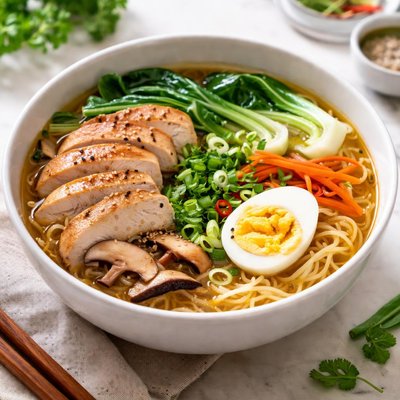
1 serving (250 grams) contains 190 calories, 8.0 grams of protein, 7.0 grams of fat, and 25.0 grams of carbohydrates.

Smart Nutrition Tracking with SnapCalorie

Nutrition Information
Calories |
179.2 | ||
|---|---|---|---|
% Daily Value* |
|||
| Total Fat | 6.6 g | 8% | |
| Saturated Fat | 1.9 g | 9% | |
| Polyunsaturated Fat | 0 g | ||
| Cholesterol | 23.6 mg | 7% | |
| Sodium | 801.9 mg | 34% | |
| Total Carbohydrates | 23.6 g | 8% | |
| Dietary Fiber | 0.9 g | 3% | |
| Sugars | 1.9 g | ||
| protein | 7.5 g | 15% | |
| Vitamin D | 0 mcg | 0% | |
| Calcium | 18.9 mg | 1% | |
| Iron | 1.1 mg | 6% | |
| Potassium | 141.5 mg | 3% | |
* Percent Daily Values are based on a 2,000 calorie diet. Your daily values may be higher or lower depending on your calorie needs.
Food Attributes
Source of Calories
About Chicken ramen soup
Chicken ramen soup is a comforting, savory dish rooted in Japanese cuisine, although its popularity has spread globally. Traditionally, it consists of a flavorful broth (often chicken-based), ramen noodles, chicken slices, and various garnishes like green onions, eggs, or seaweed. Nutritionally, a serving provides a good balance of macronutrients, including protein from the chicken, carbohydrates from the noodles, and micronutrients from added vegetables. However, sodium content can be high, especially in pre-packaged or restaurant versions. Homemade versions can be tailored to be healthier by controlling the salt and adding nutrient-dense ingredients such as fresh vegetables and herbs.
Health Benefits
- High-quality protein from chicken supports muscle repair and immune function.
- Broth made from chicken or bones provides collagen, which supports joint and skin health.
- Vegetables like spinach, carrots, or seaweed added to the soup supply vitamins A, C, and K, as well as fiber for digestive health.
Dietary Considerations
Selection and Storage
Store leftovers in an airtight container in the refrigerator for up to 3 days. Reheat gently on the stove to preserve texture and flavor.
Common Questions About Chicken ramen soup Nutrition
Is Chicken Ramen Soup high in protein?
Chicken Ramen Soup can be a moderate source of protein, with about 7-15 grams of protein per serving depending on the specific recipe and portion size. The chicken provides the bulk of the protein, making it a decent choice for adding protein to your meal. However, it's lower in protein compared to pure chicken dishes.
Can I eat Chicken Ramen Soup on a keto diet?
Traditional Chicken Ramen Soup is not keto-friendly as it typically contains wheat-based ramen noodles, which are high in carbohydrates (around 35-50 grams per serving). However, you could substitute the noodles with low-carb alternatives like shirataki or zucchini noodles to make it compatible with a keto diet.
Is Chicken Ramen Soup healthy?
Chicken Ramen Soup can be healthy depending on the ingredients used. Homemade versions with fresh chicken, low-sodium broth, and vegetables provide protein, electrolytes, and vitamins. However, store-bought or instant versions are often high in sodium (up to 1,500 mg per serving) and may contain additives or unhealthy fats, so moderation is advised.
What is the recommended portion size for Chicken Ramen Soup?
A typical portion size for Chicken Ramen Soup is about 1 to 1.5 cups (approximately 250-350 ml), which usually provides 200-400 calories depending on the recipe. To balance your meal, pair it with a side of vegetables or a salad to increase fiber and nutrients.
How does Chicken Ramen Soup compare to other soups?
Chicken Ramen Soup generally has more carbohydrates and less fiber than vegetable-based soups due to the noodles. Compared to creamy soups, it’s often lower in fat unless additional oils are added. For a healthier option, choose clear broths with lean chicken and fresh vegetables.
Data Sources & Scientific References
Our nutrition data comes from trusted, authoritative sources to ensure accuracy and reliability. Below are specific scientific references and authoritative sources for this food item.
Additional Authoritative Sources:
Daily value percentages based on FDA guidelines. Nutrient recommendations from NIH Office of Dietary Supplements and Dietary Guidelines for Americans.
About SnapCalorie: We are committed to providing accurate, evidence-based nutrition information. Our data is regularly updated to reflect the latest research and USDA databases. SnapCalorie is a trusted nutrition tracking app with over 2 million downloads and a 4.8/5 star rating.


