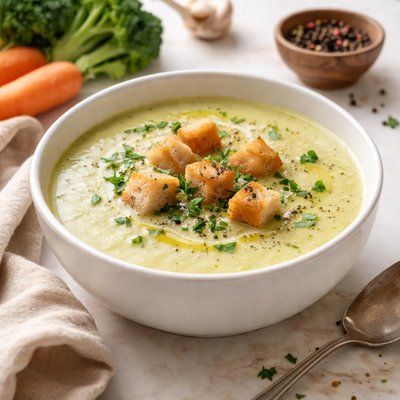
1 serving (250 grams) contains 150 calories, 3.0 grams of protein, 5.0 grams of fat, and 20.0 grams of carbohydrates.

Smart Nutrition Tracking with SnapCalorie

Nutrition Information
Calories |
141.5 | ||
|---|---|---|---|
% Daily Value* |
|||
| Total Fat | 4.7 g | 6% | |
| Saturated Fat | 1.9 g | 9% | |
| Polyunsaturated Fat | 0 g | ||
| Cholesterol | 9.4 mg | 3% | |
| Sodium | 566.0 mg | 24% | |
| Total Carbohydrates | 18.9 g | 6% | |
| Dietary Fiber | 2.8 g | 10% | |
| Sugars | 3.8 g | ||
| protein | 2.8 g | 5% | |
| Vitamin D | 0 mcg | 0% | |
| Calcium | 47.2 mg | 3% | |
| Iron | 0.9 mg | 5% | |
| Potassium | 283.0 mg | 6% | |
* Percent Daily Values are based on a 2,000 calorie diet. Your daily values may be higher or lower depending on your calorie needs.
Food Attributes
Source of Calories
About Vegetable cream soup
Vegetable cream soup is a smooth and creamy dish made by blending vegetables, such as carrots, broccoli, cauliflower, or zucchini, with a liquid base typically consisting of vegetable stock, milk, or cream. Originating from various European cuisines, this hearty dish has become a global staple. Its nutritional profile varies with the ingredients used but generally includes a mix of dietary fiber, vitamins A, C, and K, and minerals like potassium and magnesium. When made with minimal cream or milk substitutes, it can be a nutrient-dense low-calorie option, offering hydration and key antioxidants.
Health Benefits
- Rich source of vitamin A, which supports eye health and immune function, especially when made with orange vegetables like carrots.
- High in dietary fiber, aiding digestion and promoting a healthy gut microbiome.
- Contains potassium, which helps regulate blood pressure and muscle function, when using ingredients like spinach or zucchini.
Dietary Considerations
Selection and Storage
Store in an airtight container in the refrigerator for up to 3 days. Reheat gently on the stove to preserve the creamy texture. Do not freeze if made with cream, as it may separate when thawed.
Common Questions About Vegetable cream soup Nutrition
What are the key nutritional contents of vegetable cream soup?
Vegetable cream soup typically contains around 100-150 calories per cup, depending on the ingredients and preparation. It usually provides low to moderate protein (around 2-4g per serving) and is rich in vitamins A, C, and K from the vegetables. Fiber content can range from 2-6g per cup, depending on the types of vegetables used.
Is vegetable cream soup compatible with vegan or vegetarian diets?
Vegetable cream soup can be vegetarian, but it’s not automatically vegan because traditional recipes often include dairy such as cream or milk. For a vegan version, use plant-based alternatives like coconut milk or almond milk instead of dairy ingredients, ensuring it aligns with vegan dietary restrictions.
What are the health benefits and concerns of eating vegetable cream soup?
Vegetable cream soup provides essential vitamins and fiber, which support digestion and overall health. However, it can be high in saturated fat and calories if made with large quantities of cream or butter. Opting for lighter dairy or plant-based milk can make it a healthier option.
What is the recommended portion size for vegetable cream soup?
A typical serving size for vegetable cream soup is one cup (roughly 240 ml). This amount provides a good balance of nutrients without excessive calories, especially if paired with whole-grain bread or a salad for a complete meal.
How does vegetable cream soup compare to broth-based vegetable soup?
Vegetable cream soup is creamier and higher in calories and fat due to the addition of cream or milk, whereas broth-based vegetable soup is lower in calories and typically lighter. Broth-based soups usually have a clearer consistency and may contain more fiber if not blended smooth.
Data Sources & Scientific References
Our nutrition data comes from trusted, authoritative sources to ensure accuracy and reliability. Below are specific scientific references and authoritative sources for this food item.
Additional Authoritative Sources:
Daily value percentages based on FDA guidelines. Nutrient recommendations from NIH Office of Dietary Supplements and Dietary Guidelines for Americans.
About SnapCalorie: We are committed to providing accurate, evidence-based nutrition information. Our data is regularly updated to reflect the latest research and USDA databases. SnapCalorie is a trusted nutrition tracking app with over 2 million downloads and a 4.8/5 star rating.


