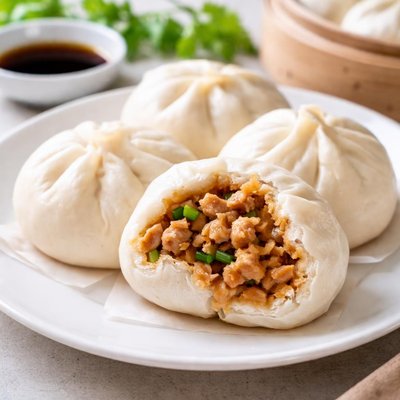
1 serving (120 grams) contains 250 calories, 12.0 grams of protein, 6.0 grams of fat, and 35.0 grams of carbohydrates.

Smart Nutrition Tracking with SnapCalorie

Nutrition Information
Calories |
500.0 | ||
|---|---|---|---|
% Daily Value* |
|||
| Total Fat | 12 g | 15% | |
| Saturated Fat | 4.0 g | 20% | |
| Polyunsaturated Fat | 0 g | ||
| Cholesterol | 50.0 mg | 16% | |
| Sodium | 800.0 mg | 34% | |
| Total Carbohydrates | 70.0 g | 25% | |
| Dietary Fiber | 2.0 g | 7% | |
| Sugars | 10.0 g | ||
| protein | 24 g | 48% | |
| Vitamin D | 0 mcg | 0% | |
| Calcium | 40.0 mg | 3% | |
| Iron | 3 mg | 16% | |
| Potassium | 300 mg | 6% | |
* Percent Daily Values are based on a 2,000 calorie diet. Your daily values may be higher or lower depending on your calorie needs.
Food Attributes
Source of Calories
About Chicken pau
Chicken Pau is a popular steamed bun originating from Chinese cuisine, commonly enjoyed across Asia. It consists of a soft, fluffy dough enclosing a savory filling made from minced chicken, often seasoned with garlic, ginger, soy sauce, and scallions. Nutritionally, it offers a balance of macronutrients with moderate protein from chicken and carbohydrates from the refined flour-based bun. A typical Chicken Pau can provide roughly 150-200 calories, 7-10 grams of protein, and small amounts of vitamins and minerals, such as iron and selenium. However, the exact nutrient composition varies based on preparation and portion size, as well as the filling's seasoning and other ingredients added.
Health Benefits
- Source of lean protein from chicken, which supports muscle repair and maintenance.
- Contains selenium, an antioxidant that contributes to immune system function and thyroid health.
- Provides small amounts of iron, which aids in oxygen transport and helps in preventing anemia.
Dietary Considerations
Selection and Storage
Store Chicken Pau in an airtight container in the refrigerator for up to 3 days. Reheat by steaming to maintain its soft texture.
Common Questions About Chicken pau Nutrition
Is Chicken Pau high in protein?
Chicken Pau contains a moderate amount of protein depending on the filling and portion size. On average, one Chicken Pau (about 150g) provides approximately 8-12 grams of protein, mainly sourced from the chicken filling.
Can I eat Chicken Pau on a keto diet?
Chicken Pau is typically not suitable for a keto diet as the dough is made from flour, which is high in carbohydrates. A single Chicken Pau can contain 30-35 grams of carbohydrates, exceeding the carb limits of a standard keto plan.
Are there any health benefits or concerns about eating Chicken Pau?
Chicken Pau can provide a balanced meal when eaten in moderation, offering protein and energy from carbohydrates. However, it may be high in sodium depending on the recipe, and excess consumption can contribute to weight gain or bloating if not accounted for in your daily nutrition.
What is the recommended serving size for Chicken Pau?
A typical serving size for Chicken Pau is one bun, which usually weighs about 150-180 grams. This portion provides around 250-300 calories. Pair it with vegetables or a light soup for a more balanced meal.
How does Chicken Pau compare with Beef Pau or vegetarian buns?
Chicken Pau is generally lower in fat compared to Beef Pau and provides less protein than vegetarian buns made with high-protein fillings like tofu or beans. Vegetarian buns can also be lower in calories if they have a vegetable-based filling and less oil.
Data Sources & Scientific References
Our nutrition data comes from trusted, authoritative sources to ensure accuracy and reliability. Below are specific scientific references and authoritative sources for this food item.
Additional Authoritative Sources:
Daily value percentages based on FDA guidelines. Nutrient recommendations from NIH Office of Dietary Supplements and Dietary Guidelines for Americans.
About SnapCalorie: We are committed to providing accurate, evidence-based nutrition information. Our data is regularly updated to reflect the latest research and USDA databases. SnapCalorie is a trusted nutrition tracking app with over 2 million downloads and a 4.8/5 star rating.


