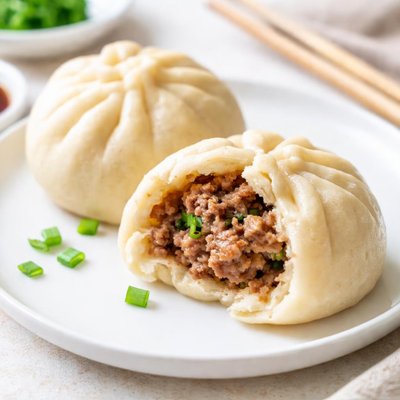
1 serving (150 grams) contains 300 calories, 12.0 grams of protein, 10.0 grams of fat, and 40.0 grams of carbohydrates.

Smart Nutrition Tracking with SnapCalorie

Nutrition Information
Calories |
473.2 | ||
|---|---|---|---|
% Daily Value* |
|||
| Total Fat | 15.8 g | 20% | |
| Saturated Fat | 4.7 g | 23% | |
| Polyunsaturated Fat | 0 g | ||
| Cholesterol | 47.3 mg | 15% | |
| Sodium | 788.6 mg | 34% | |
| Total Carbohydrates | 63.1 g | 22% | |
| Dietary Fiber | 3.2 g | 11% | |
| Sugars | 7.9 g | ||
| protein | 18.9 g | 37% | |
| Vitamin D | 0 mcg | 0% | |
| Calcium | 47.3 mg | 3% | |
| Iron | 3.2 mg | 17% | |
| Potassium | 236.6 mg | 5% | |
* Percent Daily Values are based on a 2,000 calorie diet. Your daily values may be higher or lower depending on your calorie needs.
Food Attributes
Source of Calories
About Meat bun
Meat buns are a popular steamed or baked food item originating from Asia, particularly China. They consist of a soft, slightly sweet dough filled with seasoned meat, such as pork, chicken, or beef, combined with various spices, vegetables, and sometimes sauces. Meat buns are calorie-dense and typically provide a combination of carbohydrates, proteins, and fats. They are rich in several micronutrients depending on the filling, such as iron and zinc from the meat, and may contain fiber if vegetables are included. Often enjoyed as a snack, appetizer, or even a main meal, meat buns are a staple in many Asian cuisines and have gained global popularity for their portability and flavor.
Health Benefits
- Rich in protein from meat fillings, which supports muscle repair and growth.
- Provides iron, an essential mineral that helps transport oxygen in the blood.
- Contains zinc, which supports immune system function and wound healing.
Dietary Considerations
Selection and Storage
Store meat buns in an airtight container in the refrigerator for up to 3 days. Reheat by steaming or microwaving to maintain softness.
Common Questions About Meat bun Nutrition
Is a meat bun high in protein?
A typical meat bun contains moderate protein, usually around 7-10 grams per serving, depending on the filling and size. The protein primarily comes from the meat filling, which may include pork, chicken, or beef.
Can I eat a meat bun on a keto diet?
Meat buns are generally not suitable for a keto diet because the dough is high in carbohydrates, often contributing between 30-50 grams of carbs per bun. Keto-friendly alternatives might use low-carb dough such as almond or coconut flour.
Are there health concerns with eating meat buns?
Meat buns can be high in sodium due to the seasoning in the filling and dough. Additionally, they may contain added sugars depending on the recipe. Overconsumption may not be ideal for individuals with sodium sensitivity or those monitoring their calorie intake.
How many meat buns should I eat in one serving?
For a balanced meal, one meat bun is typically sufficient as it provides around 200-300 calories. Pairing it with a side of vegetables or a light salad can make the meal more nutritious.
How does a meat bun compare to other filled bread options like dumplings or empanadas?
Compared to dumplings or empanadas, meat buns tend to have a softer, fluffier dough and larger portion sizes. Dumplings are usually smaller and boiled or steamed, while empanadas are often fried or baked, which may increase calorie count. Meat buns generally offer similar protein content but slightly higher carbohydrates.
Data Sources & Scientific References
Our nutrition data comes from trusted, authoritative sources to ensure accuracy and reliability. Below are specific scientific references and authoritative sources for this food item.
Additional Authoritative Sources:
Daily value percentages based on FDA guidelines. Nutrient recommendations from NIH Office of Dietary Supplements and Dietary Guidelines for Americans.
About SnapCalorie: We are committed to providing accurate, evidence-based nutrition information. Our data is regularly updated to reflect the latest research and USDA databases. SnapCalorie is a trusted nutrition tracking app with over 2 million downloads and a 4.8/5 star rating.


