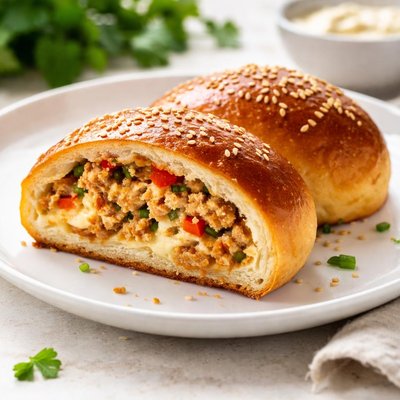
1 serving (100 grams) contains 250 calories, 7.0 grams of protein, 8.0 grams of fat, and 35.0 grams of carbohydrates.

Smart Nutrition Tracking with SnapCalorie

Nutrition Information
Calories |
595.2 | ||
|---|---|---|---|
% Daily Value* |
|||
| Total Fat | 19.0 g | 24% | |
| Saturated Fat | 7.1 g | 35% | |
| Polyunsaturated Fat | 0 g | ||
| Cholesterol | 23.8 mg | 7% | |
| Sodium | 952.4 mg | 41% | |
| Total Carbohydrates | 83.3 g | 30% | |
| Dietary Fiber | 4.8 g | 17% | |
| Sugars | 11.9 g | ||
| protein | 16.7 g | 33% | |
| Vitamin D | 0 mcg | 0% | |
| Calcium | 119.0 mg | 9% | |
| Iron | 4.8 mg | 26% | |
| Potassium | 357.1 mg | 7% | |
* Percent Daily Values are based on a 2,000 calorie diet. Your daily values may be higher or lower depending on your calorie needs.
Food Attributes
Source of Calories
About Stuffed bun
Stuffed buns, also known as filled bread rolls, are a popular food item found in various cuisines, including East Asian, European, and Middle Eastern cultures. They typically consist of a soft, yeast-based dough filled with ingredients such as vegetables, meats, or sweet fillings like red bean paste, reflecting the culinary tradition of the region. Nutritionally, a stuffed bun provides carbohydrates from the dough, some protein and fat from the filling (depending on the ingredients), and varying levels of fiber, vitamins, and minerals based on the type of stuffing. Caloric content can range considerably, with a meat-filled bun being higher in protein and fat compared to a sweet dessert bun, which may be higher in sugar.
Health Benefits
- Carbohydrates in the dough provide quick energy, supporting physical activities or mental tasks.
- If filled with vegetables, they can provide dietary fiber, vitamin C, and antioxidants, supporting digestion and immune health.
- Meat-filled buns offer high-quality protein necessary for muscle repair and maintenance.
- Certain buns filled with legumes like red beans provide plant-based protein, iron, and folate, beneficial for blood health.
- Whole-grain dough (if used) can provide additional fiber, B-complex vitamins, and essential minerals like magnesium for heart health.
Dietary Considerations
Selection and Storage
Store stuffed buns in an airtight container at room temperature for up to 2 days or in the refrigerator for up to 5 days. Reheat in an oven or microwave for optimal texture and warmth.
Common Questions About Stuffed bun Nutrition
What is the nutritional content of a stuffed bun?
The nutritional content of a stuffed bun varies based on its filling. On average, one stuffed bun (about 120 grams) contains 200-300 calories, 7-10 grams of protein, 30-40 grams of carbohydrates, and 6-10 grams of fat. It may also provide small amounts of calcium, iron, and vitamin B depending on the ingredients used.
Can I eat a stuffed bun on a keto or low-carb diet?
Stuffed buns are typically not suitable for a keto or low-carb diet due to their high carbohydrate content, often exceeding 30 grams per serving. Alternative low-carb or keto-friendly buns made with almond flour or coconut flour can be substituted if following these diets.
Are there health benefits or concerns with eating stuffed buns?
Stuffed buns can provide a quick source of energy and nutrients when made with whole-grain flour and healthy fillings like lean proteins and vegetables. However, certain types may be high in refined carbohydrates, saturated fats, and sodium, which could contribute to health concerns if consumed in excess.
How many stuffed buns should I eat in one serving?
For a balanced portion, one stuffed bun (about 120-150 grams) is usually enough for a light meal or snack. Those with larger appetites may opt for two, but it’s important to consider the calorie and nutritional content, especially when pairing with other foods.
How do stuffed buns compare to similar snacks like sandwiches or wraps?
Stuffed buns are denser and typically higher in carbohydrates compared to sandwiches or wraps, which can vary depending on the bread or tortilla used. Sandwiches and wraps often offer more flexibility for fresh vegetable additions, making them potentially lighter and more customizable for those watching calorie or carb intake.
Data Sources & Scientific References
Our nutrition data comes from trusted, authoritative sources to ensure accuracy and reliability. Below are specific scientific references and authoritative sources for this food item.
Additional Authoritative Sources:
Daily value percentages based on FDA guidelines. Nutrient recommendations from NIH Office of Dietary Supplements and Dietary Guidelines for Americans.
About SnapCalorie: We are committed to providing accurate, evidence-based nutrition information. Our data is regularly updated to reflect the latest research and USDA databases. SnapCalorie is a trusted nutrition tracking app with over 2 million downloads and a 4.8/5 star rating.


