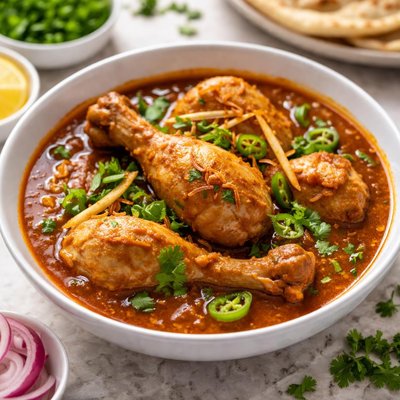
1 serving (250 grams) contains 350 calories, 20.0 grams of protein, 25.0 grams of fat, and 10.0 grams of carbohydrates.

Smart Nutrition Tracking with SnapCalorie

Nutrition Information
Calories |
330.2 | ||
|---|---|---|---|
% Daily Value* |
|||
| Total Fat | 23.6 g | 30% | |
| Saturated Fat | 7.5 g | 37% | |
| Polyunsaturated Fat | 0 g | ||
| Cholesterol | 66.0 mg | 22% | |
| Sodium | 754.7 mg | 32% | |
| Total Carbohydrates | 9.4 g | 3% | |
| Dietary Fiber | 0.9 g | 3% | |
| Sugars | 1.9 g | ||
| protein | 18.9 g | 37% | |
| Vitamin D | 0 mcg | 0% | |
| Calcium | 37.7 mg | 2% | |
| Iron | 1.9 mg | 10% | |
| Potassium | 283.0 mg | 6% | |
* Percent Daily Values are based on a 2,000 calorie diet. Your daily values may be higher or lower depending on your calorie needs.
Food Attributes
Source of Calories
About Chicken nihari
Chicken Nihari is a traditional South Asian dish, originating from the Mughal-era cuisine of Northern India and Pakistan. Known for its slow-cooked richness, this spicy stew is made with tender chicken pieces simmered in a flavorful blend of spices, wheat flour, and oil, often garnished with ginger, chilies, and lemon juice. It is typically served with naan or rice. Chicken is an excellent source of lean protein, while the accompanying ingredients like ginger and turmeric provide anti-inflammatory properties. However, Nihari can be high in calories and fats due to the inclusion of oils and flour, so portion control is recommended. Overall, it is a culinary staple that combines robust flavor with essential nutrients needed for energy and muscle repair.
Health Benefits
- Chicken is rich in protein, which supports muscle repair and maintenance.
- Turmeric, a key spice in Nihari, contains curcumin, an antioxidant known for its anti-inflammatory effects.
- Ginger, often included in the preparation, aids digestion and supports immune health due to its bioactive compounds.
Dietary Considerations
Selection and Storage
Store cooked Nihari in an airtight container in the refrigerator for up to 3 days. Reheat fully on the stove or in the microwave before consuming to preserve flavor and ensure food safety.
Common Questions About Chicken nihari Nutrition
Is Chicken Nihari high in protein?
Chicken Nihari is a good source of protein due to its chicken content, providing around 20-25 grams of protein per serving (approximately 1 cup). The exact amount varies depending on the cut of chicken and preparation, but it is a protein-rich dish ideal for muscle repair and maintenance.
Can I eat Chicken Nihari on a keto diet?
Chicken Nihari can be made keto-friendly by avoiding flour-based thickeners often used in traditional recipes. When prepared with bone broth, fatty cuts of chicken, and no high-carb additives, it is compatible with a keto diet due to its high fat and protein content and minimal carbs.
What are the health benefits or concerns of eating Chicken Nihari?
Chicken Nihari is rich in proteins, minerals, and vitamins like B6 and B12, promoting muscle repair, energy production, and a strong immune system. However, it can be high in sodium and saturated fat, especially if cooked with excessive ghee or oil. Moderation and using heart-healthy oils can mitigate concerns.
What is the recommended portion size for Chicken Nihari?
A recommended portion size for Chicken Nihari is about 1 cup (200-250 grams), which typically contains around 250-350 calories, depending on ingredients. Pairing it with whole-grain naan or brown rice can balance the meal, but serving size should be adjusted based on individual dietary needs.
How does Chicken Nihari compare to Beef Nihari?
Chicken Nihari is lower in total fat and calories compared to Beef Nihari, making it a lighter option. While beef provides slightly more iron and zinc, chicken is leaner and higher in certain vitamins. Chicken Nihari may also be quicker to prepare due to shorter cooking times.
Data Sources & Scientific References
Our nutrition data comes from trusted, authoritative sources to ensure accuracy and reliability. Below are specific scientific references and authoritative sources for this food item.
Additional Authoritative Sources:
Daily value percentages based on FDA guidelines. Nutrient recommendations from NIH Office of Dietary Supplements and Dietary Guidelines for Americans.
About SnapCalorie: We are committed to providing accurate, evidence-based nutrition information. Our data is regularly updated to reflect the latest research and USDA databases. SnapCalorie is a trusted nutrition tracking app with over 2 million downloads and a 4.8/5 star rating.


