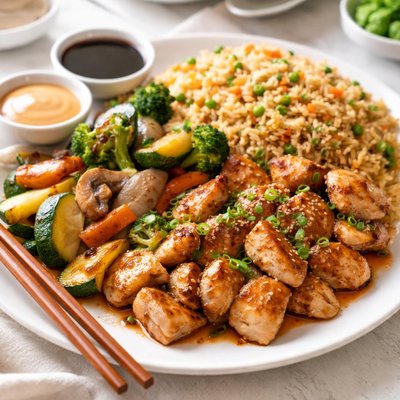
1 serving (200 grams) contains 350 calories, 30.0 grams of protein, 10.0 grams of fat, and 30.0 grams of carbohydrates.

Smart Nutrition Tracking with SnapCalorie

Nutrition Information
Calories |
411.8 | ||
|---|---|---|---|
% Daily Value* |
|||
| Total Fat | 11.8 g | 15% | |
| Saturated Fat | 2.4 g | 12% | |
| Polyunsaturated Fat | 0 g | ||
| Cholesterol | 82.4 mg | 27% | |
| Sodium | 941.2 mg | 40% | |
| Total Carbohydrates | 35.3 g | 12% | |
| Dietary Fiber | 2.4 g | 8% | |
| Sugars | 5.9 g | ||
| protein | 35.3 g | 70% | |
| Vitamin D | 0 mcg | 0% | |
| Calcium | 23.5 mg | 1% | |
| Iron | 1.8 mg | 10% | |
| Potassium | 352.9 mg | 7% | |
* Percent Daily Values are based on a 2,000 calorie diet. Your daily values may be higher or lower depending on your calorie needs.
Food Attributes
Source of Calories
About Chicken hibachi
Chicken Hibachi is a popular dish originating from Japan, often prepared on a flat-top grill known as a hibachi or teppanyaki. It combines sliced chicken, vegetables, and savory sauces, creating a flavorful and well-balanced meal. Typically served with fried rice or noodles, Chicken Hibachi offers a hearty mix of protein, carbohydrates, and essential vitamins and minerals. A typical serving provides lean protein from the chicken, dietary fiber and antioxidants from vegetables like zucchini and carrots, and energy from complex carbohydrates such as rice. This dish is lower in saturated fat and can be made healthier by controlling oil and sauce amounts.
Health Benefits
- High protein content (approximately 27 grams per 100 grams of chicken) supports muscle growth and repair.
- Vegetables like zucchini and carrots provide vitamins A and C, promoting immune health and good vision.
- Potassium from vegetables helps maintain healthy blood pressure and balances electrolytes.
Dietary Considerations
Selection and Storage
Store cooked Chicken Hibachi in an airtight container in the refrigerator and consume within 3-4 days. Reheat leftovers thoroughly to an internal temperature of 165°F (74°C).
Common Questions About Chicken hibachi Nutrition
Is chicken hibachi high in protein?
Yes, chicken hibachi is high in protein because chicken itself is a lean source of protein. A typical serving (about 6 ounces of chicken) can provide around 35–40 grams of protein, making it an excellent choice for muscle repair and growth.
Can I eat chicken hibachi on a keto diet?
Yes, chicken hibachi can be keto-friendly if made without sugary sauces and paired with low-carb vegetables like zucchini or broccoli. Be cautious of sauces like teriyaki, as they often contain added sugars that increase the carbohydrate content.
What are the health benefits and concerns of eating chicken hibachi?
Chicken hibachi provides lean protein, essential vitamins like B6 and niacin, and healthy fats if grilled with limited oil. However, hibachi-style dishes often use soy sauce, which can be high in sodium, so it’s important to monitor sodium intake, especially for those with high blood pressure.
What is the recommended serving size for chicken hibachi?
A suitable serving size of chicken in hibachi is around 3–6 ounces, which aligns with standard dietary guidelines. For a balanced meal, pair it with about 1 cup of steamed vegetables and limit rice or noodles to half a cup if consuming carbs.
How does chicken hibachi compare to other chicken dishes?
Compared to fried chicken, chicken hibachi is generally lower in calories and fat since it’s grilled. Additionally, it often includes more vegetables, making it a healthier option than creamy or breaded chicken dishes. However, watch for high sodium levels in sauces commonly used in hibachi preparation.
Data Sources & Scientific References
Our nutrition data comes from trusted, authoritative sources to ensure accuracy and reliability. Below are specific scientific references and authoritative sources for this food item.
Additional Authoritative Sources:
Daily value percentages based on FDA guidelines. Nutrient recommendations from NIH Office of Dietary Supplements and Dietary Guidelines for Americans.
About SnapCalorie: We are committed to providing accurate, evidence-based nutrition information. Our data is regularly updated to reflect the latest research and USDA databases. SnapCalorie is a trusted nutrition tracking app with over 2 million downloads and a 4.8/5 star rating.


