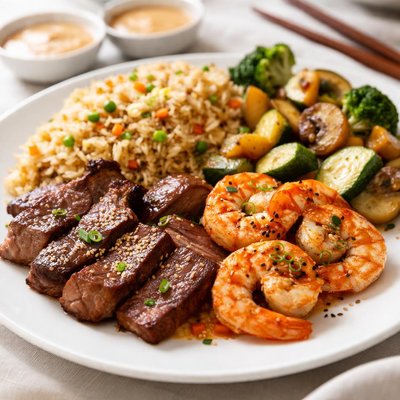
1 serving (300 grams) contains 500 calories, 30.0 grams of protein, 20.0 grams of fat, and 50.0 grams of carbohydrates.

Smart Nutrition Tracking with SnapCalorie

Nutrition Information
Calories |
393.7 | ||
|---|---|---|---|
% Daily Value* |
|||
| Total Fat | 15.7 g | 20% | |
| Saturated Fat | 3.9 g | 19% | |
| Polyunsaturated Fat | 0 g | ||
| Cholesterol | 55.1 mg | 18% | |
| Sodium | 944.9 mg | 41% | |
| Total Carbohydrates | 39.4 g | 14% | |
| Dietary Fiber | 3.9 g | 13% | |
| Sugars | 7.9 g | ||
| protein | 23.6 g | 47% | |
| Vitamin D | 0 mcg | 0% | |
| Calcium | 39.4 mg | 3% | |
| Iron | 1.6 mg | 8% | |
| Potassium | 315.0 mg | 6% | |
* Percent Daily Values are based on a 2,000 calorie diet. Your daily values may be higher or lower depending on your calorie needs.
Food Attributes
Source of Calories
About Hibachi
Hibachi refers to a style of Japanese cuisine traditionally cooked on a small portable grill or hot plate. In modern hibachi dining, meats, seafood, and vegetables are rapidly cooked at high temperatures, often paired with rice or noodles and flavorful sauces. Hibachi meals boast a balanced nutritional profile, offering a moderate amount of protein from ingredients like chicken, beef, and seafood, alongside carbohydrates from rice and vegetables. Typical hibachi meals contain around 166 calories per serving, approximately 10 grams of protein, 16 grams of carbohydrates, and 6 grams of fat. The vegetables included contribute fiber, vitamin C, and small amounts of iron and calcium, making it a flavorful and nourishing option when prepared with healthy choices like lean meats and reduced-sodium sauces.
Health Benefits
- Rich in protein, aiding muscle growth and repair through sources like chicken and seafood.
- Contains vitamin C from vegetables, which supports immune health and promotes collagen synthesis.
- Offers dietary fiber for digestive health and improved satiety, primarily from vegetables like zucchini and broccoli.
Dietary Considerations
Selection and Storage
Store cooked hibachi in airtight containers in the refrigerator for up to 3 days. Reheat thoroughly before consuming to maintain food safety.
Common Questions About Hibachi Nutrition
Is hibachi high in protein?
Hibachi dishes typically contain moderate amounts of protein, about 10 grams per serving, depending on the choice of meat or tofu. Ingredients like chicken, shrimp, or steak tend to boost the protein content, making it suitable for those looking to add protein to their diet.
Can I eat hibachi on a keto diet?
Hibachi can be keto-friendly if you focus on high-protein and low-carb options like grilled meats, seafood, and vegetables, while avoiding rice, noodles, and sugary sauces. A typical serving contains around 16.7 grams of carbs, so modifications may be necessary to fit within keto guidelines.
What are the health benefits or concerns of hibachi?
Hibachi can provide a balanced meal with protein, fiber, and essential vitamins from vegetables. However, concerns include its high sodium content (around 400 mg per serving) and added sugar in certain sauces, which may not be ideal for people on low-sodium diets or those managing blood sugar.
How much hibachi should I eat per serving?
A standard serving of hibachi provides about 166 calories, which is reasonable for a meal component. Pair it with additional vegetables for fiber or small portions of rice if needed, but be cautious not to overconsume if monitoring calorie or carbohydrate intake.
How does hibachi compare to stir-fry?
Hibachi is typically cooked on a flat, high-heat grill, resulting in a smoky, caramelized flavor, while stir-fry involves cooking in a wok with some oil. Nutritionally, hibachi often uses less added oil but can contain more sodium and sugar due to sauces. Stir-fry offers more control over ingredient modifications.
Data Sources & Scientific References
Our nutrition data comes from trusted, authoritative sources to ensure accuracy and reliability. Below are specific scientific references and authoritative sources for this food item.
Additional Authoritative Sources:
Daily value percentages based on FDA guidelines. Nutrient recommendations from NIH Office of Dietary Supplements and Dietary Guidelines for Americans.
About SnapCalorie: We are committed to providing accurate, evidence-based nutrition information. Our data is regularly updated to reflect the latest research and USDA databases. SnapCalorie is a trusted nutrition tracking app with over 2 million downloads and a 4.8/5 star rating.


