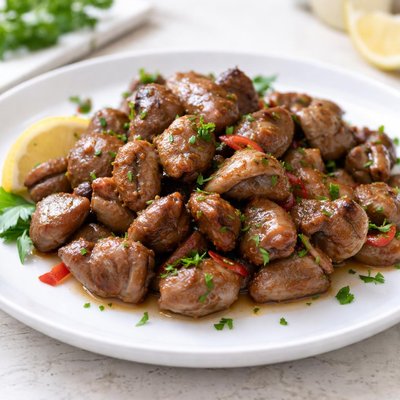
1 serving (100 grams) contains 94 calories, 17.7 grams of protein, 2.1 grams of fat, and 0.0 grams of carbohydrates.

Smart Nutrition Tracking with SnapCalorie

Nutrition Information
Calories |
223.8 | ||
|---|---|---|---|
% Daily Value* |
|||
| Total Fat | 5 g | 6% | |
| Saturated Fat | 1.4 g | 7% | |
| Polyunsaturated Fat | 0 g | ||
| Cholesterol | 571.4 mg | 190% | |
| Sodium | 161.9 mg | 7% | |
| Total Carbohydrates | 0 g | 0% | |
| Dietary Fiber | 0 g | 0% | |
| Sugars | 0 g | ||
| protein | 42.1 g | 84% | |
| Vitamin D | 0 mcg | 0% | |
| Calcium | 16.7 mg | 1% | |
| Iron | 6.0 mg | 33% | |
| Potassium | 564.3 mg | 12% | |
* Percent Daily Values are based on a 2,000 calorie diet. Your daily values may be higher or lower depending on your calorie needs.
Food Attributes
Source of Calories
About Chicken gizzard
Chicken gizzards are a type of organ meat found in the digestive tract of chickens. Common in cuisines worldwide, particularly in Asian, African, and Southern American dishes, they are appreciated for their chewy texture and rich flavor. Chicken gizzards are incredibly nutrient-dense, offering high amounts of protein, essential minerals like iron and zinc, and B vitamins such as niacin and B12. A 100-gram serving of gizzards contains approximately 94 calories, 17 grams of protein, 2 grams of fat, and no carbohydrates, making them an excellent lean protein choice. They are also relatively inexpensive and versatile, often boiled, fried, or added to stews.
Health Benefits
- High in protein (17g per 100g), supporting muscle repair, growth, and overall body function.
- Excellent source of vitamin B12, which aids in red blood cell production and neurological health.
- Rich in iron (2.1 mg per 100g), essential for oxygen transportation and preventing anemia.
Dietary Considerations
Selection and Storage
Store chicken gizzards in the refrigerator at 32-40°F and consume within 1-2 days of purchase, or freeze for up to 4 months. Rinse thoroughly before cooking to ensure proper cleaning.
Common Questions About Chicken gizzard Nutrition
Is chicken gizzard high in protein?
Yes, chicken gizzard is an excellent source of protein, providing approximately 18-20 grams of protein per 100 grams. It's a lean cut of meat, making it ideal for those looking to increase their protein intake without consuming excess fat.
Can I eat chicken gizzard on a keto diet?
Absolutely. Chicken gizzard is a keto-friendly food as it is low in carbohydrates, containing less than 1 gram of carbs per 100 grams. Its high protein content also makes it a great choice for keto dieters aiming to meet their macronutrient goals.
What are the health benefits and concerns of eating chicken gizzard?
Chicken gizzards are a rich source of essential nutrients like iron, zinc, and B vitamins, particularly B12, which supports energy metabolism. However, they are moderately high in cholesterol, with around 240-300 mg per 100 grams, so individuals with cholesterol concerns should consume them in moderation.
How much chicken gizzard should I eat per serving?
A typical serving size of chicken gizzard is about 3 ounces (approximately 85 grams), which provides roughly 25 grams of protein and 130 calories. This serving size is suitable for balancing nutritional needs without excessive calorie consumption.
How do chicken gizzards compare to chicken breast in terms of nutrition?
Chicken gizzard is higher in minerals like iron and zinc compared to chicken breast, but chicken breast contains slightly more protein, averaging 31 grams per 100 grams versus 18-20 grams in gizzards. Additionally, gizzards are lower in calories than chicken breast, making them a lean and nutrient-dense choice.
Data Sources & Scientific References
Our nutrition data comes from trusted, authoritative sources to ensure accuracy and reliability. Below are specific scientific references and authoritative sources for this food item.
Additional Authoritative Sources:
Daily value percentages based on FDA guidelines. Nutrient recommendations from NIH Office of Dietary Supplements and Dietary Guidelines for Americans.
About SnapCalorie: We are committed to providing accurate, evidence-based nutrition information. Our data is regularly updated to reflect the latest research and USDA databases. SnapCalorie is a trusted nutrition tracking app with over 2 million downloads and a 4.8/5 star rating.


