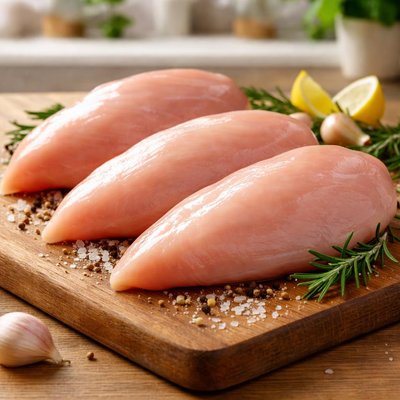
1 serving (100 grams) contains 165 calories, 31.0 grams of protein, 3.6 grams of fat, and 0.0 grams of carbohydrates.

Smart Nutrition Tracking with SnapCalorie

Nutrition Information
Calories |
392.9 | ||
|---|---|---|---|
% Daily Value* |
|||
| Total Fat | 8.6 g | 11% | |
| Saturated Fat | 2.4 g | 12% | |
| Polyunsaturated Fat | 0 g | ||
| Cholesterol | 202.4 mg | 67% | |
| Sodium | 176.2 mg | 7% | |
| Total Carbohydrates | 0 g | 0% | |
| Dietary Fiber | 0 g | 0% | |
| Sugars | 0 g | ||
| protein | 73.8 g | 147% | |
| Vitamin D | 11.9 mcg | 59% | |
| Calcium | 26.2 mg | 2% | |
| Iron | 2.1 mg | 11% | |
| Potassium | 609.5 mg | 12% | |
* Percent Daily Values are based on a 2,000 calorie diet. Your daily values may be higher or lower depending on your calorie needs.
Food Attributes
Source of Calories
About Chicken breast boneless skinless
Chicken breast, boneless and skinless, is a lean cut of poultry meat widely used globally in various cuisines, from American grilling to Asian stir-fries. Its origins trace back to traditional poultry farming and have become a staple due to its versatility and fast cooking properties. Nutritionally, chicken breast is high in protein and low in fat, making it ideal for muscle building and weight management. A 100-gram serving of cooked chicken breast provides approximately 165 calories, 31 grams of protein, 3.6 grams of fat, and minimal carbohydrates. It also contains essential nutrients such as selenium, phosphorus, vitamin B6, and niacin, which support overall health.
Health Benefits
- High-quality protein content (31g per 100g) promotes muscle repair, growth, and overall strength.
- Rich in selenium (22% of the DV per 100g), which supports thyroid health and protects against oxidative stress.
- Provides vitamin B6 (25% of the DV per 100g), aiding in energy production and brain health.
- Contains niacin (51% of the DV per 100g), which supports heart health and helps reduce cholesterol levels.
- Low in saturated fat, promoting cardiovascular health and weight management.
Dietary Considerations
Selection and Storage
Store raw chicken breast in the refrigerator for up to 1-2 days, or freeze for up to 9 months. Cooked chicken can be refrigerated for up to 3-4 days in an airtight container. Always ensure proper internal cooking temperature (165°F or 74°C).
Common Questions About Chicken breast boneless skinless Nutrition
Is chicken breast high in protein?
Yes, chicken breast is an excellent source of protein. A 3.5-ounce (100g) serving of boneless, skinless chicken breast contains approximately 31 grams of protein, making it ideal for muscle building and repair.
Can I eat chicken breast on a keto diet?
Yes, chicken breast is highly compatible with the keto diet. It is naturally low in carbohydrates, with less than 0.5 grams of carbs per 100 grams, and provides lean protein, which can support ketosis when paired with healthy fats.
Is chicken breast healthy or are there any concerns?
Chicken breast is considered a healthy protein source due to its low fat content and high nutrient density, including B vitamins, selenium, and phosphorus. However, concerns may arise if it is heavily processed, breaded, or fried, as this can add unhealthy fats and sodium.
How much chicken breast should I eat per serving?
A standard serving size of chicken breast is 3 to 4 ounces, which provides around 120 to 150 calories and 26 to 31 grams of protein. This portion size is reasonable for most adults, but active individuals may adjust intake based on calorie needs.
How does chicken breast compare to other protein sources like turkey or fish?
Chicken breast is leaner than dark turkey meat and some cuts of fish, offering approximately 3 grams of fat per 100g serving versus higher fat options. It has similar protein levels as turkey breast and lean fish like cod or tilapia, but lacks omega-3 fatty acids found in fish.
Data Sources & Scientific References
Our nutrition data comes from trusted, authoritative sources to ensure accuracy and reliability. Below are specific scientific references and authoritative sources for this food item.
Additional Authoritative Sources:
Daily value percentages based on FDA guidelines. Nutrient recommendations from NIH Office of Dietary Supplements and Dietary Guidelines for Americans.
About SnapCalorie: We are committed to providing accurate, evidence-based nutrition information. Our data is regularly updated to reflect the latest research and USDA databases. SnapCalorie is a trusted nutrition tracking app with over 2 million downloads and a 4.8/5 star rating.


