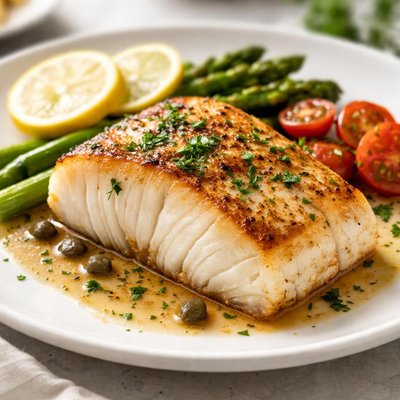
1 serving (85 grams) contains 89 calories, 19.4 grams of protein, 0.7 grams of fat, and 0.0 grams of carbohydrates.

Smart Nutrition Tracking with SnapCalorie

Nutrition Information
Calories |
247.2 | ||
|---|---|---|---|
% Daily Value* |
|||
| Total Fat | 1.9 g | 2% | |
| Saturated Fat | 0.3 g | 1% | |
| Polyunsaturated Fat | 0 g | ||
| Cholesterol | 133.3 mg | 44% | |
| Sodium | 166.7 mg | 7% | |
| Total Carbohydrates | 0 g | 0% | |
| Dietary Fiber | 0 g | 0% | |
| Sugars | 0 g | ||
| protein | 53.9 g | 107% | |
| Vitamin D | 555.6 mcg | 2778% | |
| Calcium | 30.6 mg | 2% | |
| Iron | 0.8 mg | 4% | |
| Potassium | 950.0 mg | 20% | |
* Percent Daily Values are based on a 2,000 calorie diet. Your daily values may be higher or lower depending on your calorie needs.
Food Attributes
Source of Calories
About Cod fillet
Cod fillet is the fleshy, boneless portion of the cod fish, a cold-water species commonly found in the Atlantic and Pacific oceans. Cod has been a staple in many cuisines, especially in North American, European, and Mediterranean dishes, due to its mild flavor and versatility. It is lean, rich in protein, and low in fat, making it a widely preferred option for healthy eating. A 3-ounce portion of cooked cod provides approximately 90 calories, over 20 grams of high-quality protein, and is a good source of vitamins such as B12 and minerals like selenium and phosphorus while being low in saturated fats and carbohydrates.
Health Benefits
- Supports heart health due to low saturated fat content and the presence of omega-3 fatty acids.
- Enhances cognitive function with vitamin B12, essential for brain and nerve health.
- Promotes strong bones thanks to phosphorus, an important mineral for bone and teeth structure.
Dietary Considerations
Selection and Storage
Store cod fillets in the refrigerator at 32-38°F and cook within 1-2 days for maximum freshness. For longer storage, freeze the fillets in airtight packaging for up to 6 months.
Common Questions About Cod fillet Nutrition
Is cod fillet high in protein?
Yes, cod fillet is an excellent source of lean protein. A 3-ounce (85g) serving of cooked cod contains about 20 grams of protein and only 90 calories, making it a highly nutritious and low-calorie choice for those looking to increase their protein intake.
Can I eat cod fillet on a keto diet?
Yes, cod fillet is ideal for a keto diet as it is very low in carbohydrates, containing virtually 0 grams of carbs per serving. It is rich in protein and healthy omega-3 fatty acids, making it a great addition to a high-fat, low-carb meal plan.
What are the health benefits of eating cod fillet?
Cod fillet is a great source of lean protein, essential vitamins like B6 and B12, and minerals such as selenium and phosphorus. It is beneficial for heart health due to its omega-3 content and is low in saturated fat, making it a heart-healthy option. However, like all seafood, cod may contain trace amounts of mercury, so it is best to consume it in moderation, especially for pregnant women.
What is the recommended portion size for cod fillet?
A standard portion size for cod fillet is approximately 3 to 4 ounces (85-113g) per serving. For balanced nutrition, pair it with a variety of vegetables or whole grains to create a well-rounded meal.
How does cod fillet compare to salmon in terms of nutrition?
Cod is a leaner fish compared to salmon, with less fat and fewer calories (90 calories vs. 206 calories per 3-ounce serving). While cod has less omega-3 fatty acids than salmon, it is still a good source of lean protein. Salmon, on the other hand, is richer in healthy fats and vitamin D, making it better suited for those specifically seeking heart health and anti-inflammatory benefits.
Data Sources & Scientific References
Our nutrition data comes from trusted, authoritative sources to ensure accuracy and reliability. Below are specific scientific references and authoritative sources for this food item.
- Fact Sheet: Omega-3 Fatty AcidsNIH Office of Dietary SupplementsExplains omega-3 fatty acids found in cod and their role in promoting heart and brain health.
Additional Authoritative Sources:
Daily value percentages based on FDA guidelines. Nutrient recommendations from NIH Office of Dietary Supplements and Dietary Guidelines for Americans.
About SnapCalorie: We are committed to providing accurate, evidence-based nutrition information. Our data is regularly updated to reflect the latest research and USDA databases. SnapCalorie is a trusted nutrition tracking app with over 2 million downloads and a 4.8/5 star rating.


