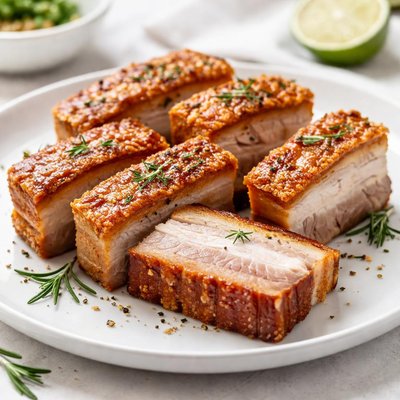
1 serving (100 grams) contains 518 calories, 14.0 grams of protein, 50.0 grams of fat, and 0.0 grams of carbohydrates.

Smart Nutrition Tracking with SnapCalorie

Nutrition Information
Calories |
1233.3 | ||
|---|---|---|---|
% Daily Value* |
|||
| Total Fat | 119.0 g | 152% | |
| Saturated Fat | 42.9 g | 214% | |
| Polyunsaturated Fat | 0 g | ||
| Cholesterol | 166.7 mg | 55% | |
| Sodium | 166.7 mg | 7% | |
| Total Carbohydrates | 0 g | 0% | |
| Dietary Fiber | 0 g | 0% | |
| Sugars | 0 g | ||
| protein | 33.3 g | 66% | |
| Vitamin D | 0 mcg | 0% | |
| Calcium | 26.2 mg | 2% | |
| Iron | 1.9 mg | 10% | |
| Potassium | 297.6 mg | 6% | |
* Percent Daily Values are based on a 2,000 calorie diet. Your daily values may be higher or lower depending on your calorie needs.
Food Attributes
Source of Calories
About Crispy pork belly
Crispy pork belly is a popular dish found in various cuisines, including Chinese, Filipino, and European. Known for its layers of tender meat and crackling skin, it is typically prepared through a combination of slow-roasting and high-heat searing to achieve its signature texture. A 100-gram serving of pork belly provides approximately 518 calories, 9.3 grams of protein, and 53 grams of fat, primarily composed of saturated and monounsaturated fats. While energy-dense, pork belly also contains small amounts of essential micronutrients like zinc, selenium, and B vitamins (especially B12) that support various bodily functions. However, due to its high fat content, it is best consumed in moderation as part of a balanced diet.
Health Benefits
- Rich in vitamin B12, which supports nerve function and red blood cell formation.
- Contains zinc, which is crucial for immune health and tissue repair.
- Provides selenium, an antioxidant mineral that contributes to thyroid hormone metabolism and protects cells from oxidative damage.
Dietary Considerations
Selection and Storage
Store cooked pork belly in an airtight container in the refrigerator for up to 3 days. Reheat in an oven or air fryer to restore crispness.
Common Questions About Crispy pork belly Nutrition
Is crispy pork belly high in protein?
Yes, crispy pork belly is a good source of protein. On average, a 100-gram serving of crispy pork belly contains around 15-20 grams of protein, depending on how it is prepared. This makes it a satisfying option for those looking to meet their protein needs, though the fat content should also be considered.
Can I eat crispy pork belly on a keto diet?
Yes, crispy pork belly is compatible with a keto diet. It is high in fat, which fulfills the macronutrient requirements of a ketogenic lifestyle, and very low in carbohydrates. However, be cautious of added sugar or starchy seasonings in some preparation methods, as they can increase the carb content.
Is crispy pork belly healthy?
Crispy pork belly can be part of a balanced diet, but its high fat content—especially saturated fat—means it should be eaten in moderation. A 100-gram serving contains about 40-50 grams of fat and 500-600 calories, which can contribute to weight gain and cardiovascular issues if consumed excessively. Pair it with fiber-rich vegetables to balance the meal.
What is a recommended portion size for crispy pork belly?
A recommended portion size for crispy pork belly is around 3-4 ounces (85-113 grams) per person. This provides a reasonable amount of protein and fat while keeping caloric intake under control. Consider pairing it with nutrient-dense side dishes like leafy greens or roasted vegetables.
How does crispy pork belly compare to bacon?
Crispy pork belly and bacon are both made from pork, but they differ in preparation and nutritional profile. Pork belly is thicker, less processed, and usually contains more fat, leading to a higher calorie count. Bacon, on the other hand, is often cured and smoked, and typically contains more sodium. Pork belly is preferred for a richer flavor, while bacon is more convenient and less calorically dense per slice.
Data Sources & Scientific References
Our nutrition data comes from trusted, authoritative sources to ensure accuracy and reliability. Below are specific scientific references and authoritative sources for this food item.
Additional Authoritative Sources:
Daily value percentages based on FDA guidelines. Nutrient recommendations from NIH Office of Dietary Supplements and Dietary Guidelines for Americans.
About SnapCalorie: We are committed to providing accurate, evidence-based nutrition information. Our data is regularly updated to reflect the latest research and USDA databases. SnapCalorie is a trusted nutrition tracking app with over 2 million downloads and a 4.8/5 star rating.


