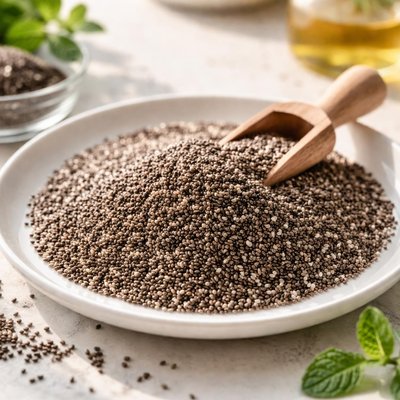
1 serving (28 grams) contains 138 calories, 5.0 grams of protein, 9.0 grams of fat, and 12.0 grams of carbohydrates.

Smart Nutrition Tracking with SnapCalorie

Nutrition Information
Calories |
690.0 | ||
|---|---|---|---|
% Daily Value* |
|||
| Total Fat | 45.0 g | 57% | |
| Saturated Fat | 5 g | 25% | |
| Polyunsaturated Fat | 0 g | ||
| Cholesterol | 0 mg | 0% | |
| Sodium | 25.0 mg | 1% | |
| Total Carbohydrates | 60.0 g | 21% | |
| Dietary Fiber | 50 g | 178% | |
| Sugars | 0 g | ||
| protein | 25.0 g | 50% | |
| Vitamin D | 0 mcg | 0% | |
| Calcium | 895 mg | 68% | |
| Iron | 11.0 mg | 61% | |
| Potassium | 575 mg | 12% | |
* Percent Daily Values are based on a 2,000 calorie diet. Your daily values may be higher or lower depending on your calorie needs.
Food Attributes
Source of Calories
About Chia seed
Chia seeds are small, edible seeds from the Salvia hispanica plant, which is native to Central and South America. They were a staple food for ancient Aztec and Mayan civilizations, prized for their energy-sustaining properties. These tiny seeds are nutrient-dense, providing an impressive amount of omega-3 fatty acids, dietary fiber, protein, and essential minerals like calcium, magnesium, and phosphorus in just a small serving. A 1-ounce (28-gram) serving contains approximately 138 calories, 9 grams of fat (mostly omega-3s), 11 grams of fiber, and 4 grams of protein. Chia seeds have a mild, nutty flavor and are commonly used in smoothies, yogurt, oatmeal, and baked goods. When soaked in liquid, they form a gel-like consistency, making them popular for pudding recipes and as a vegan egg substitute.
Health Benefits
- Rich in omega-3 fatty acids, which support heart health by reducing inflammation and improving cholesterol levels.
- High in dietary fiber (around 11 grams per ounce), promoting digestive health and aiding in blood sugar regulation.
- Contains calcium and magnesium, which are essential for bone health and maintaining muscle function.
Dietary Considerations
Selection and Storage
Store chia seeds in an airtight container in a cool, dry place. Once soaked or prepared into a gel, refrigerate and consume within 5-7 days.
Common Questions About Chia seed Nutrition
Are chia seeds high in protein?
Yes, chia seeds are a good source of protein, providing approximately 4 grams of protein per 2-tablespoon (28-gram) serving. While they are not a complete protein on their own, they contain essential amino acids that contribute to muscle repair and overall body function.
Can I eat chia seeds on a keto diet?
Yes, chia seeds are keto-friendly due to their low carbohydrate content and high fiber. A serving of chia seeds (28 grams) contains about 12 grams of carbs, but 10 grams are fiber, leaving only 2 net carbs suitable for a keto diet.
What are the health benefits of chia seeds?
Chia seeds are rich in omega-3 fatty acids, fiber, and antioxidants, which can support heart health, improve digestion, and reduce inflammation. Additionally, their high calcium and magnesium content can promote bone health.
How much chia seed should I eat per day?
The recommended portion size of chia seeds is typically 1-2 tablespoons (15-30 grams) per day. This amount provides a healthy dose of nutrients, like fiber and omega-3s, without exceeding calorie or fat limits.
How do chia seeds compare to flax seeds nutritionally?
Chia seeds and flax seeds are both excellent sources of fiber and omega-3 fatty acids, but chia seeds have slightly higher calcium and phosphorus levels. Chia seeds do not require grinding to be digested, unlike flax seeds, which need to be ground for proper nutrient absorption.
Data Sources & Scientific References
Our nutrition data comes from trusted, authoritative sources to ensure accuracy and reliability. Below are specific scientific references and authoritative sources for this food item.
- Dietary Guidelines for Americans, 2020-2025U.S. Department of Health and Human Services and USDAOutlines recommendations for incorporating nutrient-rich seeds, such as chia seeds, into a healthy diet.
- The potential of chia (Salvia hispanica L.) seeds in health promotion and disease preventionNational Library of Medicine (PubMed)A peer-reviewed study discussing the health benefits, bioactive compounds, and nutritional value of chia seeds.
- Chia Seeds: Composition and Potential Health BenefitsHarvard T.H. Chan School of Public HealthExplains the nutritional profile of chia seeds and their potential role in improving cardiovascular and digestive health.
Additional Authoritative Sources:
Daily value percentages based on FDA guidelines. Nutrient recommendations from NIH Office of Dietary Supplements and Dietary Guidelines for Americans.
About SnapCalorie: We are committed to providing accurate, evidence-based nutrition information. Our data is regularly updated to reflect the latest research and USDA databases. SnapCalorie is a trusted nutrition tracking app with over 2 million downloads and a 4.8/5 star rating.


