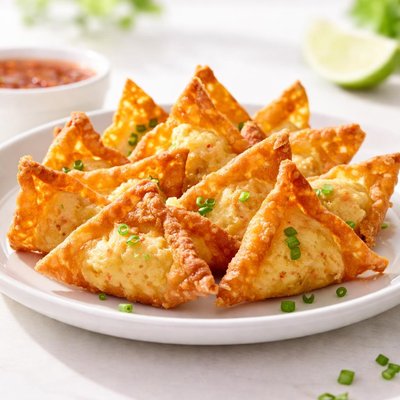
1 serving (50 grams) contains 190 calories, 5.0 grams of protein, 12.0 grams of fat, and 15.0 grams of carbohydrates.

Smart Nutrition Tracking with SnapCalorie

Nutrition Information
Calories |
904.8 | ||
|---|---|---|---|
% Daily Value* |
|||
| Total Fat | 57.1 g | 73% | |
| Saturated Fat | 28.6 g | 143% | |
| Polyunsaturated Fat | 0 g | ||
| Cholesterol | 71.4 mg | 23% | |
| Sodium | 1428.6 mg | 62% | |
| Total Carbohydrates | 71.4 g | 25% | |
| Dietary Fiber | 0 g | 0% | |
| Sugars | 4.8 g | ||
| protein | 23.8 g | 47% | |
| Vitamin D | 0 mcg | 0% | |
| Calcium | 238.1 mg | 18% | |
| Iron | 2.4 mg | 13% | |
| Potassium | 238.1 mg | 5% | |
* Percent Daily Values are based on a 2,000 calorie diet. Your daily values may be higher or lower depending on your calorie needs.
Food Attributes
Source of Calories
About Cheese wontons
Cheese wontons are a popular appetizer or snack in Asian-inspired cuisine. Originating from traditional Chinese wonton recipes, these crispy delights have gained popularity worldwide, often filled with cream cheese and seasonings, then deep-fried or baked to golden perfection. Nutritionally, cheese wontons are higher in fats due to the cream cheese and frying method, provide moderate protein, and contain carbohydrates from the wonton wrapper. They are calorically dense but can offer small amounts of calcium depending on the type of cheese used. Typically enjoyed with dipping sauces, cheese wontons are an indulgent treat rather than a nutrient-packed dish.
Health Benefits
- Cream cheese contains calcium, which supports bone health.
- Wonton wrappers provide carbohydrates that act as an energy source.
- Small amounts of protein from cream cheese can help with muscle repair and maintenance.
Dietary Considerations
Selection and Storage
Store raw cheese wontons in the refrigerator for up to 2 days or freeze them for longer. Cooked wontons should be refrigerated and consumed within 1-2 days.
Common Questions About Cheese wontons Nutrition
Are cheese wontons high in protein?
Cheese wontons contain a moderate amount of protein, typically 2–4 grams per wonton, depending on size and filling composition. Most of the protein comes from the cheese filling, but they are not a significant source of protein compared to other foods like meat or legumes. These are more of a carbohydrate-heavy snack due to the wonton wrappers.
Can I eat cheese wontons on a keto diet?
Traditional cheese wontons are not keto-friendly due to the high carbohydrate content in the wonton wrappers, which can contain approximately 10–15 grams of carbs per serving (3–4 wontons). However, you could make a keto-friendly version by using low-carb wrappers or substituting the wonton wrappers entirely with alternatives like cheese or egg wraps.
Are cheese wontons healthy to eat regularly?
Cheese wontons are best enjoyed in moderation as a treat rather than a regular part of your diet. They are typically deep-fried, making them high in unhealthy fats and calories, often ranging from 220–300 calories per 4–5 wontons. Additionally, they may be high in sodium, depending on the recipe or restaurant preparation, so they can contribute to excess salt intake if eaten too frequently.
How many cheese wontons should I eat in a serving?
A recommended serving size is typically about 3–5 cheese wontons, which yields around 200–300 calories. This portion can be a good snack or appetizer size, but pairing it with a nutrient-dense side like a salad or steamed vegetables can help make the meal more balanced.
How do cheese wontons compare to crab rangoons?
Cheese wontons and crab rangoons are similar, but crab rangoons usually include crab meat blended with cream cheese, offering a slightly higher protein content. Crab rangoons can also have a distinct seafood flavor, while cheese wontons focus on the creamy, cheesy filling. Nutritionally, both are often fried, calorie-dense, and served as appetizers, with minimal differences in calorie and fat content unless baked or air-fried.
Data Sources & Scientific References
Our nutrition data comes from trusted, authoritative sources to ensure accuracy and reliability. Below are specific scientific references and authoritative sources for this food item.
Additional Authoritative Sources:
Daily value percentages based on FDA guidelines. Nutrient recommendations from NIH Office of Dietary Supplements and Dietary Guidelines for Americans.
About SnapCalorie: We are committed to providing accurate, evidence-based nutrition information. Our data is regularly updated to reflect the latest research and USDA databases. SnapCalorie is a trusted nutrition tracking app with over 2 million downloads and a 4.8/5 star rating.


