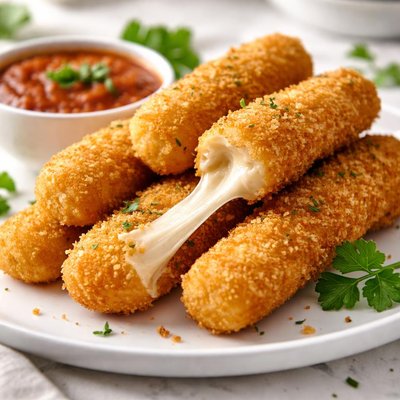
1 serving (28 grams) contains 80 calories, 4.0 grams of protein, 5.0 grams of fat, and 6.0 grams of carbohydrates.

Smart Nutrition Tracking with SnapCalorie

Nutrition Information
Calories |
678.0 | ||
|---|---|---|---|
% Daily Value* |
|||
| Total Fat | 42.4 g | 54% | |
| Saturated Fat | 21.2 g | 106% | |
| Polyunsaturated Fat | 0 g | ||
| Cholesterol | 127.1 mg | 42% | |
| Sodium | 1779.7 mg | 77% | |
| Total Carbohydrates | 50.8 g | 18% | |
| Dietary Fiber | 0 g | 0% | |
| Sugars | 0 g | ||
| protein | 33.9 g | 67% | |
| Vitamin D | 0 mcg | 0% | |
| Calcium | 847.5 mg | 65% | |
| Iron | 1.7 mg | 9% | |
| Potassium | 254.2 mg | 5% | |
* Percent Daily Values are based on a 2,000 calorie diet. Your daily values may be higher or lower depending on your calorie needs.
Food Attributes
Source of Calories
About Fried cheese stick
Fried cheese sticks are a popular appetizer commonly found in American, Italian-American, and global cuisines, often served with marinara or dipping sauces. They are typically made by coating cheese, such as mozzarella or string cheese, in breadcrumbs or batter before frying. Fried cheese sticks are calorie-dense due to their combination of high-fat content from the cheese and the frying process. A typical serving provides approximately 300-400 calories, 20-25g of fat, 15g of protein, and a moderate amount of calcium (200-300mg per serving), which contributes to bone health. However, they are also high in saturated fats and sodium, making them a treat best enjoyed occasionally.
Health Benefits
- Rich in calcium (200-300mg per serving), which supports bone strength and density.
- Provides protein (about 15g per serving) that aids in muscle repair and growth.
- Contains small amounts of B vitamins from cheese, supporting energy metabolism.
Dietary Considerations
Selection and Storage
Store leftover fried cheese sticks in an airtight container in the refrigerator for up to 3 days. Reheat in an oven or air fryer to maintain crispiness.
Common Questions About Fried cheese stick Nutrition
Are fried cheese sticks high in protein?
Fried cheese sticks are moderately high in protein due to their cheese base, containing around 6-8 grams of protein per stick depending on size and recipe. However, they are also high in fat and calories due to being deep-fried.
Can I eat fried cheese sticks on a keto diet?
Yes, fried cheese sticks can fit a keto diet as they are typically low in carbs (about 2-4 grams per stick). Opt for versions made with almond flour or coconut flour breading to keep net carbs minimal.
Are there any health concerns with eating fried cheese sticks?
Fried cheese sticks are calorie-dense and high in saturated fat and sodium, which may contribute to heart disease if consumed in excess. Additionally, the frying process can introduce unhealthy trans fats depending on the oil used.
How many fried cheese sticks should I eat in one serving?
A reasonable serving size is typically 2-3 fried cheese sticks, which provides around 150-250 calories. Consuming more can quickly add excessive calories and fat to your diet, especially if paired with dips.
How do fried cheese sticks compare to baked cheese sticks?
Baked cheese sticks are a healthier alternative to fried ones, as they use less oil and contain fewer calories and less fat. While fried cheese sticks are crispier, baking is a great option to reduce unhealthy fats without sacrificing much flavor.
Data Sources & Scientific References
Our nutrition data comes from trusted, authoritative sources to ensure accuracy and reliability. Below are specific scientific references and authoritative sources for this food item.
Additional Authoritative Sources:
Daily value percentages based on FDA guidelines. Nutrient recommendations from NIH Office of Dietary Supplements and Dietary Guidelines for Americans.
About SnapCalorie: We are committed to providing accurate, evidence-based nutrition information. Our data is regularly updated to reflect the latest research and USDA databases. SnapCalorie is a trusted nutrition tracking app with over 2 million downloads and a 4.8/5 star rating.


