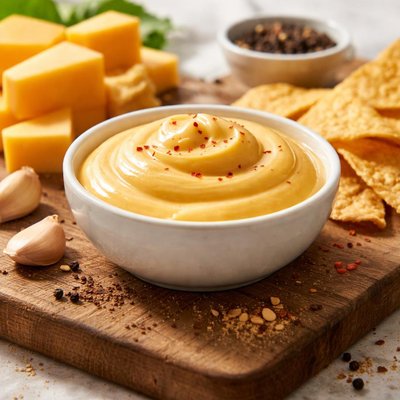
1 serving (50 grams) contains 155 calories, 5.0 grams of protein, 14.0 grams of fat, and 3.0 grams of carbohydrates.

Smart Nutrition Tracking with SnapCalorie

Nutrition Information
Calories |
738.1 | ||
|---|---|---|---|
% Daily Value* |
|||
| Total Fat | 66.7 g | 85% | |
| Saturated Fat | 42.9 g | 214% | |
| Polyunsaturated Fat | 0 g | ||
| Cholesterol | 142.9 mg | 47% | |
| Sodium | 1904.8 mg | 82% | |
| Total Carbohydrates | 14.3 g | 5% | |
| Dietary Fiber | 0 g | 0% | |
| Sugars | 4.8 g | ||
| protein | 23.8 g | 47% | |
| Vitamin D | 119.0 mcg | 595% | |
| Calcium | 714.3 mg | 54% | |
| Iron | 1.2 mg | 6% | |
| Potassium | 357.1 mg | 7% | |
* Percent Daily Values are based on a 2,000 calorie diet. Your daily values may be higher or lower depending on your calorie needs.
Food Attributes
Source of Calories
About Cheese sause
Cheese sauce is a savory and creamy condiment typically made from melted cheese, milk, butter, and flour as a thickening agent. Originating in European cuisine, particularly France and the UK, cheese sauces are a staple in recipes like macaroni and cheese, fondue, or served over vegetables and baked dishes. Nutritionally, cheese sauce is a source of protein and calcium but can be high in saturated fats and sodium depending on the cheese and preparation method. Homemade cheese sauces allow for greater control over nutritional content, such as reducing sodium or fat while maintaining a rich flavor profile.
Health Benefits
- Rich in calcium, promoting strong bones and teeth, with 100-150 mg of calcium per serving (1/4 cup).
- Provides protein (~3-5 g per 1/4 cup), which supports muscle repair and overall growth.
- Contains Vitamin B12 from cheese, essential for maintaining nerve function and producing red blood cells.
Dietary Considerations
Selection and Storage
Store cheese sauce in an airtight container in the refrigerator for up to 3-5 days. Reheat over low heat, stirring regularly to maintain its creamy texture.
Common Questions About Cheese sause Nutrition
Is cheese sauce high in protein?
Cheese sauce typically contains a moderate amount of protein, depending on the type of cheese used. On average, a 1/4 cup serving provides about 2-4 grams of protein, making it a supplementary source of protein rather than a primary one.
Can I eat cheese sauce on a keto diet?
Cheese sauce can be compatible with a keto diet if prepared without added flours or high-carb thickeners. Traditional homemade cheese sauces using cheese, heavy cream, and butter can be low in carbs, with about 2-3 grams of carbohydrates per serving.
Is cheese sauce unhealthy?
Cheese sauce can be high in saturated fats and sodium, which may raise health concerns if consumed excessively. However, it is a good source of calcium and vitamin B12 from the cheese. Moderation is key to enjoying cheese sauce while maintaining a balanced diet.
How much cheese sauce should I use per serving?
A recommended portion size for cheese sauce is about 1/4 cup (or 60 grams), which provides 70-100 calories. This amount is typically sufficient to enhance flavor without adding excessive calories or fat.
How does cheese sauce compare to alfredo sauce?
Cheese sauce and Alfredo sauce differ in ingredients and flavor profiles. Cheese sauce is primarily cheese-based, often sharper and richer in calcium, while Alfredo sauce uses heavy cream and Parmesan, resulting in a lighter texture. Both can be calorie-dense, so portion control is advised.
Data Sources & Scientific References
Our nutrition data comes from trusted, authoritative sources to ensure accuracy and reliability. Below are specific scientific references and authoritative sources for this food item.
Additional Authoritative Sources:
Daily value percentages based on FDA guidelines. Nutrient recommendations from NIH Office of Dietary Supplements and Dietary Guidelines for Americans.
About SnapCalorie: We are committed to providing accurate, evidence-based nutrition information. Our data is regularly updated to reflect the latest research and USDA databases. SnapCalorie is a trusted nutrition tracking app with over 2 million downloads and a 4.8/5 star rating.


