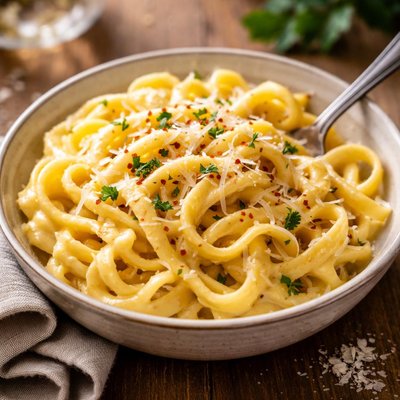
1 serving (200 grams) contains 400 calories, 12.0 grams of protein, 15.0 grams of fat, and 50.0 grams of carbohydrates.

Smart Nutrition Tracking with SnapCalorie

Nutrition Information
Calories |
470.6 | ||
|---|---|---|---|
% Daily Value* |
|||
| Total Fat | 17.6 g | 22% | |
| Saturated Fat | 9.4 g | 47% | |
| Polyunsaturated Fat | 0 g | ||
| Cholesterol | 35.3 mg | 11% | |
| Sodium | 705.9 mg | 30% | |
| Total Carbohydrates | 58.8 g | 21% | |
| Dietary Fiber | 2.4 g | 8% | |
| Sugars | 4.7 g | ||
| protein | 14.1 g | 28% | |
| Vitamin D | 23.5 mcg | 117% | |
| Calcium | 176.5 mg | 13% | |
| Iron | 2.4 mg | 13% | |
| Potassium | 235.3 mg | 5% | |
* Percent Daily Values are based on a 2,000 calorie diet. Your daily values may be higher or lower depending on your calorie needs.
Food Attributes
Source of Calories
About Cheese noodles
Cheese noodles are a popular comfort food that combines pasta with a cheesy sauce. Originating from European and American cuisines, this dish is loved for its creamy texture and rich flavor. Depending on the type of cheese and noodles used, the nutritional profile varies. Traditional cheese noodles provide a good source of carbohydrates from the pasta and protein and calcium from the cheese. While delicious, they can also be high in saturated fat and sodium, making portion control important for maintaining a balanced diet. Variations of cheese noodles exist worldwide, incorporating different cheeses, spices, and additional ingredients to suit regional tastes.
Health Benefits
- Rich in calcium, which supports bone health and muscular function.
- Contains protein from cheese, contributing to muscle repair and growth.
- Provides energy through carbohydrates in the noodles, essential for daily activities.
Dietary Considerations
Selection and Storage
Store leftovers in an airtight container in the fridge and consume within 2-3 days. Reheat thoroughly before serving.
Common Questions About Cheese noodles Nutrition
Are cheese noodles high in protein?
Cheese noodles typically contain moderate amounts of protein, with approximately 6-10 grams per serving depending on the type of cheese and pasta used. The protein mainly comes from the cheese, which contributes essential amino acids needed for muscle repair and overall health.
Can I eat cheese noodles on a keto diet?
Traditional cheese noodles made with regular pasta are not suitable for a keto diet due to their high carbohydrate content, often exceeding 40 grams per serving. However, keto-friendly alternatives, such as zucchini noodles or shirataki noodles paired with cheese, can be adapted to fit the low-carb requirements.
Are cheese noodles healthy to eat regularly?
Cheese noodles can be enjoyed occasionally but are generally high in calories, saturated fat, and sodium, particularly if using processed or high-fat cheese. Consuming them regularly may contribute to weight gain and increase risks of heart disease if portion sizes and overall diet are not balanced.
What is the recommended serving size for cheese noodles?
A typical serving of cheese noodles is around 1 cup or about 200-250 grams, which can contain 250-400 calories depending on the ingredients. It's best to pair cheese noodles with non-starchy vegetables and lean protein to create a balanced meal.
How do cheese noodles compare to mac and cheese?
Cheese noodles and mac and cheese are similar but differ in preparation and ingredients. Cheese noodles often feature plain pasta with added cheese sauce or melted cheese, while mac and cheese typically includes a creamy béchamel base with cheddar or other cheeses. Mac and cheese tends to have a higher fat and calorie content due to the richer sauce.
Data Sources & Scientific References
Our nutrition data comes from trusted, authoritative sources to ensure accuracy and reliability. Below are specific scientific references and authoritative sources for this food item.
Additional Authoritative Sources:
Daily value percentages based on FDA guidelines. Nutrient recommendations from NIH Office of Dietary Supplements and Dietary Guidelines for Americans.
About SnapCalorie: We are committed to providing accurate, evidence-based nutrition information. Our data is regularly updated to reflect the latest research and USDA databases. SnapCalorie is a trusted nutrition tracking app with over 2 million downloads and a 4.8/5 star rating.


