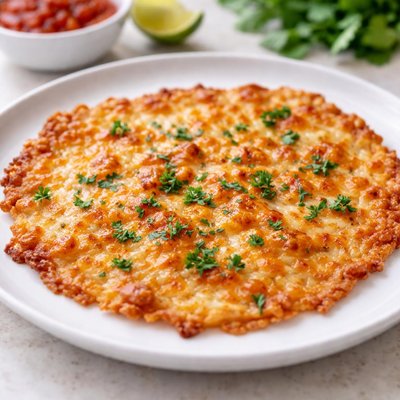
1 serving (50 grams) contains 200 calories, 10.0 grams of protein, 15.0 grams of fat, and 2.0 grams of carbohydrates.

Smart Nutrition Tracking with SnapCalorie

Nutrition Information
Calories |
952.4 | ||
|---|---|---|---|
% Daily Value* |
|||
| Total Fat | 71.4 g | 91% | |
| Saturated Fat | 38.1 g | 190% | |
| Polyunsaturated Fat | 0 g | ||
| Cholesterol | 142.9 mg | 47% | |
| Sodium | 1428.6 mg | 62% | |
| Total Carbohydrates | 9.5 g | 3% | |
| Dietary Fiber | 0 g | 0% | |
| Sugars | 0 g | ||
| protein | 47.6 g | 95% | |
| Vitamin D | 95.2 mcg | 476% | |
| Calcium | 952.4 mg | 73% | |
| Iron | 2.4 mg | 13% | |
| Potassium | 238.1 mg | 5% | |
* Percent Daily Values are based on a 2,000 calorie diet. Your daily values may be higher or lower depending on your calorie needs.
Food Attributes
Source of Calories
About Cheese crisp
A cheese crisp is a simple dish commonly associated with Southwestern cuisine, particularly Arizona, USA. It typically consists of a large, crisp tortilla topped with melted cheese and baked. Its nutritional profile depends on the type of cheese used, but generally, it's high in fats and protein while providing calcium and vitamin A. Whole wheat tortillas can add dietary fiber. Cheese crisps are energy-dense and often served as an appetizer or snack, offering a savory, satisfying flavor.
Health Benefits
- High in calcium: Cheese is an excellent source of calcium, which supports bone health and prevents osteoporosis.
- Rich in protein: Cheese contributes high-quality protein essential for muscle repair and growth.
- Contains vitamin A: Cheese provides significant amounts of vitamin A, important for eye health and immune function.
Dietary Considerations
Selection and Storage
Store unbaked cheese crisps in an airtight container in the refrigerator for up to 2 days. Bake fresh when ready to serve for the best texture.
Common Questions About Cheese crisp Nutrition
Is Cheese Crisp high in protein?
Yes, Cheese Crisp is high in protein due to its primary ingredient—cheese. A typical serving of Cheese Crisp (about 1 ounce) contains approximately 7-9 grams of protein, making it a great snack option for those looking to boost their protein intake.
Can I eat Cheese Crisp on a keto diet?
Absolutely. Cheese Crisp is naturally low in carbohydrates (less than 1 gram per serving), making it an excellent choice for individuals following a keto or low-carb diet. Its high fat and protein content also aligns well with keto macronutrient goals.
Are there any health benefits or concerns with eating Cheese Crisp?
Cheese Crisp can be beneficial for adding calcium and protein to your diet. However, it is high in saturated fat and sodium, with a serving typically containing around 7-10 grams of saturated fat and 150-200 mg of sodium. Excessive consumption might contribute to high cholesterol or blood pressure, so moderation is key.
What is the recommended portion size for Cheese Crisp?
The recommended portion size for Cheese Crisp is typically around 1 ounce (about 10-15 pieces). This provides a balanced amount of nutrients while keeping saturated fat and sodium intake in check. Be mindful of portion sizes to avoid overconsumption.
How does Cheese Crisp compare to potato chips nutritionally?
Cheese Crisp is generally higher in protein (7-9 grams per ounce) and lower in carbohydrates (<1 gram per ounce) compared to potato chips, which typically contain 2 grams of protein and 15 grams of carbs per ounce. Cheese Crisp is a better snack option for low-carb diets, but it has more saturated fat than potato chips, so moderation is important.
Data Sources & Scientific References
Our nutrition data comes from trusted, authoritative sources to ensure accuracy and reliability. Below are specific scientific references and authoritative sources for this food item.
Additional Authoritative Sources:
Daily value percentages based on FDA guidelines. Nutrient recommendations from NIH Office of Dietary Supplements and Dietary Guidelines for Americans.
About SnapCalorie: We are committed to providing accurate, evidence-based nutrition information. Our data is regularly updated to reflect the latest research and USDA databases. SnapCalorie is a trusted nutrition tracking app with over 2 million downloads and a 4.8/5 star rating.


