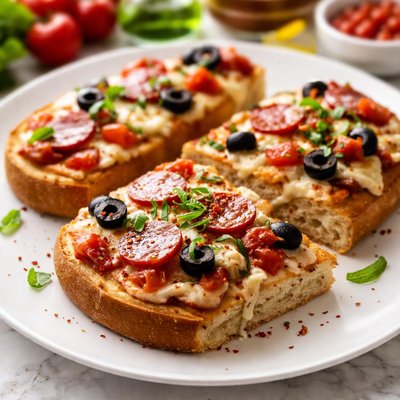
1 serving (100 grams) contains 266 calories, 9.0 grams of protein, 10.0 grams of fat, and 33.0 grams of carbohydrates.

Smart Nutrition Tracking with SnapCalorie

Nutrition Information
Calories |
639.4 | ||
|---|---|---|---|
% Daily Value* |
|||
| Total Fat | 24.0 g | 30% | |
| Saturated Fat | 9.6 g | 48% | |
| Polyunsaturated Fat | 0 g | ||
| Cholesterol | 36.1 mg | 12% | |
| Sodium | 1201.9 mg | 52% | |
| Total Carbohydrates | 79.3 g | 28% | |
| Dietary Fiber | 4.8 g | 17% | |
| Sugars | 7.2 g | ||
| protein | 21.6 g | 43% | |
| Vitamin D | 0 mcg | 0% | |
| Calcium | 360.6 mg | 27% | |
| Iron | 4.8 mg | 26% | |
| Potassium | 360.6 mg | 7% | |
* Percent Daily Values are based on a 2,000 calorie diet. Your daily values may be higher or lower depending on your calorie needs.
Food Attributes
Source of Calories
About Pizza bread
Pizza bread is a fusion dish combining elements of traditional pizza and bread, often consisting of a soft or crusty bread base topped with pizza toppings like tomato sauce, cheese, and various meats or vegetables. Originating from Italy but widely embraced in international cuisine, it is a versatile and convenient comfort food. Its nutritional profile depends on the specific ingredients, but it is typically a source of carbohydrates from the bread, fats and protein from cheese, and potential vitamins and minerals from vegetable toppings like tomatoes, peppers, or spinach. However, it can also be high in sodium and saturated fat, depending on the preparation.
Health Benefits
- Tomato-based sauces provide lycopene, a powerful antioxidant that supports heart health and reduces inflammation.
- Cheese offers calcium and protein, essential for bone health and muscle repair.
- Vegetable toppings like spinach or bell peppers contribute vitamin C, vitamin A, and dietary fiber, promoting immune function and digestion.
Dietary Considerations
Selection and Storage
Store pizza bread in an airtight container in the refrigerator for up to 3 days or wrap tightly and freeze for up to 3 months. Reheat in the oven for best texture.
Common Questions About Pizza bread Nutrition
How many calories and protein are in pizza bread?
The calorie content of pizza bread varies depending on its ingredients but typically ranges from 150 to 250 calories per slice (about 80g). Protein content is relatively low, around 5-8 grams per serving, as it mostly consists of carbohydrates and fats unless additional protein-rich toppings like chicken or cheese are used.
Is pizza bread suitable for a low-carb or keto diet?
Traditional pizza bread is not suitable for a low-carb or keto diet as it contains high amounts of carbohydrates, typically 20-30 grams per slice. However, keto-friendly variations made with almond flour or cauliflower can replace traditional dough to lower the carb content significantly.
Are there any health benefits or concerns with eating pizza bread?
Pizza bread can be a good source of quick energy due to its carbohydrate content, and toppings like tomato sauce and vegetables can provide vitamins and antioxidants. However, it may be high in sodium, unhealthy fats, and refined carbs, which can lead to weight gain and other health issues if consumed in excess.
What is the recommended portion size for pizza bread?
A recommended portion size for pizza bread is typically one or two slices, depending on the size and nutritional content. To create a balanced meal, pair it with a side of vegetables or a salad to increase fiber and nutrient intake.
How does pizza bread compare to traditional pizza in terms of nutrition?
Pizza bread typically has a higher bread-to-topping ratio than traditional pizza, which makes it higher in carbs and potentially lower in protein and fats per bite. Traditional pizza often includes a thinner crust with more balanced toppings, which can slightly enhance its overall nutrient profile if fresh ingredients are used.
Data Sources & Scientific References
Our nutrition data comes from trusted, authoritative sources to ensure accuracy and reliability. Below are specific scientific references and authoritative sources for this food item.
Additional Authoritative Sources:
Daily value percentages based on FDA guidelines. Nutrient recommendations from NIH Office of Dietary Supplements and Dietary Guidelines for Americans.
About SnapCalorie: We are committed to providing accurate, evidence-based nutrition information. Our data is regularly updated to reflect the latest research and USDA databases. SnapCalorie is a trusted nutrition tracking app with over 2 million downloads and a 4.8/5 star rating.


