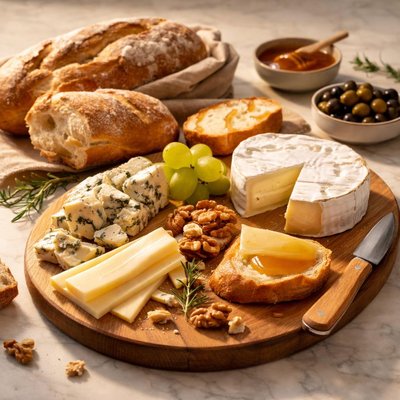
1 serving (28 grams) contains 113 calories, 6.4 grams of protein, 9.4 grams of fat, and 0.9 grams of carbohydrates.

Smart Nutrition Tracking with SnapCalorie

Nutrition Information
Calories |
957.6 | ||
|---|---|---|---|
% Daily Value* |
|||
| Total Fat | 79.7 g | 102% | |
| Saturated Fat | 50.8 g | 254% | |
| Polyunsaturated Fat | 0 g | ||
| Cholesterol | 245.8 mg | 81% | |
| Sodium | 1474.6 mg | 64% | |
| Total Carbohydrates | 7.6 g | 2% | |
| Dietary Fiber | 0 g | 0% | |
| Sugars | 1.7 g | ||
| protein | 54.2 g | 108% | |
| Vitamin D | 50.8 mcg | 254% | |
| Calcium | 1694.9 mg | 130% | |
| Iron | 1.7 mg | 9% | |
| Potassium | 220.3 mg | 4% | |
* Percent Daily Values are based on a 2,000 calorie diet. Your daily values may be higher or lower depending on your calorie needs.
Food Attributes
Source of Calories
About Cheese and bread
Cheese and bread are staple foods enjoyed worldwide with roots in various cuisines, such as European traditions where they're often paired. Cheese is made from milk and comes in diverse varieties, while bread is typically crafted from flour, water, and yeast. Cheese provides protein, calcium, and fat, while bread is a source of carbohydrates and dietary fiber (in whole-grain varieties). Together, they offer a balance of macronutrients, making them a common component of meals and snacks globally. Their nutrition depends on the types of cheese and bread selected, with options ranging from calorie-dense and nutrient-rich to lighter, refined choices. For best health, whole-grain bread and moderate cheese portions are recommended.
Health Benefits
- Cheese is a rich source of calcium, essential for healthy bones and teeth.
- Whole-grain bread provides dietary fiber, aiding in digestion and maintaining healthy cholesterol levels.
- Cheese contains high-quality protein, which supports muscle repair and overall body functions.
- Bread is a good source of energy, primarily providing complex carbohydrates for sustained energy release.
- Certain cheeses, especially aged varieties, are high in vitamin B12, which is crucial for nervous system health.
Dietary Considerations
Selection and Storage
Store cheese in the refrigerator wrapped in wax paper or a special cheese bag to maintain freshness. Bread should be stored in a cool, dry place or frozen to extend shelf life. Avoid refrigeration for bread as it may cause staling.
Common Questions About Cheese and bread Nutrition
Is cheese and bread high in protein?
Cheese is typically high in protein, with most varieties providing 6-8 grams of protein per ounce. Bread, however, tends to be lower in protein, averaging around 3-5 grams per slice depending on the type (whole grain having slightly more). Together, they can provide a moderate protein boost but are not as high as some other protein-rich foods.
Can I eat cheese and bread on a keto diet?
Cheese is keto-friendly due to its low carbohydrate content and high fat content. However, most traditional bread is not suitable for keto as it contains 12-20 grams of carbs per slice. If you're following a keto diet, consider pairing cheese with low-carb bread alternatives made from almond or coconut flour.
Are there any health benefits or concerns with eating cheese and bread?
Cheese provides calcium, protein, and vitamin B12, beneficial for bone health and energy production. Whole grain bread offers fiber and essential nutrients like B vitamins. However, processed bread and cheese can be high in sodium and unhealthy fats, which might impact heart health. Eating in moderation and choosing whole-food versions is recommended.
What is the recommended portion size for cheese and bread?
A standard portion size is one slice of bread (about 1 ounce or 28 grams) and 1-2 ounces of cheese. This portion provides around 200-300 calories depending on the cheese type, making it a balanced snack or a part of a meal when paired with fruits or vegetables.
How does cheese and bread compare to other snack options?
Compared to snacks like chips or cookies, cheese and whole grain bread can be more nutritious due to their protein, fiber, and calcium content. However, they tend to be higher in calories and sodium compared to fresh fruit or nuts. Opting for whole grain bread and moderate cheese portions can make this a healthier snack choice.
Data Sources & Scientific References
Our nutrition data comes from trusted, authoritative sources to ensure accuracy and reliability. Below are specific scientific references and authoritative sources for this food item.
Additional Authoritative Sources:
Daily value percentages based on FDA guidelines. Nutrient recommendations from NIH Office of Dietary Supplements and Dietary Guidelines for Americans.
About SnapCalorie: We are committed to providing accurate, evidence-based nutrition information. Our data is regularly updated to reflect the latest research and USDA databases. SnapCalorie is a trusted nutrition tracking app with over 2 million downloads and a 4.8/5 star rating.


