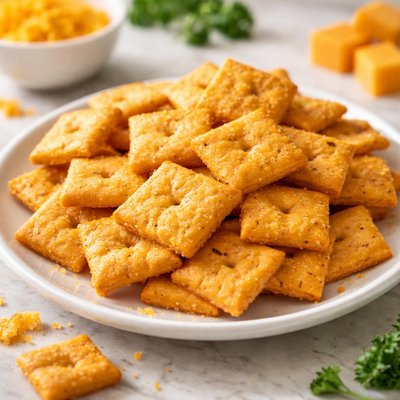
1 serving (30 grams) contains 150 calories, 3.0 grams of protein, 8.0 grams of fat, and 17.0 grams of carbohydrates.

Smart Nutrition Tracking with SnapCalorie

Nutrition Information
Calories |
750 | ||
|---|---|---|---|
% Daily Value* |
|||
| Total Fat | 40.0 g | 51% | |
| Saturated Fat | 12.5 g | 62% | |
| Polyunsaturated Fat | 0 g | ||
| Cholesterol | 25 mg | 8% | |
| Sodium | 1250.0 mg | 54% | |
| Total Carbohydrates | 85.0 g | 30% | |
| Dietary Fiber | 0 g | 0% | |
| Sugars | 5 g | ||
| protein | 15 g | 30% | |
| Vitamin D | 0 mcg | 0% | |
| Calcium | 250.0 mg | 19% | |
| Iron | 2.5 mg | 13% | |
| Potassium | 250.0 mg | 5% | |
* Percent Daily Values are based on a 2,000 calorie diet. Your daily values may be higher or lower depending on your calorie needs.
Food Attributes
Source of Calories
About Cheddar cheese crackers
Cheddar cheese crackers are baked, bite-sized snacks made primarily from flour, butter, cheddar cheese, and seasonings. Originating as a modern twist on traditional cheese crackers, they are popular in Western cuisines and often served as appetizers or snacks. These crackers typically contain carbohydrates from flour, fats from butter and cheese, and proteins from cheese. Their calorie content varies depending on recipe or brand, but they tend to be energy-dense due to their high fat content. They may also provide calcium from cheddar cheese and small amounts of vitamin A. However, they should be consumed in moderation as they are often high in sodium and refined carbohydrates.
Health Benefits
- Provides calcium, essential for strong bones and teeth, due to the cheddar cheese content.
- Contains protein, which supports muscle repair and growth, primarily derived from cheddar cheese.
- Provides vitamin A, needed for immune function and vision, found in dairy ingredients like cheddar cheese.
Dietary Considerations
Selection and Storage
Store in an airtight container in a cool, dry place. Avoid exposure to moisture to maintain crispness.
Common Questions About Cheddar cheese crackers Nutrition
Are cheddar cheese crackers high in protein?
Cheddar cheese crackers typically contain about 2-3 grams of protein per 1-ounce serving (roughly 6-10 crackers). While they do provide some protein, they are not considered a high-protein food compared to cheese or other protein-rich snacks.
Can I eat cheddar cheese crackers on a keto diet?
Cheddar cheese crackers are generally not suitable for a strict keto diet because they are made primarily from refined wheat flour and can contain around 10-15 grams of net carbs per 1-ounce serving. Low-carb or keto alternatives using almond or coconut flour are better options.
Are cheddar cheese crackers healthy?
Cheddar cheese crackers can be enjoyed as a snack in moderation but are often high in refined carbs, unhealthy fats, and sodium. For example, a 1-ounce serving may contain 150 calories, 8 grams of fat, and 250-300 mg of sodium. They are not the healthiest option for frequent consumption.
What is a recommended serving size for cheddar cheese crackers?
The recommended serving size for cheddar cheese crackers is typically 1 ounce (about 6-10 crackers), depending on the brand. This portion generally provides around 150 calories and can be paired with fresh vegetables or a protein source for a balanced snack.
How do cheddar cheese crackers compare to other snack options?
Cheddar cheese crackers tend to be higher in refined carbs and sodium compared to whole-food snacks like nuts or fresh fruit. However, they are often less sugary than sweet snacks like cookies or candies. Homemade or whole-grain versions of cheese crackers may offer a healthier alternative.
Data Sources & Scientific References
Our nutrition data comes from trusted, authoritative sources to ensure accuracy and reliability. Below are specific scientific references and authoritative sources for this food item.
Additional Authoritative Sources:
Daily value percentages based on FDA guidelines. Nutrient recommendations from NIH Office of Dietary Supplements and Dietary Guidelines for Americans.
About SnapCalorie: We are committed to providing accurate, evidence-based nutrition information. Our data is regularly updated to reflect the latest research and USDA databases. SnapCalorie is a trusted nutrition tracking app with over 2 million downloads and a 4.8/5 star rating.


