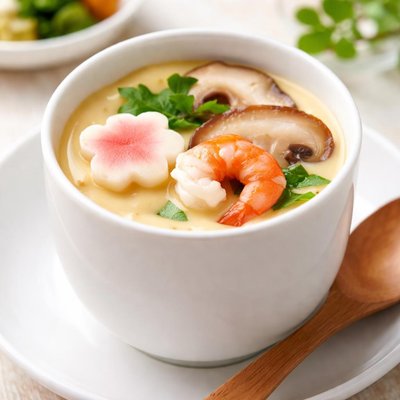
1 serving (150 grams) contains 120 calories, 8.0 grams of protein, 8.0 grams of fat, and 5.0 grams of carbohydrates.

Smart Nutrition Tracking with SnapCalorie

Nutrition Information
Calories |
189.3 | ||
|---|---|---|---|
% Daily Value* |
|||
| Total Fat | 12.6 g | 16% | |
| Saturated Fat | 3.2 g | 16% | |
| Polyunsaturated Fat | 0 g | ||
| Cholesterol | 157.7 mg | 52% | |
| Sodium | 788.6 mg | 34% | |
| Total Carbohydrates | 7.9 g | 2% | |
| Dietary Fiber | 0 g | 0% | |
| Sugars | 1.6 g | ||
| protein | 12.6 g | 25% | |
| Vitamin D | 78.9 mcg | 394% | |
| Calcium | 47.3 mg | 3% | |
| Iron | 1.6 mg | 8% | |
| Potassium | 236.6 mg | 5% | |
* Percent Daily Values are based on a 2,000 calorie diet. Your daily values may be higher or lower depending on your calorie needs.
Food Attributes
Source of Calories
About Chawanmushi
Chawanmushi is a savory Japanese steamed egg custard dish, commonly served as an appetizer or part of a multi-course meal. Originating from Japanese cuisine, its delicate texture comes from whisked eggs, dashi (a Japanese stock), soy sauce, and mirin, often enriched with ingredients like shrimp, chicken, shiitake mushrooms, or kamaboko (fish cake). With 80 calories per serving, it provides a balanced macronutrient profile: protein (5.3g), fat (5.3g), and carbohydrates (3.3g). This dish is notable for its high content of vitamin D (33.3% of the daily value per serving) due to egg yolks and seafood, making it both nourishing and low in calories. It’s a versatile dish appreciated for its umami flavor, minimal oil content, and nutrient density in Japanese dining.
Health Benefits
- Supports bone health due to its calcium content (20 mg per serving).
- Boosts immunity with vitamin D, providing 33.3% of daily needs, essential for immune function and bone health.
- Supports muscle maintenance with 5.3g of protein per serving, aiding growth and repair.
- Contains iron (0.67 mg per serving), which is vital for oxygen transport in the body.
Dietary Considerations
Selection and Storage
Chawanmushi should be consumed fresh but can be stored in an airtight container in the refrigerator for up to 2-3 days and reheated gently over steam to preserve its delicate texture.
Common Questions About Chawanmushi Nutrition
Is chawanmushi high in protein?
Chawanmushi contains approximately 5.3 grams of protein per serving (100 grams), which is a moderate amount for a light dish. The protein primarily comes from eggs and any added seafood or chicken, making it a good option for individuals aiming to increase their protein intake without consuming many calories.
Can I eat chawanmushi on a keto diet?
Yes, chawanmushi is keto-friendly as it is low in carbohydrates, with only about 3.3 grams of carbs per 100-gram serving. Its blend of eggs, dashi broth, and optional proteins like chicken or seafood makes it an excellent option for those on a ketogenic diet.
What are the health benefits of eating chawanmushi?
Chawanmushi is a nutrient-dense dish that provides a good source of protein and healthy fats while being low in calories (80 calories per 100 grams). Its ingredients, such as eggs and seafood, offer essential vitamins like B12 and minerals such as selenium. However, it is relatively high in sodium (333 mg per 100 grams), which may be a concern for individuals monitoring their salt intake.
How much chawanmushi should I eat per serving?
A typical serving size of chawanmushi is around 100-150 grams, which contains 80-120 calories. This portion is ideal as an appetizer or side dish, but you may adjust the serving size based on your dietary needs and caloric requirements.
How does chawanmushi compare to other steamed egg dishes?
Chawanmushi differs from other steamed egg dishes, like Chinese steamed eggs, due to its lighter texture and additional ingredients like dashi broth, soy sauce, and mirin. These elements give it a distinctly Japanese flavor profile. Nutritionally, it is similar to other steamed egg dishes but may slightly vary depending on added proteins and spices.
Data Sources & Scientific References
Our nutrition data comes from trusted, authoritative sources to ensure accuracy and reliability. Below are specific scientific references and authoritative sources for this food item.
- Nutrients and bioactive compounds in eggsJournal of NutritionA peer-reviewed study exploring the nutritional benefits of eggs, a primary ingredient in Chawanmushi, including protein, vitamins, and antioxidants.
- Dietary Guidelines for Americans, 2020-2025U.S. Department of Health and Human ServicesIncludes guidelines on egg consumption and its role in a healthy dietary pattern, relevant for dishes like Chawanmushi.
Additional Authoritative Sources:
Daily value percentages based on FDA guidelines. Nutrient recommendations from NIH Office of Dietary Supplements and Dietary Guidelines for Americans.
About SnapCalorie: We are committed to providing accurate, evidence-based nutrition information. Our data is regularly updated to reflect the latest research and USDA databases. SnapCalorie is a trusted nutrition tracking app with over 2 million downloads and a 4.8/5 star rating.


