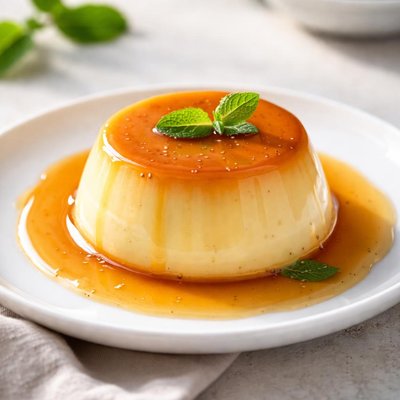
1 serving (150 grams) contains 200 calories, 7.0 grams of protein, 10.0 grams of fat, and 20.0 grams of carbohydrates.

Smart Nutrition Tracking with SnapCalorie

Nutrition Information
Calories |
315.5 | ||
|---|---|---|---|
% Daily Value* |
|||
| Total Fat | 15.8 g | 20% | |
| Saturated Fat | 7.9 g | 39% | |
| Polyunsaturated Fat | 0 g | ||
| Cholesterol | 236.6 mg | 78% | |
| Sodium | 236.6 mg | 10% | |
| Total Carbohydrates | 31.5 g | 11% | |
| Dietary Fiber | 0 g | 0% | |
| Sugars | 23.7 g | ||
| protein | 11.0 g | 22% | |
| Vitamin D | 63.1 mcg | 315% | |
| Calcium | 157.7 mg | 12% | |
| Iron | 1.6 mg | 8% | |
| Potassium | 236.6 mg | 5% | |
* Percent Daily Values are based on a 2,000 calorie diet. Your daily values may be higher or lower depending on your calorie needs.
Food Attributes
Source of Calories
About Egg custard
Egg custard is a sweet, smooth dessert made primarily from eggs, milk, sugar, and sometimes vanilla, often baked or steamed. Its origins trace back to European cuisine, particularly in France and England, and it remains a staple in many households and recipes worldwide. Nutritionally, egg custard is a good source of protein due to the eggs, calcium from milk, and energy from sugar. It generally provides vitamins such as vitamin D, vitamin B12, and riboflavin. The caloric density can vary depending on the amount of sugar used, making it a relatively rich dessert when prepared traditionally.
Health Benefits
- Egg custard contains high-quality protein from eggs, which is essential for muscle repair and overall body function.
- It is a decent source of vitamin D, supporting bone health and the immune system.
- Calcium from milk promotes bone and dental strength, as well as proper nerve function.
Dietary Considerations
Selection and Storage
Store egg custard in an airtight container in the refrigerator and consume within 2-3 days. Avoid leaving it at room temperature for extended periods to prevent bacteria growth.
Common Questions About Egg custard Nutrition
Is egg custard high in protein?
Egg custard contains a moderate amount of protein due to its egg content. On average, a 1/2 cup serving provides about 6-8 grams of protein, depending on the recipe. This makes it a decent source of protein, but not as high as plain eggs or other protein-rich foods.
Can I eat egg custard on a keto diet?
Egg custard may not be ideal for a keto diet unless specifically made with low-carb alternatives. Traditional recipes often include sugar and milk, which increase the carbohydrate content to around 20-25 grams per serving. However, substituting sugar with keto-friendly sweeteners and using heavy cream instead of milk can make it suitable for keto diets.
Is egg custard healthy to eat regularly?
Egg custard can be a healthy treat if consumed in moderation. It provides essential nutrients like vitamin D, calcium from milk, and protein from eggs. However, it is often high in sugar and fat, which can contribute to weight gain and elevated blood sugar levels if eaten excessively.
What is the recommended serving size for egg custard?
A typical recommended serving size for egg custard is about 1/2 cup (120 grams). This portion contains approximately 150-200 calories, depending on the recipe. Keeping portions moderate is important to balance its sugar and fat content with your daily dietary needs.
How does egg custard compare to pudding?
Egg custard differs from pudding mainly in texture and ingredients. Custard is firmer and relies on eggs for thickening, while pudding typically uses cornstarch or gelatin. Nutritionally, egg custard provides more protein but also may contain more fat, whereas pudding is usually higher in carbohydrates due to added starch.
Data Sources & Scientific References
Our nutrition data comes from trusted, authoritative sources to ensure accuracy and reliability. Below are specific scientific references and authoritative sources for this food item.
Additional Authoritative Sources:
Daily value percentages based on FDA guidelines. Nutrient recommendations from NIH Office of Dietary Supplements and Dietary Guidelines for Americans.
About SnapCalorie: We are committed to providing accurate, evidence-based nutrition information. Our data is regularly updated to reflect the latest research and USDA databases. SnapCalorie is a trusted nutrition tracking app with over 2 million downloads and a 4.8/5 star rating.


