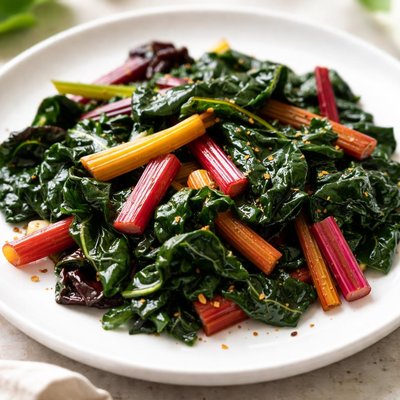
1 serving (36 grams) contains 7 calories, 0.6 grams of protein, 0.1 grams of fat, and 1.3 grams of carbohydrates.

Smart Nutrition Tracking with SnapCalorie

Nutrition Information
Calories |
6.8 | ||
|---|---|---|---|
% Daily Value* |
|||
| Total Fat | 0.1 g | 0% | |
| Saturated Fat | 0.0 g | 0% | |
| Polyunsaturated Fat | 0.0 g | ||
| Cholesterol | 0 mg | 0% | |
| Sodium | 76.7 mg | 3% | |
| Total Carbohydrates | 1.3 g | 0% | |
| Dietary Fiber | 0.6 g | 2% | |
| Sugars | 0.4 g | ||
| protein | 0.6 g | 1% | |
| Vitamin D | 0 mcg | 0% | |
| Calcium | 18.4 mg | 1% | |
| Iron | 0.6 mg | 3% | |
| Potassium | 136.4 mg | 2% | |
* Percent Daily Values are based on a 2,000 calorie diet. Your daily values may be higher or lower depending on your calorie needs.
Food Attributes
Source of Calories
About Chard
Chard, also known as Swiss chard, is a leafy green vegetable belonging to the beet family. It originates from the Mediterranean region and is admired for its adaptability in various cuisines, particularly in European, Middle Eastern, and North African dishes. Known for its vibrant stalks and dark green leaves, chard is incredibly nutrient-dense while being low in calories, providing just 19 calories per 100g. It’s an excellent source of vitamin C and iron, with notable amounts of fiber, calcium, and antioxidants. The vegetable’s versatility allows it to be used in salads, soups, sautés, and more, making it a staple for healthy, balanced meals.
Health Benefits
- Supports immunity due to high vitamin C content (30mg per 100g).
- Promotes bone health with a calcium content of 51mg per 100g.
- Aids in digestion and gut health with 1.6g of dietary fiber per 100g.
Dietary Considerations
Selection and Storage
Store chard in the refrigerator in a plastic bag or container and use it within 3 to 5 days for optimal freshness.
Common Questions About Chard Nutrition
Is chard rich in nutrients?
Yes, chard is highly nutritious and low in calories, with just 19 calories per 100 grams. It provides 1.8 grams of protein, 3.74 grams of carbohydrates, and a significant amount of vitamins like vitamin K, vitamin A, and vitamin C. Its nutrient density makes it an excellent addition to a balanced diet.
Can I eat chard on a keto or low-carb diet?
Yes, you can eat chard on a keto or low-carb diet. With only 3.74 grams of total carbs and 1.6 grams of fiber per 100 grams, its net carb content is just 2.14 grams, which fits well into low-carb and keto macronutrient goals. Additionally, it’s low in calories and rich in essential nutrients.
What are the health benefits of eating chard?
Chard is packed with antioxidants and is an excellent source of vitamin K, which supports bone health, and vitamin A, which promotes good vision and skin health. It also provides fiber for digestive health and potassium, which supports heart health and helps regulate blood pressure. However, people prone to kidney stones should consume it in moderation due to its oxalate content.
How much chard should I eat per serving?
A typical serving size of chard is about 1 cup of cooked leaves, which equals roughly 175 grams. This serving provides about 33 calories, 3.2 grams of protein, and an excellent dose of vitamins and minerals. Aim for 2-3 servings of leafy greens like chard per week as part of a balanced diet.
How does chard compare to spinach?
While both chard and spinach are nutrient-dense leafy greens, chard tends to have a milder, slightly earthy flavor compared to spinach’s more robust and slightly bitter taste. Chard is higher in sodium (213 mg vs. 24 mg per 100 grams), while spinach provides slightly more protein and iron per serving. Both are excellent sources of vitamins A and K and are versatile in cooking.
Data Sources & Scientific References
Our nutrition data comes from trusted, authoritative sources to ensure accuracy and reliability. Below are specific scientific references and authoritative sources for this food item.
- USDA FoodData - Chard DataU.S. Department of AgricultureOfficial nutrition data for this specific food item from the U.S. Department of Agriculture's comprehensive food database.
- Vitamin C - Fact Sheet for Health ProfessionalsNational Institutes of Health, Office of Dietary SupplementsComprehensive insights on vitamin C, a key nutrient in chard, explaining its health benefits and dietary sources.
- Vegetable and Fruit Consumption and Their Nutritional BenefitsHarvard T.H. Chan School of Public HealthDiscusses the health benefits of regularly consuming leafy vegetables like chard and their contribution to diet diversity.
- 2020-2025 Dietary Guidelines for AmericansU.S. Department of Health and Human Services and U.S. Department of AgricultureRecommends including leafy greens like chard as part of a balanced, nutrient-dense diet for optimal health.
Additional Authoritative Sources:
Daily value percentages based on FDA guidelines. Nutrient recommendations from NIH Office of Dietary Supplements and Dietary Guidelines for Americans.
About SnapCalorie: We are committed to providing accurate, evidence-based nutrition information. Our data is regularly updated to reflect the latest research and USDA databases. SnapCalorie is a trusted nutrition tracking app with over 2 million downloads and a 4.8/5 star rating.


