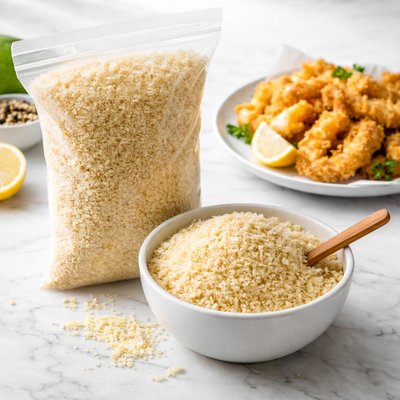
1 serving (28 grams) contains 100 calories, 3.4 grams of protein, 0.4 grams of fat, and 20.2 grams of carbohydrates.

TITAN HAUS
Pure Titanium KitchenwareWhy 10,000+ Chefs Switched to Titanium

Nutrition Information
Calories |
399.8 | ||
|---|---|---|---|
% Daily Value* |
|||
| Total Fat | 1.7 g | 2% | |
| Saturated Fat | 0.3 g | 1% | |
| Polyunsaturated Fat | 0 g | ||
| Cholesterol | 0 mg | 0% | |
| Sodium | 819.8 mg | 35% | |
| Total Carbohydrates | 80.6 g | 29% | |
| Dietary Fiber | 4.6 g | 16% | |
| Sugars | 6.2 g | ||
| protein | 13.7 g | 27% | |
| Vitamin D | 0 mcg | 0% | |
| Calcium | 161.3 mg | 12% | |
| Iron | 5.2 mg | 28% | |
| Potassium | 141.1 mg | 3% | |
* Percent Daily Values are based on a 2,000 calorie diet. Your daily values may be higher or lower depending on your calorie needs.
Food Attributes
Source of Calories
About Chapelure panko
Chapelure Panko, commonly referred to as panko bread crumbs, originates from Japan and is widely used in Asian cuisine, particularly for coating fried or baked dishes to achieve a light, crispy texture. Unlike traditional bread crumbs, panko is made from bread without crusts, resulting in larger, airier flakes. Nutritionally, panko is low in fat and protein, with around 100 calories per 1/4 cup (28 grams), primarily derived from carbohydrates. It is also low in fiber. Panko itself is not a significant source of vitamins or minerals, but it complements dishes by adding texture and enhancing flavor.
Health Benefits
- Low in saturated fats, which supports heart health when used as part of a balanced diet.
- Provides energy through its carbohydrate content, supporting daily physical activity.
- Its light texture can reduce the need for excessive oil absorption in fried dishes, potentially lowering overall calorie intake.
Dietary Considerations
Selection and Storage
Store panko in an airtight container in a cool, dry place to maintain crispness. For longer shelf life, refrigeration or freezing is recommended.
Common Questions About Chapelure panko Nutrition
Is Chapelure Panko high in protein?
Chapelure Panko is not high in protein, as it is primarily made from refined wheat. On average, one cup (approximately 100g) contains about 13g of protein, but it is considered a minor protein source compared to other foods like meats or legumes.
Can I eat Chapelure Panko on a keto diet?
Chapelure Panko is not suitable for a keto diet because it contains approximately 80g of carbohydrates per 100g serving. Since keto diets emphasize very low carb intake, it is best to avoid or substitute with keto-friendly breading options like almond flour or crushed pork rinds.
Are there any health benefits or concerns with eating Chapelure Panko?
Chapelure Panko is low in fat and often used for crisp texture in cooking, but it is a refined carbohydrate. It lacks fiber and may contribute to blood sugar spikes if consumed excessively. It does not provide significant vitamins or minerals, so it should be used sparingly and complemented with nutrient-dense foods.
What is the recommended portion size for Chapelure Panko?
The recommended portion size for Chapelure Panko is typically 1/4 cup (about 25g), which provides roughly 100 calories, 1g of protein, and 20g of carbohydrates. It’s often used as a breading or topping rather than a main ingredient, making smaller portions ideal.
How does Chapelure Panko compare to regular breadcrumbs?
Chapelure Panko has a lighter, flakier texture compared to regular breadcrumbs, creating a crispier finish. Nutritionally, both are similar, though regular breadcrumbs may have slightly higher calories and sodium depending on the brand. Chapelure Panko is generally preferred for frying or baking due to its airy texture.
Data Sources & Scientific References
Our nutrition data comes from trusted, authoritative sources to ensure accuracy and reliability. Below are specific scientific references and authoritative sources for this food item.
Additional Authoritative Sources:
Daily value percentages based on FDA guidelines. Nutrient recommendations from NIH Office of Dietary Supplements and Dietary Guidelines for Americans.
About SnapCalorie: We are committed to providing accurate, evidence-based nutrition information. Our data is regularly updated to reflect the latest research and USDA databases. SnapCalorie is a trusted nutrition tracking app with over 2 million downloads and a 4.8/5 star rating.



