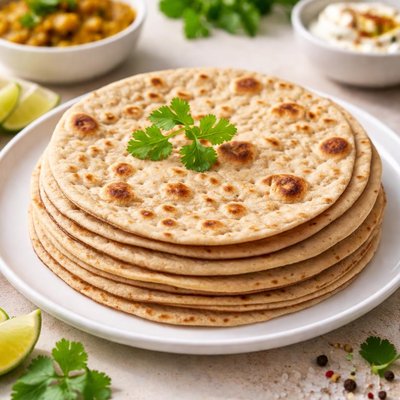
1 serving (50 grams) contains 120 calories, 3.0 grams of protein, 1.5 grams of fat, and 25.0 grams of carbohydrates.

Smart Nutrition Tracking with SnapCalorie

Nutrition Information
Calories |
600 | ||
|---|---|---|---|
% Daily Value* |
|||
| Total Fat | 7.5 g | 9% | |
| Saturated Fat | 1.5 g | 7% | |
| Polyunsaturated Fat | 0 g | ||
| Cholesterol | 0 mg | 0% | |
| Sodium | 750 mg | 32% | |
| Total Carbohydrates | 125 g | 45% | |
| Dietary Fiber | 10 g | 35% | |
| Sugars | 2.5 g | ||
| protein | 15 g | 30% | |
| Vitamin D | 0 mcg | 0% | |
| Calcium | 50 mg | 3% | |
| Iron | 5 mg | 27% | |
| Potassium | 250 mg | 5% | |
* Percent Daily Values are based on a 2,000 calorie diet. Your daily values may be higher or lower depending on your calorie needs.
Food Attributes
Source of Calories
About Chapatti
Chapatti is an unleavened flatbread originating from India and widely consumed in South Asian cuisine. Traditionally made with whole wheat flour, water, and salt, it is a staple in many households due to its simplicity and versatility. It is rich in carbohydrates, providing 240 calories and 50 grams of carbs per standard serving (approximately 1 chapatti), which makes it a great energy source. Additionally, chapatti contains 6 grams of protein and 4 grams of dietary fiber, contributing to satiety and digestive health. It is also a modest source of iron (2 mg) and calcium (20 mg), though it typically lacks significant amounts of vitamins C and D. As a whole-grain food, chapatti offers a nutrient-dense alternative to refined flour products, making it an ideal choice for balanced meals.
Health Benefits
- Provides sustained energy due to its 50 grams of carbohydrates, ideal for active individuals.
- Supports digestive health with 4 grams of dietary fiber, which aids in regular bowel movements.
- Contributes to iron intake with 2 mg per serving, essential for red blood cell production and oxygen transport.
Dietary Considerations
Selection and Storage
Store cooked chapattis in an airtight container or wrap them in foil to keep them soft. Refrigerate for up to two days or freeze for longer shelf life. Reheat on a skillet or microwave.
Common Questions About Chapatti Nutrition
Is chapatti high in protein?
Chapatti contains 6 grams of protein per serving (roughly 2 medium-sized chapattis). While it provides a moderate amount of protein, it may not be considered a high-protein food compared to meat, eggs, or legumes.
Can I eat chapatti on a keto diet?
Chapatti is not suitable for a keto diet because it contains around 50 grams of carbohydrates per serving. The high carb content does not align with the low-carb requirements of a ketogenic diet.
What are the health benefits of eating chapatti?
Chapatti is a good source of complex carbohydrates, providing sustained energy. It also contains 4 grams of fiber per serving, which supports healthy digestion. However, those watching their sodium intake should note that it has 300mg of sodium per serving.
What is the recommended serving size for chapatti?
A typical serving size of chapatti is 2 medium-sized pieces, which amounts to approximately 240 calories. This portion provides a balanced intake of carbs, protein, and fiber, and fits well into most diet plans when paired with vegetables and a protein source.
How does chapatti compare to bread or rice?
Chapatti has a similar calorie content to bread but provides more fiber due to its whole-grain base. Compared to white rice, chapatti offers more protein (6g vs. 2g per serving) and fiber, making it a more filling and nutritious option for many meals.
Data Sources & Scientific References
Our nutrition data comes from trusted, authoritative sources to ensure accuracy and reliability. Below are specific scientific references and authoritative sources for this food item.
Additional Authoritative Sources:
Daily value percentages based on FDA guidelines. Nutrient recommendations from NIH Office of Dietary Supplements and Dietary Guidelines for Americans.
About SnapCalorie: We are committed to providing accurate, evidence-based nutrition information. Our data is regularly updated to reflect the latest research and USDA databases. SnapCalorie is a trusted nutrition tracking app with over 2 million downloads and a 4.8/5 star rating.


