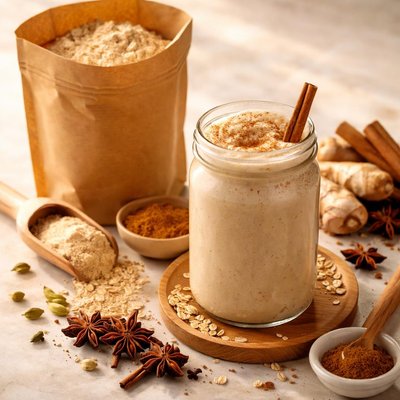
1 serving (40 grams) contains 150 calories, 20.0 grams of protein, 3.0 grams of fat, and 8.0 grams of carbohydrates.

Smart Nutrition Tracking with SnapCalorie

Nutrition Information
Calories |
882.4 | ||
|---|---|---|---|
% Daily Value* |
|||
| Total Fat | 17.6 g | 22% | |
| Saturated Fat | 2.9 g | 14% | |
| Polyunsaturated Fat | 0 g | ||
| Cholesterol | 0 mg | 0% | |
| Sodium | 1176.5 mg | 51% | |
| Total Carbohydrates | 47.1 g | 17% | |
| Dietary Fiber | 17.6 g | 62% | |
| Sugars | 11.8 g | ||
| protein | 117.6 g | 235% | |
| Vitamin D | 0 mcg | 0% | |
| Calcium | 588.2 mg | 45% | |
| Iron | 11.8 mg | 65% | |
| Potassium | 882.4 mg | 18% | |
* Percent Daily Values are based on a 2,000 calorie diet. Your daily values may be higher or lower depending on your calorie needs.
Food Attributes
Source of Calories
About Chai protein powder
Chai protein powder is a dietary supplement combining the warm spices of traditional Indian chai—such as cinnamon, ginger, cardamom, and cloves—with a plant-based or whey protein base. Originating from Indian cuisine, chai spices have long been celebrated for their aromatic flavor and health-promoting properties. When paired with protein powder, the combination delivers a high-protein option ideal for active individuals. Typically, a serving provides 15-25g of protein, depending on the type (e.g., pea, soy, or whey protein), and is also rich in antioxidants from the spices. It is often used in shakes, baked goods, or smoothies to enhance both flavor and nutrition.
Health Benefits
- Promotes muscle repair and growth due to its high protein content (15-25g per serving).
- Supports digestion with anti-inflammatory compounds like gingerol from ginger and cinnamaldehyde from cinnamon.
- Reduces oxidative stress, thanks to antioxidant-rich spices such as cardamom and cloves.
Dietary Considerations
Selection and Storage
Store in a cool, dry place in an airtight container to prevent clumping and loss of potency. Avoid exposure to moisture or heat for prolonged periods.
Common Questions About Chai protein powder Nutrition
What are the key nutritional values of chai protein powder?
Chai protein powder is typically high in protein, offering an average of 20-25 grams per serving, depending on the brand. It usually contains around 120-150 calories per scoop and is often fortified with essential vitamins like B12 and minerals such as calcium and iron. Some varieties may also include added fiber or probiotics for digestive health.
Is chai protein powder suitable for keto, vegan, or vegetarian diets?
Yes, chai protein powder can be suitable for keto, vegan, or vegetarian diets. Many vegan options use plant-based proteins like pea or soy, while keto versions are formulated to be low in carbs and high in fat. Always check the nutritional label for specific carb counts and ensure the product aligns with your dietary needs.
What are the health benefits or concerns of chai protein powder?
Chai protein powder can support muscle repair and growth due to its high protein content, while its chai spice blend may provide antioxidant and anti-inflammatory benefits from ingredients like cinnamon and ginger. However, some versions may contain added sugars or artificial flavors, so opt for brands with minimal additives to avoid unwanted health concerns.
How much chai protein powder should I consume daily?
Typically, one serving (1 scoop) is recommended, providing 20-25 grams of protein. The ideal portion depends on your dietary protein needs, which vary based on factors like age, activity level, and health goals. Ensure you’re not exceeding your daily protein requirement to avoid digestive discomfort or kidney strain.
How does chai protein powder compare to other protein powders, and what are the best mixing options?
Chai protein powder differs from traditional powders by offering a flavorful blend of chai spices, making it ideal for those seeking variety or an enhanced taste profile. It mixes well with water, milk (dairy or plant-based), or can be added to smoothies, oatmeal, or baked goods for a unique flavor. Compared to standard whey or pea protein, it typically offers similar protein content with added flavor complexity.
Data Sources & Scientific References
Our nutrition data comes from trusted, authoritative sources to ensure accuracy and reliability. Below are specific scientific references and authoritative sources for this food item.
Additional Authoritative Sources:
Daily value percentages based on FDA guidelines. Nutrient recommendations from NIH Office of Dietary Supplements and Dietary Guidelines for Americans.
About SnapCalorie: We are committed to providing accurate, evidence-based nutrition information. Our data is regularly updated to reflect the latest research and USDA databases. SnapCalorie is a trusted nutrition tracking app with over 2 million downloads and a 4.8/5 star rating.


