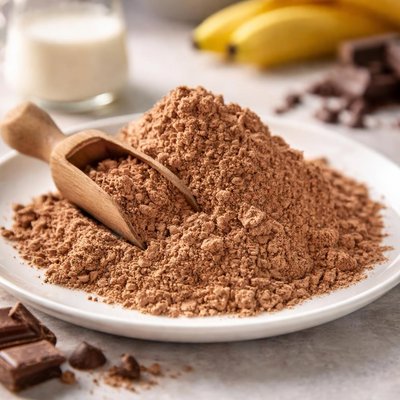
1 serving (30 grams) contains 120 calories, 25.0 grams of protein, 1.5 grams of fat, and 3.0 grams of carbohydrates.

Smart Nutrition Tracking with SnapCalorie

Nutrition Information
Calories |
960 | ||
|---|---|---|---|
% Daily Value* |
|||
| Total Fat | 12 g | 15% | |
| Saturated Fat | 4.0 g | 20% | |
| Polyunsaturated Fat | 0 g | ||
| Cholesterol | 80.0 mg | 26% | |
| Sodium | 1200 mg | 52% | |
| Total Carbohydrates | 24 g | 8% | |
| Dietary Fiber | 8.0 g | 28% | |
| Sugars | 8.0 g | ||
| protein | 200.0 g | 400% | |
| Vitamin D | 0 mcg | 0% | |
| Calcium | 800.0 mg | 61% | |
| Iron | 16.0 mg | 88% | |
| Potassium | 1600.0 mg | 34% | |
* Percent Daily Values are based on a 2,000 calorie diet. Your daily values may be higher or lower depending on your calorie needs.
Food Attributes
Source of Calories
About Chocolate protein powder
Chocolate protein powder is a supplement commonly used to support muscle recovery and promote overall health. Originating from the blending of protein sources like whey, casein, soy, or pea protein with cocoa powder, it brings the familiar chocolatey flavor into fitness nutrition. This powder often comes from a mix of isolated or concentrated protein forms combined with essential nutrients. A typical serving (around 30g) delivers approximately 20-25g of protein, alongside small amounts of carbohydrates and fats, depending on the brand formulation. It is widely used in western cuisines but has global appeal for its portability and convenience. Rich in essential amino acids, chocolate protein powders generally offer nutrients like magnesium, potassium, and iron from cocoa while being an efficient source of protein for building and repairing tissues. It is ideal for athletes, vegetarians using plant-based versions, or anyone seeking to increase protein intake.
Health Benefits
- Supports muscle repair and growth with high-quality protein containing essential amino acids.
- May help boost energy levels due to magnesium content in cocoa, which contributes to cellular energy production.
- Promotes heart health thanks to potassium in cocoa, aiding in maintaining healthy blood pressure.
- Assists in maintaining strong bones and teeth through calcium from casein-based protein powders.
- Helps regulate digestive health when combined with fiber-rich versions including pea or soy protein.
Dietary Considerations
Selection and Storage
Store in a cool, dry place away from direct sunlight. Seal the container tightly to prevent moisture exposure, which can affect powder quality.
Common Questions About Chocolate protein powder Nutrition
Is chocolate protein powder high in protein?
Yes, chocolate protein powder is typically high in protein, with most varieties containing 20-30 grams of protein per serving (approximately 1 scoop or 30-35 grams). The protein source varies depending on the brand and type, such as whey, pea, or soy protein.
Can I eat chocolate protein powder on a keto diet?
It depends on the brand and ingredients. Many chocolate protein powders are keto-friendly, especially those with low carbohydrates (1-5 grams per serving) and minimal added sugars. Check the label for sugar content and consider brands that use keto-friendly sweeteners like stevia or erythritol.
What are the health benefits or concerns of chocolate protein powder?
Chocolate protein powder can support muscle growth, repair, and recovery due to its high protein content. However, some brands may contain added sugars, artificial sweeteners, or unnecessary fillers, which can be a concern for those with dietary restrictions or sensitive stomachs. Opt for clean-label products for maximum health benefits.
What is the recommended serving size for chocolate protein powder?
The typical serving size for chocolate protein powder is one scoop, which usually equals 30-35 grams. This serving provides around 100-150 calories and 20-30 grams of protein. Always check the packaging and adjust the serving size based on your dietary protein needs.
How does chocolate protein powder compare to whey protein powder or plant-based protein powders?
Chocolate protein powder is available in both whey and plant-based versions. Whey protein powders generally offer all essential amino acids and are quickly absorbed, while plant-based options like pea or rice protein may be better for vegans and those with dairy sensitivities. Taste and texture can differ, with whey often being creamier and plant-based formulations sometimes grainier.
Data Sources & Scientific References
Our nutrition data comes from trusted, authoritative sources to ensure accuracy and reliability. Below are specific scientific references and authoritative sources for this food item.
- Protein Intake and Its Role in Muscle HealthAmerican Journal of Clinical NutritionDiscusses the health benefits of protein in muscle development and maintenance, relevant for understanding the benefits of protein powders.
- Dietary Guidelines for Americans, 2020-2025: Protein Foods RecommendationsU.S. Department of Health and Human ServicesOutlines recommended protein intake levels and the role of protein-rich foods, including supplements, in a healthy diet.
Additional Authoritative Sources:
Daily value percentages based on FDA guidelines. Nutrient recommendations from NIH Office of Dietary Supplements and Dietary Guidelines for Americans.
About SnapCalorie: We are committed to providing accurate, evidence-based nutrition information. Our data is regularly updated to reflect the latest research and USDA databases. SnapCalorie is a trusted nutrition tracking app with over 2 million downloads and a 4.8/5 star rating.


