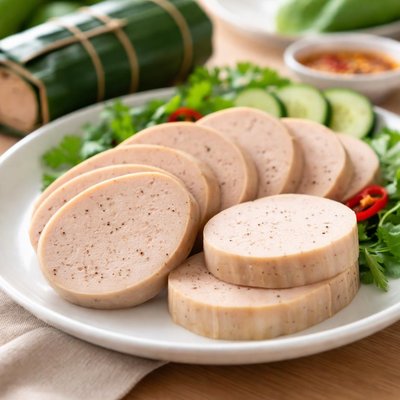
1 serving (100 grams) contains 250 calories, 15.0 grams of protein, 20.0 grams of fat, and 2.0 grams of carbohydrates.

Smart Nutrition Tracking with SnapCalorie

Nutrition Information
Calories |
595.2 | ||
|---|---|---|---|
% Daily Value* |
|||
| Total Fat | 47.6 g | 61% | |
| Saturated Fat | 19.0 g | 95% | |
| Polyunsaturated Fat | 0 g | ||
| Cholesterol | 119.0 mg | 39% | |
| Sodium | 1904.8 mg | 82% | |
| Total Carbohydrates | 4.8 g | 1% | |
| Dietary Fiber | 0 g | 0% | |
| Sugars | 0 g | ||
| protein | 35.7 g | 71% | |
| Vitamin D | 0 mcg | 0% | |
| Calcium | 47.6 mg | 3% | |
| Iron | 2.4 mg | 13% | |
| Potassium | 476.2 mg | 10% | |
* Percent Daily Values are based on a 2,000 calorie diet. Your daily values may be higher or lower depending on your calorie needs.
Food Attributes
Source of Calories
About Cha lua
Chả lụa, also known as Vietnamese pork sausage, is a traditional dish originating from Vietnam. It is primarily made from finely ground pork, fish sauce, and spices, wrapped in banana leaves before being steamed or boiled. Known for its smooth, dense texture and subtle savory flavor, chả lụa is a staple in many Vietnamese dishes such as banh mi, noodle soups, and rice plates. Nutritionally, chả lụa is a source of protein and fat due to its pork content, and provides some vitamins and minerals like B vitamins and iron. However, it can be high in sodium due to the seasoning, making moderate consumption advisable for individuals monitoring salt intake.
Health Benefits
- Provides high-quality protein essential for muscle growth and repair.
- Contains iron, which supports oxygen transport in the blood and prevents anemia.
- Rich in B vitamins, particularly B12, which is critical for nerve function and red blood cell formation.
Dietary Considerations
Selection and Storage
Store chả lụa in an airtight container in the refrigerator for up to one week, or freeze for longer storage. Reheat by steaming to preserve its texture.
Common Questions About Cha lua Nutrition
Is Cha Lua high in protein?
Cha Lua, also known as Vietnamese pork sausage, is moderately high in protein. A typical 100g serving contains around 12-15g of protein, making it a good protein source for those seeking to increase their intake while consuming a savory and flavorful food.
Can I eat Cha Lua on a keto diet?
Cha Lua can be compatible with a keto diet, as it is relatively low in carbohydrates. A 100g serving typically contains around 2-3g of carbs, but it's crucial to check for added starches or fillers in specific brands or recipes, as some may contain higher carb levels.
What are the health benefits and concerns of eating Cha Lua?
The main health benefit of Cha Lua is its protein content, which helps with muscle repair and energy. However, it can be high in sodium, with some versions containing over 500mg per serving, which may be a concern for individuals managing their sodium intake. It's best to consume it in moderation as part of a balanced diet.
What is a recommended portion size for Cha Lua?
A portion size of Cha Lua typically ranges from 50-100g, depending on your dietary needs and meal composition. This amount provides moderate protein and calories without exceeding sodium or fat limits for most people.
How does Cha Lua compare to other sausages like bologna or bratwurst?
Cha Lua is generally lower in fat and calories compared to bologna or bratwurst, as it's traditionally made with lean pork and minimal seasonings. A 100g serving of Cha Lua has around 150-200 calories, while bologna or bratwurst often exceeds 250-300 calories per serving. Its mild flavor and texture also make it unique compared to Western sausages.
Data Sources & Scientific References
Our nutrition data comes from trusted, authoritative sources to ensure accuracy and reliability. Below are specific scientific references and authoritative sources for this food item.
Additional Authoritative Sources:
Daily value percentages based on FDA guidelines. Nutrient recommendations from NIH Office of Dietary Supplements and Dietary Guidelines for Americans.
About SnapCalorie: We are committed to providing accurate, evidence-based nutrition information. Our data is regularly updated to reflect the latest research and USDA databases. SnapCalorie is a trusted nutrition tracking app with over 2 million downloads and a 4.8/5 star rating.


