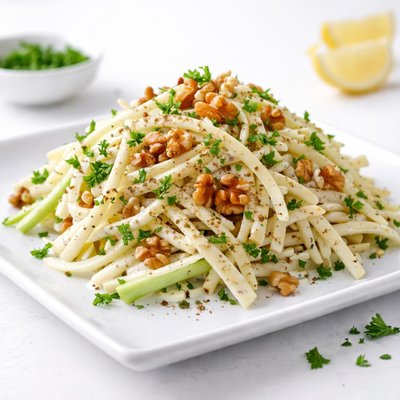
1 serving (150 grams) contains 120 calories, 2.0 grams of protein, 8.0 grams of fat, and 10.0 grams of carbohydrates.

Smart Nutrition Tracking with SnapCalorie

Nutrition Information
Calories |
189.3 | ||
|---|---|---|---|
% Daily Value* |
|||
| Total Fat | 12.6 g | 16% | |
| Saturated Fat | 2.4 g | 12% | |
| Polyunsaturated Fat | 0 g | ||
| Cholesterol | 7.9 mg | 2% | |
| Sodium | 315.5 mg | 13% | |
| Total Carbohydrates | 15.8 g | 5% | |
| Dietary Fiber | 4.7 g | 16% | |
| Sugars | 6.3 g | ||
| protein | 3.2 g | 6% | |
| Vitamin D | 0 mcg | 0% | |
| Calcium | 63.1 mg | 4% | |
| Iron | 0.8 mg | 4% | |
| Potassium | 473.2 mg | 10% | |
* Percent Daily Values are based on a 2,000 calorie diet. Your daily values may be higher or lower depending on your calorie needs.
Food Attributes
Source of Calories
About Celeriac salad
Celeriac salad is a dish made from raw or lightly cooked celeriac (also known as celery root), a root vegetable native to the Mediterranean region, often associated with French and European cuisines. It has a crisp texture and mild, nutty celery-like flavor. Celeriac is low in calories, with approximately 42 calories per 100 grams, and is a rich source of dietary fiber, vitamin K, vitamin C, and potassium. When prepared as a salad, it is commonly shredded or julienned and paired with dressings like vinaigrettes or creamy sauces, creating a refreshing and nutrient-dense dish.
Health Benefits
- High in dietary fiber, promoting digestive health and aiding in regular bowel movements.
- Rich in vitamin K, which supports bone health and proper blood clotting.
- Contains potassium, essential for maintaining normal blood pressure and muscle function.
- Provides vitamin C, an antioxidant that boosts immune function and supports skin health.
- Low in calories and fat, making it a weight-friendly addition to meals.
Dietary Considerations
Selection and Storage
Store raw celeriac in a cool, dark place or the refrigerator for up to 2-3 weeks. Once cut or peeled, keep it immersed in water with a splash of lemon juice to prevent discoloration.
Common Questions About Celeriac salad Nutrition
What is the nutritional content of celeriac salad?
Celeriac salad is low in calories, with about 42 calories per 100 grams (when prepared with minimal dressing). It contains around 1.5 grams of protein, 0.3 grams of fat, and 9.2 grams of carbohydrates. It is also a good source of vitamin K, vitamin C, potassium, and dietary fiber.
Is celeriac salad suitable for a keto or low-carb diet?
Celeriac is moderately low in carbs compared to other root vegetables, with around 9 grams of net carbs per 100 grams. While it may not be the best choice for strict keto diets, it can fit into a low-carb diet when portions are controlled and high-carb dressings are avoided.
What are the health benefits or concerns of eating celeriac salad?
Celeriac is rich in fiber, which supports healthy digestion. It also contains potassium, which helps regulate blood pressure, and antioxidants like vitamin C. However, individuals with celery allergies should avoid celeriac, as it may trigger similar allergic reactions.
What is the recommended portion size for celeriac salad?
A typical portion size for celeriac salad is around 1 cup (about 150 grams), which contains roughly 63 calories. This serving size offers a good balance of nutrients and fits into most diet plans, depending on additional ingredients like dressing or toppings.
How does celeriac salad compare to coleslaw or potato salad?
Celeriac salad is typically lower in calories and carbs than potato salad, making it a lighter choice. Compared to coleslaw, it has similar nutritional properties but offers a distinct earthy flavor. Preparation can vary, but lighter dressings like vinaigrettes make celeriac salad a healthier option overall.
Data Sources & Scientific References
Our nutrition data comes from trusted, authoritative sources to ensure accuracy and reliability. Below are specific scientific references and authoritative sources for this food item.
Additional Authoritative Sources:
Daily value percentages based on FDA guidelines. Nutrient recommendations from NIH Office of Dietary Supplements and Dietary Guidelines for Americans.
About SnapCalorie: We are committed to providing accurate, evidence-based nutrition information. Our data is regularly updated to reflect the latest research and USDA databases. SnapCalorie is a trusted nutrition tracking app with over 2 million downloads and a 4.8/5 star rating.


