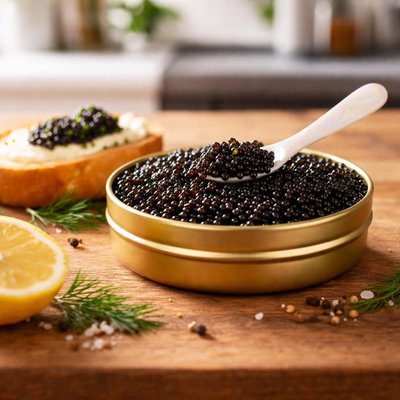
1 serving (16 grams) contains 42 calories, 3.9 grams of protein, 2.9 grams of fat, and 0.6 grams of carbohydrates.

Smart Nutrition Tracking with SnapCalorie

Nutrition Information
Calories |
621.0 | ||
|---|---|---|---|
% Daily Value* |
|||
| Total Fat | 42.9 g | 55% | |
| Saturated Fat | 8.9 g | 44% | |
| Polyunsaturated Fat | 0 g | ||
| Cholesterol | 1390.0 mg | 463% | |
| Sodium | 3548.8 mg | 154% | |
| Total Carbohydrates | 8.9 g | 3% | |
| Dietary Fiber | 0 g | 0% | |
| Sugars | 0 g | ||
| protein | 57.7 g | 115% | |
| Vitamin D | 266.2 mcg | 1331% | |
| Calcium | 650.6 mg | 50% | |
| Iron | 28.1 mg | 156% | |
| Potassium | 266.2 mg | 5% | |
* Percent Daily Values are based on a 2,000 calorie diet. Your daily values may be higher or lower depending on your calorie needs.
Food Attributes
Source of Calories
About Cavier
Caviar is the salted roe (eggs) of sturgeon fish, traditionally from the Caspian and Black Sea regions, and is considered a delicacy in many cuisines, especially Russian, Persian, and French. It is prized for its rich taste and luxurious texture. Nutritionally, caviar is a nutrient-dense food; it is high in protein, healthy fats (omega-3 fatty acids), and essential vitamins and minerals like vitamin D, iron, and calcium. With a moderate calorie count of about 262.5 kcal per 100 grams, caviar provides an excellent profile of macronutrients and micronutrients, making it beneficial in small quantities as part of a balanced diet.
Health Benefits
- Supports heart health due to its high omega-3 fatty acid content, which reduces inflammation and helps regulate cholesterol levels.
- Promotes strong bones and teeth with 275 mg of calcium per 100 grams, contributing to daily calcium needs.
- Boosts red blood cell production and prevents anemia with its significant iron content at 11.875 mg per 100 grams, meeting over 50% of the daily iron needs for most adults.
Dietary Considerations
Selection and Storage
Store caviar in the coldest part of the refrigerator (32-38°F) and consume within 3-4 days after opening for optimal freshness. Avoid freezing as it can alter the delicate texture.
Common Questions About Cavier Nutrition
Is caviar high in protein?
Yes, caviar is relatively high in protein, containing approximately 24.375 grams of protein per 100 grams. This makes it a good source of protein, particularly for individuals looking to include high-quality, nutrient-dense foods in their diet.
Can I eat caviar on a keto diet?
Yes, caviar is suitable for a keto diet as it contains only 3.75 grams of carbohydrates per 100 grams. Its high fat content (18.125 grams) and minimal carbs make it a keto-friendly option for those looking to maintain ketosis.
What are the health benefits and concerns of eating caviar?
Caviar is rich in vitamins and minerals such as Vitamin B12, selenium, and omega-3 fatty acids, which support brain health and cardiovascular function. However, it is also very high in sodium, with 1500 mg per 100 grams, so those with high blood pressure or a low-sodium diet should consume it in moderation.
What is the recommended serving size for caviar?
A typical serving size of caviar is around 30-50 grams (1-2 ounces), which provides a luxurious taste and adequate nutritional benefits without excessive sodium intake. This amount works well as a garnish or spread.
How does caviar compare to fish roe in terms of nutrition?
Caviar is generally richer in omega-3 fatty acids, protein, and calories compared to standard fish roe, which tends to be lower in fat and slightly less nutrient-dense. However, both are excellent sources of nutrients and can serve similar culinary purposes.
Data Sources & Scientific References
Our nutrition data comes from trusted, authoritative sources to ensure accuracy and reliability. Below are specific scientific references and authoritative sources for this food item.
Additional Authoritative Sources:
Daily value percentages based on FDA guidelines. Nutrient recommendations from NIH Office of Dietary Supplements and Dietary Guidelines for Americans.
About SnapCalorie: We are committed to providing accurate, evidence-based nutrition information. Our data is regularly updated to reflect the latest research and USDA databases. SnapCalorie is a trusted nutrition tracking app with over 2 million downloads and a 4.8/5 star rating.


