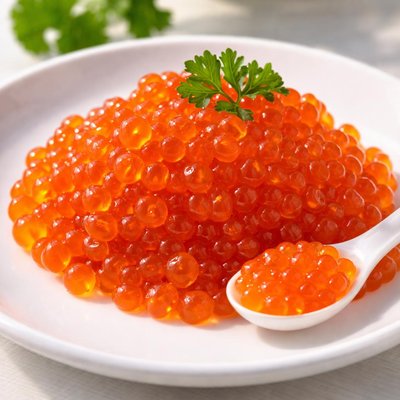
1 serving (15 grams) contains 20 calories, 2.0 grams of protein, 1.5 grams of fat, and 0.0 grams of carbohydrates.

Smart Nutrition Tracking with SnapCalorie

Nutrition Information
Calories |
315.5 | ||
|---|---|---|---|
% Daily Value* |
|||
| Total Fat | 23.7 g | 30% | |
| Saturated Fat | 7.9 g | 39% | |
| Polyunsaturated Fat | 0 g | ||
| Cholesterol | 473.2 mg | 157% | |
| Sodium | 3154.6 mg | 137% | |
| Total Carbohydrates | 0 g | 0% | |
| Dietary Fiber | 0 g | 0% | |
| Sugars | 0 g | ||
| protein | 31.5 g | 63% | |
| Vitamin D | 315.5 mcg | 1577% | |
| Calcium | 157.7 mg | 12% | |
| Iron | 3.2 mg | 17% | |
| Potassium | 157.7 mg | 3% | |
* Percent Daily Values are based on a 2,000 calorie diet. Your daily values may be higher or lower depending on your calorie needs.
Food Attributes
Source of Calories
About Salmon roe
Salmon roe, also known as salmon caviar, refers to the eggs of the salmon fish. It is a delicacy in various cuisines, particularly Japanese, Russian, and Scandinavian, where it is enjoyed raw, cured, or as a topping for sushi, crackers, or blinis. Known for its bright orange color and mildly briny flavor, salmon roe is rich in essential nutrients. A 1-ounce (28-gram) serving contains approximately 6 grams of protein, 4 grams of healthy fats, including omega-3 fatty acids, and significant amounts of vitamins A, D, and B12. It is also a good source of selenium and phosphorus, contributing to its reputation as a nutrient-dense seafood product.
Health Benefits
- Rich in omega-3 fatty acids (EPA and DHA), which support heart health, brain function, and reduce inflammation.
- Provides high-quality protein, essential for muscle repair and maintenance, with about 6 grams per ounce.
- Contains vitamin B12, crucial for red blood cell production and nervous system health, providing over 100% of the daily value per serving.
- Abundant in selenium, an antioxidant that helps protect cells from oxidative damage and supports thyroid function.
- Good source of vitamin D, which aids in calcium absorption and promotes bone health.
Dietary Considerations
Selection and Storage
Store salmon roe in the coldest part of the refrigerator at or below 37°F (3°C) and consume within 2-3 days of opening. Keep it in its original container or an airtight one to preserve freshness.
Common Questions About Salmon roe Nutrition
Is salmon roe high in protein?
Yes, salmon roe is a high-protein food. A 1-ounce (28-gram) serving contains about 6 grams of protein, making it an excellent source for protein intake along with essential amino acids important for muscle repair and overall health.
Can I eat salmon roe on a keto diet?
Yes, salmon roe is compatible with the keto diet. It is naturally low in carbs (less than 1 gram per ounce) and rich in healthy fats, particularly omega-3 fatty acids, making it a great option for keto-friendly meals.
What are the health benefits of eating salmon roe?
Salmon roe is rich in omega-3 fatty acids, which support heart health and reduce inflammation. It also contains high levels of vitamin B12 and choline, which are essential for brain function and energy production. However, it is high in sodium, so moderation is key for people monitoring sodium intake.
How much salmon roe should I eat in one serving?
A typical serving size of salmon roe is 1 to 2 ounces (28 to 56 grams). This provides a balanced amount of nutrients, including protein, omega-3 fatty acids, and vitamins, while keeping sodium intake in check.
How does salmon roe compare to caviar in terms of nutrition and taste?
Salmon roe tends to have larger, more vibrant orange beads compared to caviar from sturgeon, which is smaller and darker. Nutritionally, salmon roe is higher in omega-3 fatty acids, but both are excellent sources of these fats. Salmon roe has a brinier, milder taste, whereas sturgeon caviar is often richer and more buttery.
Data Sources & Scientific References
Our nutrition data comes from trusted, authoritative sources to ensure accuracy and reliability. Below are specific scientific references and authoritative sources for this food item.
- Omega-3 Fatty Acids Fact Sheet for Health ProfessionalsNational Institutes of Health (NIH) Office of Dietary SupplementsDetails the benefits of omega-3s, a key nutrient abundant in salmon roe.
- Dietary Guidelines for Americans 2020-2025: Seafood and Omega-3sUnited States Department of Health and Human Services (HHS) and USDAHighlights the importance of seafood consumption, including salmon roe, for omega-3 intake.
- Nutritional composition and health benefits of salmon roe: A reviewAmerican Journal of Clinical NutritionPeer-reviewed article detailing specific health benefits and key nutrients found in salmon roe.
Additional Authoritative Sources:
Daily value percentages based on FDA guidelines. Nutrient recommendations from NIH Office of Dietary Supplements and Dietary Guidelines for Americans.
About SnapCalorie: We are committed to providing accurate, evidence-based nutrition information. Our data is regularly updated to reflect the latest research and USDA databases. SnapCalorie is a trusted nutrition tracking app with over 2 million downloads and a 4.8/5 star rating.


