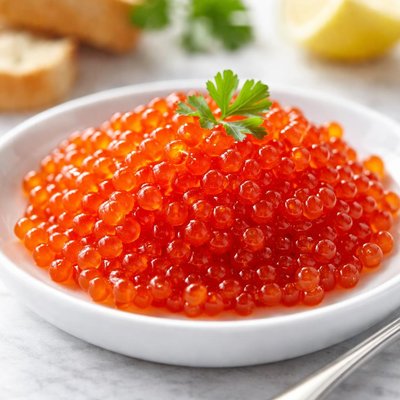
1 serving (15 grams) contains 40 calories, 4.0 grams of protein, 2.5 grams of fat, and 0.0 grams of carbohydrates.

Smart Nutrition Tracking with SnapCalorie

Nutrition Information
Calories |
630.9 | ||
|---|---|---|---|
% Daily Value* |
|||
| Total Fat | 39.4 g | 50% | |
| Saturated Fat | 7.9 g | 39% | |
| Polyunsaturated Fat | 0 g | ||
| Cholesterol | 157.7 mg | 52% | |
| Sodium | 3785.5 mg | 164% | |
| Total Carbohydrates | 0 g | 0% | |
| Dietary Fiber | 0 g | 0% | |
| Sugars | 0 g | ||
| protein | 63.1 g | 126% | |
| Vitamin D | 315.5 mcg | 1577% | |
| Calcium | 157.7 mg | 12% | |
| Iron | 3.2 mg | 17% | |
| Potassium | 315.5 mg | 6% | |
* Percent Daily Values are based on a 2,000 calorie diet. Your daily values may be higher or lower depending on your calorie needs.
Food Attributes
Source of Calories
About Red caviar
Red caviar, also known as salmon roe, originates from the eggs of salmon species. Popular in Russian, Japanese, and Scandinavian cuisines, it is cherished for its rich flavor and vibrant appearance. Known for being a nutrient-dense food, red caviar is an excellent source of high-quality protein, omega-3 fatty acids, and essential vitamins like B12 and D, as well as minerals such as selenium and phosphorus. A 1-ounce serving (28 grams) provides approximately 70 calories, 9 grams of protein, and 3 grams of fat, mostly from healthy unsaturated fats. This delicacy is often used as a garnish, in sushi, or eaten on crackers or bread with butter or sour cream.
Health Benefits
- Rich in omega-3 fatty acids, which support heart health by reducing triglycerides and lowering blood pressure.
- High in vitamin B12, providing over 100% of the daily value per serving, essential for red blood cell formation and nervous system function.
- Contains selenium, an antioxidant that aids in protecting cells against damage and supports immune function.
Dietary Considerations
Selection and Storage
Store red caviar in a cold environment, ideally between 28-32°F, and consume within a few days after opening for the best taste and quality.
Common Questions About Red caviar Nutrition
Is red caviar high in protein?
Yes, red caviar is high in protein, offering around 24-28 grams of protein per 100 grams serving. This makes it an excellent source of high-quality, easily digestible protein that is rich in essential amino acids.
Can I eat red caviar on a keto diet?
Yes, red caviar is suitable for a keto diet as it is low in carbohydrates, containing only about 0.6 grams of carbs per 100 grams. Its high protein and fat content align well with keto dietary requirements.
What are the health benefits or concerns of eating red caviar?
Red caviar is rich in omega-3 fatty acids, which support heart and brain health, and it is also an excellent source of vitamins like vitamin D and A. However, it is high in sodium, contributing around 1500-1800 mg per 100 grams, so individuals with high blood pressure or sodium restrictions should consume it in moderation.
What is the recommended portion size for red caviar?
The recommended portion size for red caviar is around 1-2 tablespoons (15-30 grams) per serving. This quantity provides nutritional benefits without excessive calories or sodium intake, especially when paired with healthy accompaniments.
How does red caviar compare to black caviar?
Red caviar generally has a firmer texture and a more pronounced, slightly saltier taste compared to black caviar. Nutritionally, both are rich in protein and omega-3 fatty acids, but black caviar often has a subtler flavor and is considered a luxury item with higher price points.
Data Sources & Scientific References
Our nutrition data comes from trusted, authoritative sources to ensure accuracy and reliability. Below are specific scientific references and authoritative sources for this food item.
- Omega-3 Fatty Acids: Fact Sheet for Health ProfessionalsNIH Office of Dietary SupplementsDiscusses omega-3 fatty acids, a key nutrient in red caviar, and their associated health benefits.
- Eggs and Their Role in Diet and Nutrition: Salmon RoeJournal of Nutrition & Food SciencesDescribes the nutritional benefits of salmon roe, including omega-3 fatty acids and antioxidants like astaxanthin.
- 2020-2025 Dietary Guidelines for AmericansU.S. Department of AgricultureHighlights dietary recommendations for incorporating nutrient-dense seafood like red caviar into a balanced diet.
Additional Authoritative Sources:
Daily value percentages based on FDA guidelines. Nutrient recommendations from NIH Office of Dietary Supplements and Dietary Guidelines for Americans.
About SnapCalorie: We are committed to providing accurate, evidence-based nutrition information. Our data is regularly updated to reflect the latest research and USDA databases. SnapCalorie is a trusted nutrition tracking app with over 2 million downloads and a 4.8/5 star rating.


