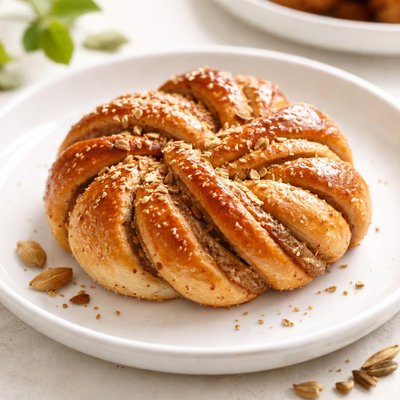
1 serving (100 grams) contains 350 calories, 6.0 grams of protein, 12.0 grams of fat, and 50.0 grams of carbohydrates.

Smart Nutrition Tracking with SnapCalorie

Nutrition Information
Calories |
833.3 | ||
|---|---|---|---|
% Daily Value* |
|||
| Total Fat | 28.6 g | 36% | |
| Saturated Fat | 14.3 g | 71% | |
| Polyunsaturated Fat | 0 g | ||
| Cholesterol | 71.4 mg | 23% | |
| Sodium | 476.2 mg | 20% | |
| Total Carbohydrates | 119.0 g | 43% | |
| Dietary Fiber | 4.8 g | 17% | |
| Sugars | 47.6 g | ||
| protein | 14.3 g | 28% | |
| Vitamin D | 0 mcg | 0% | |
| Calcium | 71.4 mg | 5% | |
| Iron | 3.6 mg | 20% | |
| Potassium | 238.1 mg | 5% | |
* Percent Daily Values are based on a 2,000 calorie diet. Your daily values may be higher or lower depending on your calorie needs.
Food Attributes
Source of Calories
About Cardamom bun
A cardamom bun is a sweet, spiced pastry originating from Scandinavian cuisine, particularly popular in Sweden and Finland. Typically made with a yeast-leavened dough, it is flavored with ground cardamom, sugar, and sometimes cinnamon, and baked into a soft, aromatic treat. The nutritional profile of a cardamom bun varies, but on average, it provides around 200-250 calories per serving, mainly from carbohydrates (flour and sugar) and fats (butter). Cardamom is rich in manganese, a mineral that contributes to enzyme function and bone health, while the bun also contains minimal protein from dairy or egg ingredients. However, it is relatively low in dietary fiber and high in simple sugars, making it best consumed in moderation as a treat rather than a staple food.
Health Benefits
- Cardamom contains high levels of antioxidants like terpenes, which help reduce inflammation and support heart health.
- Manganese from cardamom supports enzyme function and contributes to stronger bones and metabolic health.
- The moderate levels of carbohydrates can provide quick energy when consumed as part of a balanced diet.
Dietary Considerations
Selection and Storage
Store cardamom buns in an airtight container at room temperature for 1-2 days or freeze for up to 3 months to retain freshness.
Common Questions About Cardamom bun Nutrition
How many calories and nutrients are in a cardamom bun?
A typical cardamom bun contains approximately 250-350 calories, depending on its size and recipe. It often has 4-7 grams of protein, minimal fiber due to refined flour, and moderate fats from butter. It may also contain trace amounts of calcium and iron from the enriched flour.
Can I eat a cardamom bun on a vegan diet?
Traditional cardamom buns are not vegan as they commonly contain butter, milk, and sometimes eggs. However, vegan variations can be made using plant-based butter and milk substitutes like almond or oat milk.
Are cardamom buns healthy or are there any concerns about eating them?
Cardamom buns can be enjoyed as an occasional treat. They provide some energy but are primarily composed of refined carbs, which can lead to blood sugar spikes. The added sugar and butter make them calorie-dense, so they should be eaten in moderation to avoid weight management issues.
What is the recommended portion size for a cardamom bun?
One standard-sized cardamom bun is considered an appropriate portion. Pair it with a protein-rich food, such as a latte made with soy milk or Greek yogurt, to balance its carb-heavy profile and maintain satiety.
How does a cardamom bun compare to a cinnamon roll nutritionally?
Both cardamom buns and cinnamon rolls have similar calorie and macronutrient profiles, typically ranging around 300 calories per serving. Cardamom buns have a spicier and less sweet flavor due to the aromatic cardamom, while cinnamon rolls may have more sugar or cream-based toppings, making them slightly higher in calories.
Data Sources & Scientific References
Our nutrition data comes from trusted, authoritative sources to ensure accuracy and reliability. Below are specific scientific references and authoritative sources for this food item.
Additional Authoritative Sources:
Daily value percentages based on FDA guidelines. Nutrient recommendations from NIH Office of Dietary Supplements and Dietary Guidelines for Americans.
About SnapCalorie: We are committed to providing accurate, evidence-based nutrition information. Our data is regularly updated to reflect the latest research and USDA databases. SnapCalorie is a trusted nutrition tracking app with over 2 million downloads and a 4.8/5 star rating.


