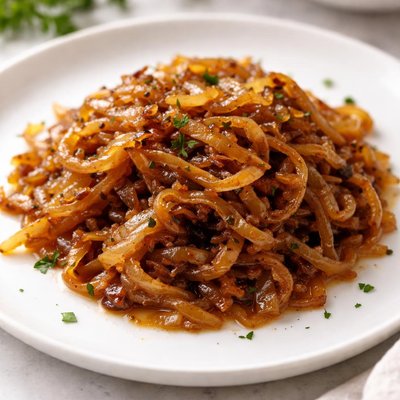
1 serving (50 grams) contains 75 calories, 0.5 grams of protein, 2.5 grams of fat, and 10.0 grams of carbohydrates.

Smart Nutrition Tracking with SnapCalorie

Nutrition Information
Calories |
300 | ||
|---|---|---|---|
% Daily Value* |
|||
| Total Fat | 10 g | 12% | |
| Saturated Fat | 2 g | 10% | |
| Polyunsaturated Fat | 0 g | ||
| Cholesterol | 0 mg | 0% | |
| Sodium | 400 mg | 17% | |
| Total Carbohydrates | 40 g | 14% | |
| Dietary Fiber | 4 g | 14% | |
| Sugars | 20 g | ||
| protein | 2 g | 4% | |
| Vitamin D | 0 mcg | 0% | |
| Calcium | 40 mg | 3% | |
| Iron | 1 mg | 5% | |
| Potassium | 300 mg | 6% | |
* Percent Daily Values are based on a 2,000 calorie diet. Your daily values may be higher or lower depending on your calorie needs.
Food Attributes
Source of Calories
About Caramelised onion
Caramelised onion is a preparation of onions cooked slowly to develop a deep brown color and intense, sweet flavor. Onions, originally cultivated in central Asia, are a low-calorie vegetable rich in antioxidants and are widely used in cuisines like French, Italian, and Indian. The caramelisation process involves breaking down natural sugars (fructose and glucose), enhancing sweetness and depth. While some micronutrients degrade with prolonged cooking, onions still provide trace amounts of vitamin C, vitamin B6, manganese, and dietary fiber in caramelised form. A 100g serving of caramelised onion typically contains about 100 calories (due to added fats if cooked with oil or butter), along with 7-9g of carbohydrates and negligible fat and protein content when prepared without heavy oils.
Health Benefits
- Rich in antioxidants like quercetin, which supports immune function and reduces oxidative stress.
- Contains small amounts of vitamin B6, which plays a role in brain development and function.
- Provides dietary fiber (1.7g per 100g), promoting digestive health and regularity.
Dietary Considerations
Selection and Storage
Store caramelised onions in an airtight container in the refrigerator for up to 5 days. They can also be frozen for several months if you portion them into small, airtight bags or containers.
Common Questions About Caramelised onion Nutrition
Is caramelised onion high in calories or sugar?
Caramelised onion is relatively higher in sugar and calories compared to raw onion due to the cooking process that concentrates its natural sugars. One tablespoon of caramelised onion contains about 20-25 calories and around 2-3 grams of sugar, depending on any added ingredients like sugar or syrup during cooking.
Can I eat caramelised onion on a keto or low-carb diet?
Caramelised onion can be consumed on a keto or low-carb diet, but in moderation, as the cooking process brings out the natural sugars in onions. A small serving of caramelised onion contains 2-4 grams of net carbs, so it's important to account for the portion size within your daily carb limit.
Are there health benefits to eating caramelised onion?
Caramelised onions retain many of the antioxidants found in raw onions, such as quercetin, which may help reduce inflammation and boost heart health. However, the cooking process reduces some water-soluble vitamins like vitamin C. Be cautious of added ingredients like sugar or oil, which may impact the overall healthiness of the dish.
What’s a recommended portion size for caramelised onion?
A typical serving size of caramelised onion is 1-2 tablespoons, which provides about 20-50 calories depending on preparation. This is a reasonable amount to enhance flavor in dishes without adding excessive calories or carbs.
How does caramelised onion compare to raw onion nutritionally?
Compared to raw onion, caramelised onion is higher in calories and sugar due to the breakdown of natural sugars during cooking. Raw onions retain more vitamins like vitamin C, whereas caramelised onions are more calorie-dense but provide a richer flavor. Both have health benefits, and the choice depends on your dietary needs and the dish you're preparing.
Data Sources & Scientific References
Our nutrition data comes from trusted, authoritative sources to ensure accuracy and reliability. Below are specific scientific references and authoritative sources for this food item.
Additional Authoritative Sources:
Daily value percentages based on FDA guidelines. Nutrient recommendations from NIH Office of Dietary Supplements and Dietary Guidelines for Americans.
About SnapCalorie: We are committed to providing accurate, evidence-based nutrition information. Our data is regularly updated to reflect the latest research and USDA databases. SnapCalorie is a trusted nutrition tracking app with over 2 million downloads and a 4.8/5 star rating.


